Feeds:
Posts
Comments

Archive for the ‘food’ Category

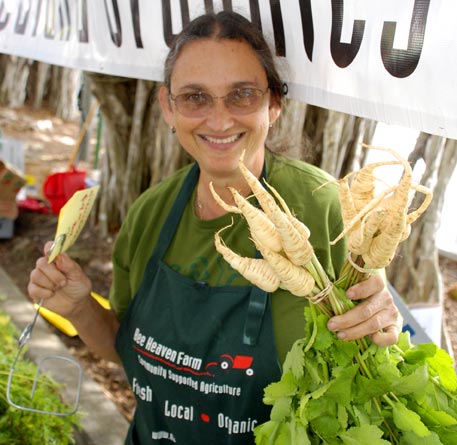
Margie Pikarsky with bunches of parsnips from Bee Heaven Farm.

Local food writer Ellen Kanner writes a blog about food on Huffington Post. As part of the “Who Grows Our Food” series of farmer profiles, today’s post is about one of our best-known local growers, Margie Pikarsky of Bee Heaven Farm. Check it out here:

Who Grows Our Food: Margie Pikarsky, Bee Heaven Farm

http://www.huffingtonpost.com/ellen-kanner/who-grows-our-food-margie_b_1671108.html

Read Full Post »

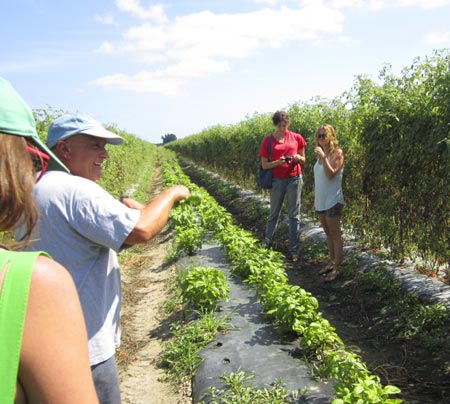
Arturo Gonzalez (wearing blue hat) points out a double row of Italian basil and sage growing among rows of tomatoes.

Good local food abounds in Redland, but you have to know where to look for it. One place is Margarita’s farm stand located on Krome Avenue. Earlier in the growing season, brother and sister owners Arturo and Maggie Gonzalez invited farmer Margie and her hard working crew for a tour of Sunshine Organic Farm, located right behind the stand, and for a completely locavore lunch.

The farm is certified organic, and Arturo has been growing heirloom tomatoes and other vegetables for several years. He was selling his vegetables at the stand, along with other locally grown produce and herbs.

Before we lunched, Arturo gave us a brief tour of his five acre field. Long rows of grape tomatoes, hanging in heavy clusters, stretched endlessly toward the back of his property. “All the tomatoes came in at the same time and ripened overnight,” Arturo complained. The vines produced more than he could sell, and a heap of rotten fruit lay on the ground. Abundance, thy name is tomato!
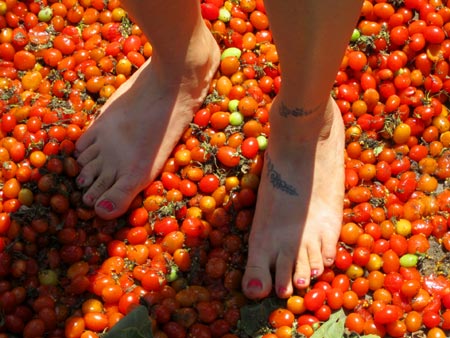
Farm intern Erinn kicked off her sandals and stomped around on the mess of overripe grape tomatoes. Squish squish!

Several rows of shaggy vines were loaded down heavily with colorful heirloom tomatoes — green zebra, yellow taxi, gold nugget, black cherry, and yellow cherry, to name varieties I recognized. In between rows of tomatoes grew double rows of basil and sage, both blooming with the sweetest aroma. Nearby were sweet long peppers, and those outrageous globular lavender and white eggplant with the romantic name of Rosa Bianca.

Madeleine chopped up frozen guanabana to make drinks for the guests.

After the tour, we gathered under a breezy overhang at the back of the farm stand. Madeleine, who works at the stand making batidos (fruits shakes) and juices, pulled out frozen chunks of guanabana (soursop), and made a thick white fruit drink in the blender with some added sugar and water. It was my first sip of guanabana (and I have no excuse why I waited so long to try it). It tasted a bit like banana, definitely not sour, certainly delicious.
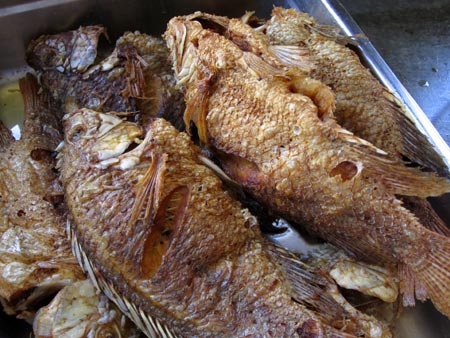
Marinated fried tilapia waiting to get eaten. They didn’t have too wait long.

Nearby, a deep fryer full of vegetable oil heated up. On a table beside it was a large steel pan heaped with cleaned whole tilapia, which Arturo had marinated overnight with pepper and other spices. He gently eased fish one at a time into bubbling hot oil where they would swim until they turned a golden brown. He had sourced the fish from an aquaculture farm he discovered near Okeechobee.
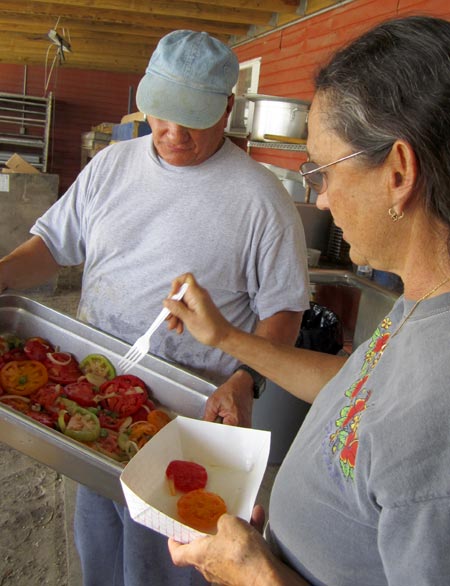
Arturo offered Margie his heirloom tomato salad.

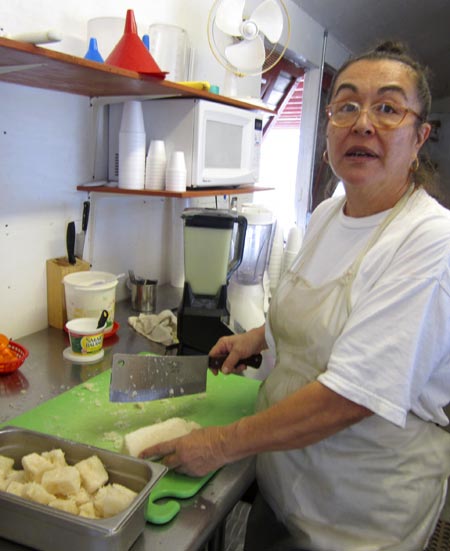
As the fish cooked, Arturo tossed fresh mild watercress grown by “the old Cuban guy down the road” with spring onion slices for a simple salad dressed lightly with olive oil, white vinegar and salt. “When I eat fried fish I gotta have a salad,” he said, making another one. He cut up a variety of different colored tomatoes picked at the peak of ripeness from the field just steps away. They were also dressed with just the right amount of oil, vinegar and salt. In the farm stand kitchen, Maggie made twice-cooked crispy tostones, fried patties made from locally grown plantains and brought them out piping hot, crispy on the outside and soft on the inside.
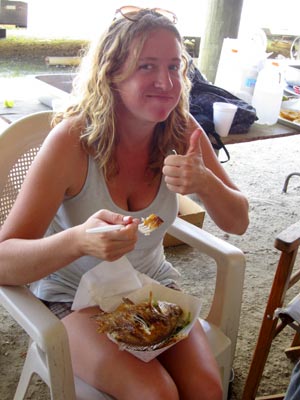
Erinn enjoyed the tilapia.
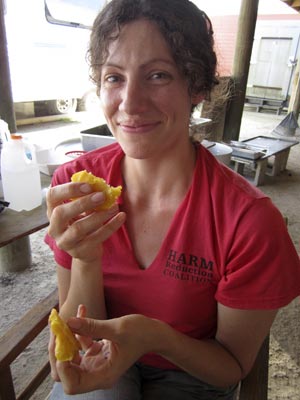
Farm intern Marsha dug in to the tostones.

As Arturo and Maggie cooked, we rounded up a collection of mismatched plastic outdoor chairs, and gathered in a semi-circle near the fryer. This was rustic dining at its best. We ate from paper boats on our laps, using fingers to pick at the fish, stabbed at salads with plastic forks. The fish was cooked to perfection, its white sweet flesh moist and tender, fried skin and fins golden brown and crispy crunchy. Dessert was thick slices of queso blanco (farmer’s cheese) topped with slabs of guava paste, maybe the only two things that weren’t local, but we quickly forgave that. The meal was fresh, simply and quickly prepared, and the most delicious thing I had eaten in a long time.
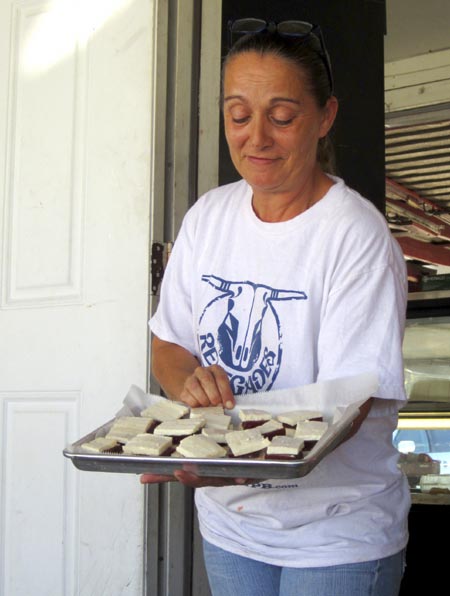
Margarita brought out a simple dessert made with cheese and guava.

Who needed overpriced craziness of SoBe dining when we had a fresh, delicious meal at our own locavore “pop up cafe” located near a busy country road, deep in the heart of where food comes from. As cool spring breezes whispered of new growth and possibilities, Arturo shared a dream of putting in water tanks and growing tilapia and watercress. Selling fried fish meals could come soon after that, permitted under a county ordinance passed last year. Hopefully by next winter’s growing season, locavores could drive down to the farm stand to buy heirloom tomatoes, and stay for a batido or a bite of fresh tilapia, relaxing at a shaded picnic bench. “Eat local and keep a family farmer in business,” somebody in our group said. Arturo laughed with delight. Yes, it’s really that simple.

Margarita’s Fruits & Vegetables
15585 SW 177th Ave. (Krome Ave.)
Redland FL 33187
305-233-7793
Open 7 days a week, 9 am to 6 pm. Open all year. 
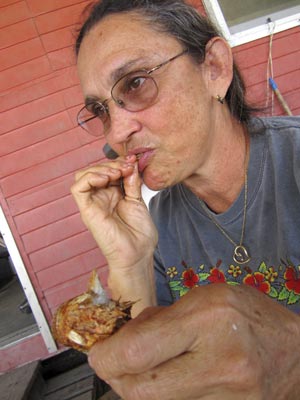
Margie crunched down on fried fish fins.

Read Full Post »
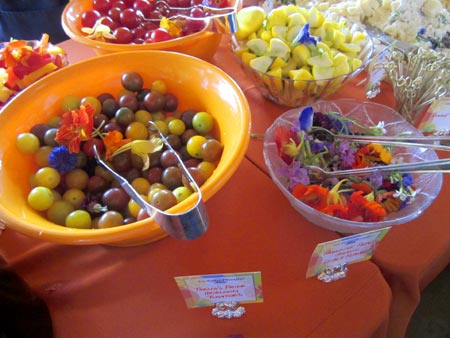
You just had to say MMMM at the annual Tropical Brunch that Les Dames d’Escoffier held recently at the lushly landscaped Schnebley Redland’s Winery. Celebrating local agriculture was the theme this year, and there was quite the assortment of fresh vegetables at the salad table. The highlights were large colorful heirloom tomatoes from Teena’s Pride, and a variety of edible flowers along with small heirloom tomatoes from Paradise Farms.

Colorful heirloom tomatoes and edible flowers from Paradise Farms.

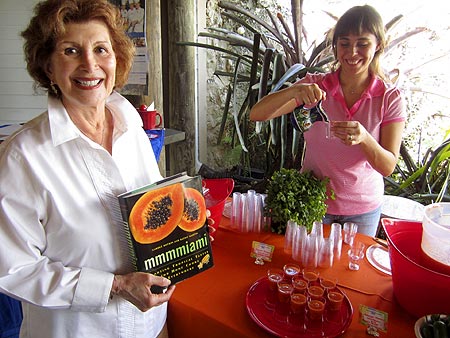
Author Carole Kotkin with a copy of her cookbook MMMMiami: Tempting Tropical Tastes for Home Cooks Everywhere.

Several dishes were taken from MMMMiami: Tempting Tropical Tastes, a cookbook authored by food writer Carole Kotkin. She held court by the gazpacho table, where you could get a cup of the chilled soup that included Florida oranges as one of the main ingredients.

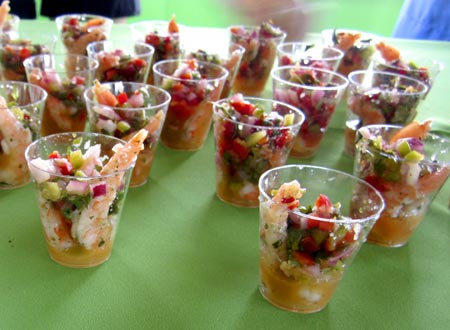
Shrimp citrus ceviche.

Another tasty dish was the Shrimp Citrus Ceviche. In Carole’s book the recipe called for scallops, but it worked well with shrimp. Also featured was Tropical Couscous Salad, flavored with orange juice and studded with bits of ripe papaya.

Winery owner Peter Schnebley and Dame Ariana Kumpis

La Diva and DJ Nevah Late dig in.

Maggie Sibley looks forward to sinking her teeth into fresh salad.

Sink your teeth into Guava Glazed BBQ Ribs served by Lucy Duran. Chef Adri Garcia was everywhere with a helping hand.

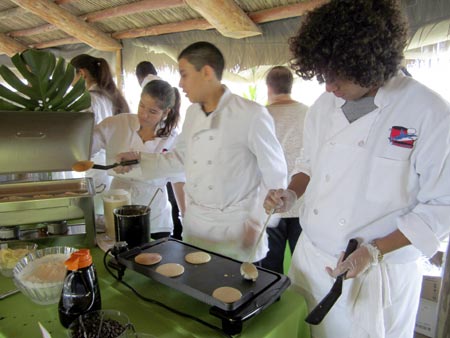
Hard working students from MAST Academy made and served pancakes.

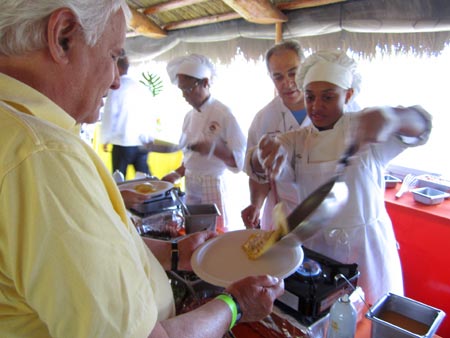
Students from Robert Morgan Educational Center made omlets under the watchful eye of Chef Tony Staravaggi.

Chef Cathy Lucas (center) at the dessert table with her students.

At the dessert table, I located another goody from MMMMiami. The Roasted Plantain Cake with Toasted Coconut Topping tasted like super intense banana bread, and who can go wrong with coconut? But biscotti baked by president Ariana Kumpis stole my heart. They were light and crispy, and studded with bits of tart red fruit. She caught me red handed as I wrapped a handful in a napkin to take home.

So many treasures, so little time!

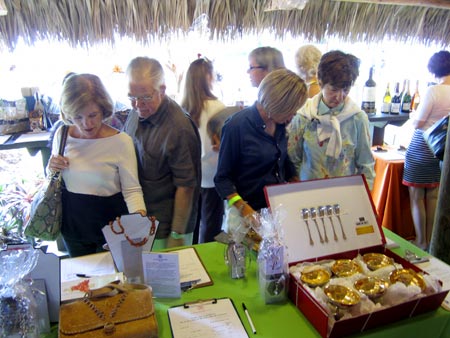
The heart of the brunch was the lavish silent auction. So many amazing things were available. I saw bottles of wine, gourmet baskets, golden serving dishes, Breville small kitchen appliances, and even jewelry to bid on. Money raised by the auction will help fund nutrition and cooking education for local kids, and support school vegetable gardens.

Leticia De Mello Bueno of Gastronomisti, and Annush Fernandez, lifestyle and (occasionally food) blogger.

The large chickee hut was full of contented guests, and I’m guessing at least 200 attended. I had fun meeting old friends and making new ones. And, I got my copy of the cookbook signed by both Carole and Ariana (she has a recipe for ajiaco). Members of Les Dames worked for months to make the event a success. Believe the buzz, the event is that that good.

(MMMMiami: Tempting Tropical Tastes was published in 1998, and is unfortunately out of print. There are a few used copies available online, but you’ll have to search for them. Carole said a paperback edition might be released next year, maybe.)

Sheah Rarback and Lance Tucker danced to the easy tunes of Jukebox Joe Tunon.

Le menu

Read Full Post »

*** Part Two of two ***

McArthur “genius prize” winner Will Allen spoke about his work in urban farming on a recent book tour. Here is part two, about his influence on a local non-profit.

Will Allen spoke at a recent tour of his new book, The Good Food Revolution.

In the audience were a number of people deeply involved in our fledgling local food movement. Among them were Melissa Contreras and Art Friedrich of Urban Oasis Project, a non-profit that plants food gardens and runs farmers markets. Their mission is clear and simple: “We believe that good, clean, healthy food should be accessible and affordable to all.”

Project founder Melissa was thrilled to hear Will Allen speak again. His message “energized me to keep moving forward with Urban Oasis Project after its first nine months” when it was just her and Art trying to get others involved. She attended a community food systems workshop at Growing Power in 2009 to learn more. “The work he was doing was so similar to what we were trying to achieve: teach people to grow some of their own food, and increase access to fresh, local produce to be eaten with a day or so after harvest,” she said.

Her commitment to Growing Power’s training didn’t stop after the workshop was over. Melissa explained, “I signed a pledge that I would come back to my community and teach others what I learned there. We have been doing that, but some of it is on hold until we have a place to call our own.”

Market manager Art said their non-profit drew from Will Allen’s work, especially in terms of food justice. Art explained, “He’s the inspiration why we started planting gardens, to create the future leaders of the local food movement, especially in neighborhoods where it’s hard to have access to fresh food. First grow community, then soil, then plants.”

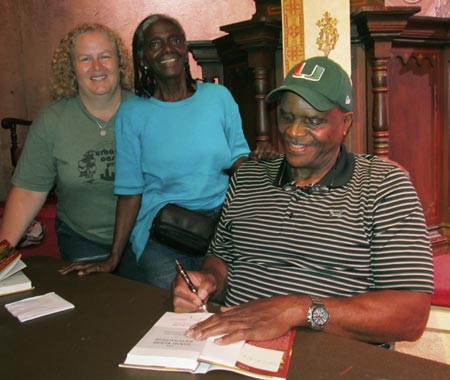
And Miss Shirley, a volunteer who helps at Urban Oasis markets, was thrilled to meet Will. “He’s giving back to his people, he’s giving his time. I learned what soil was made of and how to take care of the earth. And to be grateful for what you have.”

Read Full Post »

The food system is broken and we have to start a new food system. The way to do that is through urban farming. By growing healthy food, we also grow healthy people and communities.

That’s essentially the message Will Allen gives in The Good Food Revolution, his new book that’s largely biography and part food policy. He tells the story of his journey from sharecropper’s son, to University of Miami athlete, to corporate executive, to urban farmer and prize winner, sharing many lessons learned of grit and hope, community and self-sufficiency. His life-changing decision was to go back to his roots and grow food.

“Food is the most important thing in our lives. It’s the one thing that brings people together as one. It puts everyone on an equal level to survive. Why are we eating bad food? We should be eating good food,” Will told an audience of over 150 people who came to heard him speak in Coral Gables, on the first stop of his book tour co-sponsored by Books & Books and Slow Food Miami. (Will was also in town to accept an honorary degree from UM.)

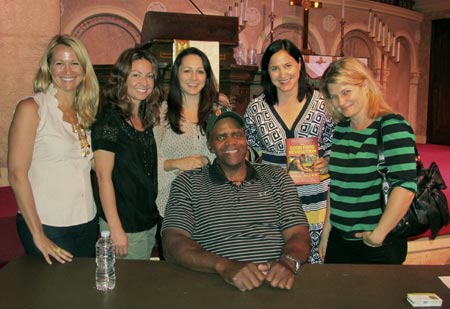
Board members of Slow Food Miami with Will Allen

Will showed a video about Growing Power, his enormous urban farm organization based in Milwaukee, and numerous slides of projects old and new. His mission: “We have to be proactive and rebuild the system so that everybody has safe, affordable, sustainable food.” Growing Power has done just that, planting gardens in underserved neighborhoods, to feed people who have little to no access to fresh vegetables. His urban farm began on a three acre parcel he bought in 1993, which since has evolved into a community food center where people can buy food raised on the farm, and take workshops to learn farming and community building skills. The operation has grown to include multiple urban farm sites and markets, a large composting facility, and livestock consisting of bees, goats, chickens, worms, and tanks full of perch and tilapia.

Nick and Margie Pikarsky of Bee Heaven Farm with Will Allen

According to Will, the local food revolution has begun. People are past the talking stage of a movement and must now start building infrastructure — farms, markets, distribution systems, training programs — and most important, partner with everyone. “Businesses, non-profits, government organizations, politicians, all have to sit at the same table. Can’t kick people from the table.” He emphasized that building relationships is the way to make things happen.

“Engage community youth,” he advised a woman in the audience who builds school gardens. Getting kids involved is an important part of Growing Power — giving them jobs, teaching them farming skills, applying those skills to academic studies, then supporting kids with college scholarships.

*** Part One of two parts ***

Melissa Contreras and Miss Shirley of Urban Oasis Project with Will Allen

Read Full Post »

« Newer Posts - Older Posts »