Feeds:
Posts
Comments

Posts Tagged ‘Bee Heaven Farm’

Bikes resting after a tour of farm country.

On a sunny, breezy Saturday morning last week, over 80 cyclists converged on Bee Heaven Farm for the Slow Locavore Farm Lunch, organized by Slow Food Miami (SFM). The Farm Lunch combined a 7.5 mile bike ride along Redland back roads, with stops along the way at several farms, and ended with a gourmet lunch prepared by Chef Kris Wessel and Chef Kira Volz served at Bee Heaven.

Donna Reno

Donna Reno, the leader of the Miami convivium (as the SF chapters are called) said she came up with the idea after going on a similar farm tour bike ride in Italy about 20 years ago. Farmer Margie (who has served on the SFM Advisory Board for the past year or two) was an active collaborator and gave that memory legs. She picked the farms, plotted the route, made suggestions for sourcing local food, and provided her ample front yard for the event.

The cyclists visited four farms, beginning and ending at Bee Heaven, with stops and tours at Fancy Koi 2 fish farm, Going Bananas! nursery/grove, and Teena’s Pride farm, which is known for its large and lovely heirloom tomatoes. “It’s important to know your grower and visit the farm,” grower Teena Borek told me. These weren’t just pointless, picturesque visits but an opportunity for locavore cyclists to put their eats into a bigger context. The connection would have been stronger and easier to make had more local local foods from those farms been on the menu. But maybe I’m asking for too much? More on that later…
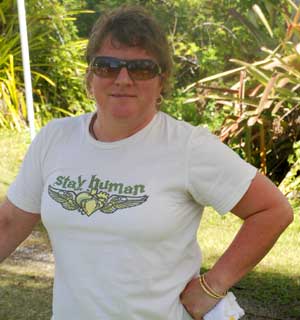
Chef Kira Volz, Creek 28

This bike ride/farm lunch was daring and unusual for SFM because it was held outdoors and was reasonably priced. Most of their activities are meals in upscale restaurants for hefty prices. It was good to see Slow Foodies get out from behind white linen tablecloths and ride around in fresh air and sunshine for a change. But wait! Most of the attendees were participants of spinning classes at Equinox gym, not just the usual Foodies. (Donna Reno explained that they got permission to hold an olive oil tasting at Equinox, using it “to reach out to the biking and fitness biking communities.”)

A few CSA members were also in the mix. Janet  and Larry Peterson said the ride was an great opportunity to visit farms that were “pretty impressive” that they otherwise wouldn’t be able to see. Janet explained she was inspired to seek out local food and joined the CSA after a group at her church, Riviera Presbyterian, read Barbara Kingsolver’s book, Animal, Vegetable, Miracle. As she looked around Bee Heaven, she said, “If this kind of farming could take hold, it would be a good local food source and would stop urban sprawl.”

Lining up for seconds (and thirds) at Chef Kira Volz’s tent.

The printed menu had a clear, comprehensive definition of locavore.

It is part of the concept of local purchasing and local economies, a preference to buy locally produced goods and services. Those who prefer to eat locally grown/produced food sometimes call themselves locavores or localvores.

So, let’s look at the food:

Key West Shrimp Fattoush (Kira Volz), Hand Rubbed BBQ Ribs & Herb Tossed Home Fries (Kris Wessel), Who Do You Do Voodoo Chicken (Kris Wessel), Andean Restorative Salad (Kira Volz), Aunt Rita’s Key Lime Pie (Kris Wessel’s aunt), Strawberry Shortcake Bar (The French Pastry Chef), Going Bananas Bread Pudding (Kira Volz) washed down with limeade (Robert is Here), water, beer and wine.

Yet not all the food on the menu was local. (Expected to see tilapia, since Fancy Koi 2 raises those fish.) When I asked Donna Reno about it, she did admit that “the freeze affected availability and we didn’t meet our goals 100 per cent in terms of local.” She pointed out that the tomatoes were from Teena’s, the shrimp was from Key West, and bananas in the bread pudding and strawberries were local. She even pointed out that the organic beer, Monk in the Trunk, was from Jupiter FL. (A closer reading of the fine print on its label revealed that it was actually brewed in South Carolina.)

Three of the four growers featured in the tour. L to R: Margie – Bee Heaven, Don – Going Bananas!, Sharon – Fancy Koi 2. Photo by Nick Pikarsky.

Wait a minute! Call it Locavore Lunch but only a smattering of ingredients is actually locally sourced? My head is spinning! A completely local meal is not that hard to do. It’s been done before. Last year’s End of Summer Brunch over at Robert Barnum’s Possum Trot was all local food and drink. And Farmer Margie held a Mothers Day Brunch last year that was completely locally sourced except for maybe salt and pepper.

Donna was pleased with the event. “We’ll do it again, maybe next spring,” she told me. Good idea! That’s plenty of time for SFM leadership to scope out farms and groves and farmers markets to see what’s growing — locally and in season — and create a menu from local food, rather than build a menu and then look for some local food to fit. I’m certain that Chef Kris Wessel and Chef Kira Volz could have come up with delicious, creative dishes based on an all-local, post-freeze list of ingredients, had they been given that challenge. It would be fantastic if the group held more events that celebrated local, regional and artisanal food, as per their own principles and mission statements.
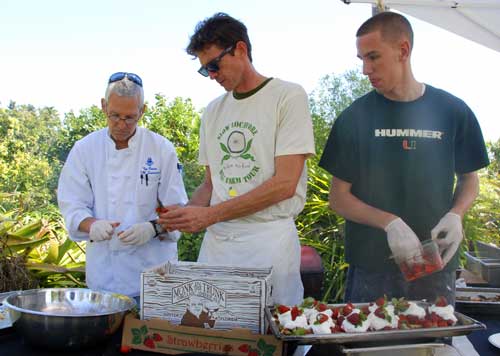
Chef Tim Rowan of Deering Bay stopped by to help out Chef Kris Wessel of Red Light. Filling in as his prep chef is his second cousin Mark Parkerson.

Locavore shouldn’t be just a foodie fad — it’s not about worshipping trendy ingredients or rock star chefs. The point is to connect the food on your plate with this place and these growers. They work very hard to feed us city folk, and have a tough time paying their bills. “The only way a small grower can survive is to sell directly to the public,” Teena Borek told me. Hopefully that connection or epiphany happened with participants on the bike ride. Our grandparents knew what food was about. It was so obvious to them but we’ve forgotten how. No farms, no food, no chefs, no locavores. It’s just that simple.

(For another take on the bike ride and lunch, check out this recent post on Mango & Lime.)

Strawberry shortcakes for dessert!

Read Full Post »

Hope springs forth

The heirloom tomatoes available at market are winding down. They will be very scarce for weeks, assuming there won’t be patchy frost tonight, which still has potential to damage weakened plants.

Weeks later, you can still see signs of freeze damage at Bee Heaven Farm — and signs of recovery.

Tomatoes blooming after the freeze

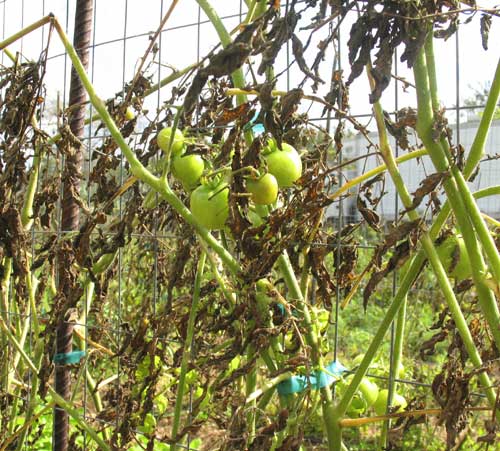
The heirloom tomatoes vary in damage. Some varieties are all but destroyed by the freeze. The ones with blackened, shriveled leaves are not coming back. A few varieties are re-growing leaves and still have fruit ripening on the vines. And some look positively fluffy with their green leaves and are blooming again. The quantity and quality of the second bloom tomatoes remains to be seen. If they’re just as nice as the ones we’ve had so far, expect more heirloom tomatoes at market, just not right away, perhaps in a couple months. “Hope springs forth!” Margie said.

Purple Pod heirloom beans blooming after the freeze.

The heirloom beans have been all but decimated. One variety with purplish stems, known as Purple Pod, re-grew leaves and looks a lot better than a week or two after the freeze. It’s even putting out a few, shy blooms. The question is, will those blooms set and grow beans. And if they grow, how big and what shape are they going to be in? All of that is doubtful because they have a big problem with mildew. “The leaves are all frozen out and the plants are more vulnerable to everything,” Margie explained to me.

This is the lasting, almost hidden freeze damage that takes weeks to emerge. The Gold of Bacau beans aren’t coming back very well at all, and the few pods that have grown since the freeze are small and misshapen, nothing you would want to buy at the market or find in your CSA box.

Freeze damaged Gold of Bacau beans.

Read Full Post »

Mystery of the bees

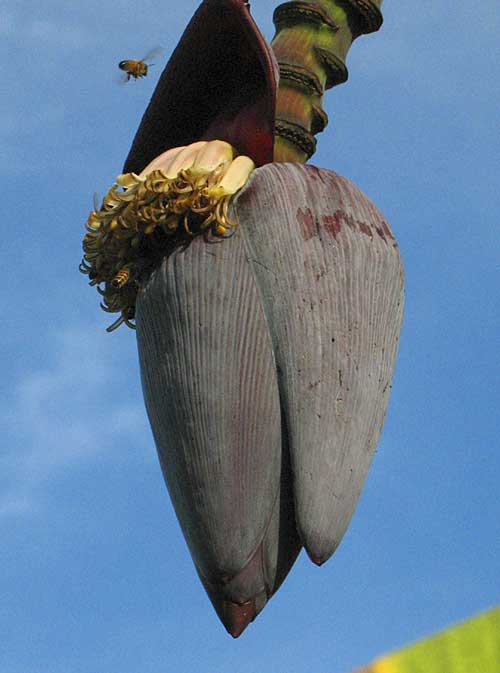
Bees like bananas. Taken in happier times a couple months ago.

About half the honey bees are dead at Bee Heaven Farm, according to Miguel Bode, the beekeeper. He checked his hives after the last freeze and again this past weekend. The bottom of the hives had a layer about an inch thick of dead bees, and there were plenty more dead bees outside the hive entrances. And hives he keeps down the road at Paradise Farms also suffered casualties, but not quite as many, and bees there were more active.

Without a doubt, Miguel suspects pesticide spraying [in the mass casualties in one hive]. No telling where it occurred, because a bee can range as far as a mile from the hive in its search for food. When a bee brings back contaminated pollen to the hive, it will get distributed to the other bees, which will also sicken and die.

Miguel was surprised by the huge quantity of deaths because the hives were in decent shape before the cold weather rolled in. The bulk of his hives, which he keeps in the suburbs, remain in good condition.

It’s not likely that it was the cold that caused the mass die off. Miguel pointed out that bees which live Up North make it through much harsher winters than ours without significant problems. Bees can survive cold weather. When the temperatures drop, the bees inside the hive cluster into a ball, and vibrate the muscles of their wings to generate heat to stay warm. The temperature inside the cluster is about 90 degrees. The bees rotate from the warm inside of the cluster to the cooler outside, so that all can get warm. [But on the other hand, if the bees didn’t have enough food to make it though the abnormally long cold spell, they could have very well been affected by the cold, Miguel told me on Jan 30th.]

So, because the bees have been diminished, it doesn’t look like there will be much avocado honey this next season. The trees are putting out buds and will start blooming in a couple weeks. By the time the next generation of bees is old enough to go out and forage (about six weeks from now), the blooming season might be past its peak. There’s also a chance there may not be as many avocados this summer. [All of this is might and maybe, because mother nature doesn’t work on an exact schedule. A lot of variables are involved.]

This incident is all the more reason why Miguel is searching for that special yard somewhere in the suburbs where he can move his bees. (There isn’t as much mass spraying of pesticides there.) If you have a big yard and love bees and honey, contact him at beemyhoneymiami(at)yahoo.com for the details of the deal.

Read Full Post »

Freeze damaged heirloom beans, two weeks after the last freeze. Bee Heaven Farm, Jan. 22.

A week later, the freeze damage appears even worse at Bee Heaven Farm. Leaves that were brown last week look almost black and withered. Heirloom pole beans are totally fried. The last of the Gold of Bacau beans sold at market last Sunday. Margie says she’ll replant beans, but it’s going to be a couple months before you see them at market again.

Heirloom tomatoes after the last freeze. Bee Heaven Farm, Jan. 22.

Most of the heirloom tomatoes look pretty rough, too. The leaves of some varieties are completely black and shriveled, and other varieties look just fine. Cold resistance clearly depends on the variety. Most tomato plants dropped green, unripe fruit because of the cold, but enough stayed on the vines for a moderate, hopeful harvest. Irrigation and light fertilizing continues, and it’s wait and see as to how much can be salvaged. “As long as the plant has some green leaves, there’s hope for recovery,” Margie said. She’s also going to replant, but it’ll be a while before there will be more tomatoes at market.

Avocado buds forming two weeks after the freeze.

Some avocado trees got their leaf tips burned by the freeze, but otherwise don’t seem the worse for the wear. They started putting out buds last week. Ideally, the buds will turn into blooms, which when pollinated, will turn into fruit. But time will tell. The freeze could still have a hidden impact on the trees that may show up months later. The blossoms may not form properly, or not set fruit, or drop fruit before it matures. Anything can go wrong, all because of so much harsh cold weather.

Over at Worden Farm, they were affected by the freeze but they are bouncing back, Eva Worden told me. It was very cold for quite a while, with 23 degrees at ground level at the coldest. They had freezing cold weather for 10 days to two weeks, and that abnormally long stretch of cold weather was “definitely record breaking,” according to Eva. In very cold weather, seeds don’t germinate, and plants don’t grow. “They just kinda hang out,” as Eva put it, and that delay pushes back the harvest schedule.

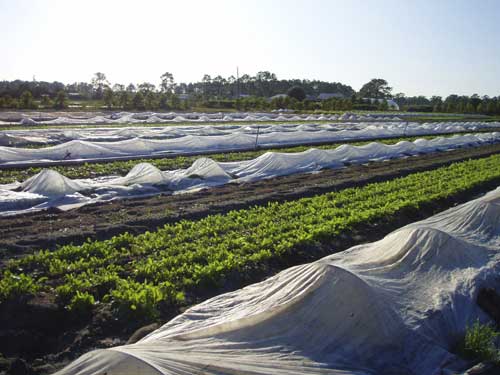
Crops protected by floating row cover. Courtesy of Worden Farm.

Crops were protected with floating row cover. The Wordens and their crew did plant vegetables planning for a freeze to happen (as they get at least one every winter up in Punta Gorda), choosing those that would be minimally affected. Collards, carrots and beets didn’t die from the cold. In fact they will be kissed with sweetness. The cold causes those plants to get a higher sugar concentration. But the warm weather crops — tomatoes, peppers, eggplant and basil — were destroyed by the extreme cold. The leafy potato tops also died from the cold, and now they are harvesting baby potatoes fast and furious. Worden Farm will have enough for us in Miami in a couple weeks, as things get replanted and start to mature. We might get mostly greens and radishes from them, and maybe those small potatoes.

Read Full Post »

Have you thawed out yet? We had two weeks of record-breaking cold temperatures this month. It seemed each night a new low was recorded, and the cold went on for the longest stretch anyone could remember. “I’ve been down here for 40 years and I’ve never seen a cold snap like this,” marveled Cliff Middleton of Three Sisters Farm. And this long cold spell did break yet another record. Beginning January 2nd, we had 12 days in a row of temps dropping below 50 degrees, and came one day short of breaking the record of 13 days straight, set in Miami in Jan/Feb 1940, according to the National Weather Service.

The weekend of Saturday January 9th brought historic lows that were well below freezing. And by the wee hours of Monday January 11, hopes of any chance of crops escaping harm died as the temperature dropped into the high to mid 20s and stayed there for several hours. That was long enough to destroy cold-sensitive plants.

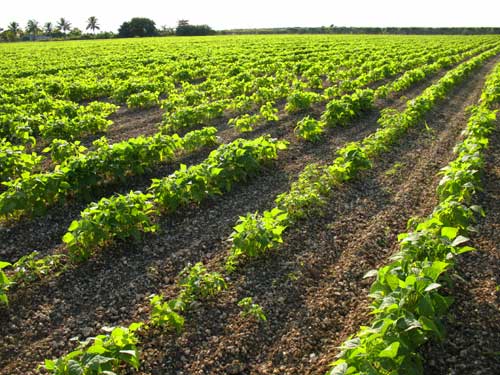
Green bean field, Homestead Organics. Taken on Friday Jan. 8, before the last freeze.

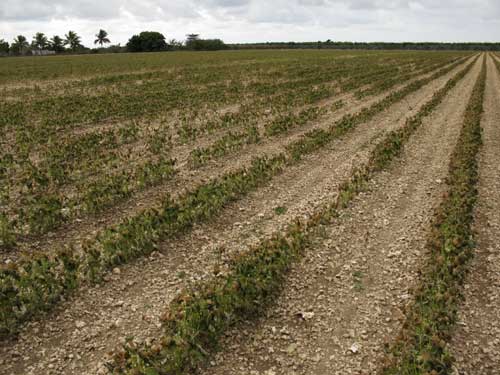
Same green bean field, Homestead Organics. Taken on Friday Jan. 15, after the freeze.

The growers of Redland Organics got hit hard by the freeze this past week. Dan Howard of Homestead Organics had five fields planted with green beans. He watered the crops for days to protect them from the cold. But early Monday Jan. 11th, the temperature fell as low as 28 degrees on his front porch, with the coldest temps around 4 – 5 a.m., and it stayed below freezing until dawn.There was no fighting it. All 22 acres of green beans were damaged.

“Farmers gamble with the weather and are risk takers,” Dan said. Sometimes they gamble and lose. Because of the freeze, Dan says he lost $100K in sales. He has crop insurance, but since beans are not a specialty crop, insurance will only pay for seed and fertilizer and not much more. He’s all ready to replant, though. “Don’t have much of a choice otherwise,” he laughed. The Friday before the last freeze, he cultivated one field, preparing the soil for planting. And just the other day he loaded his truck with bean seeds and was ready to start over again.

Cliff Middleton lost all of his above ground crops, but not as many root crops. He fought the cold by “basically saturating the land with water,” he explained. “But that many hours of cold will kill plants. Callaloo has a very low tolerance for cold and is all burned. The results of the damage will last for a year. All the fruit trees will react to this.”

Robert Barnum of Possum Trot got patchy frost in his grove, and is concerned about long-term damage to his sensitive tropical trees. He grows 300 types, and caimito, anona and guanabana are the most cold sensitive. “The cold will kill cambium, the growing layer between the bark and the wood,” Robert explained. Branches or a trunk less than four inches in diameter will die more easily, depending on how cold the temperature falls and for how long. “A tree looks OK for a while, and then the damage shows up later. Some damage takes months to show up. Lots of things can show up. Buds might not form, or form small, or not set fruit and drop off,” he said. Sounds like there might not be as much fruit this summer, but time will tell.

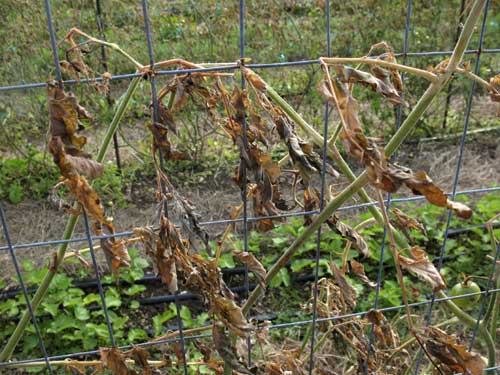
Heirloom pole beans damaged by the cold. Bee Heaven Farm, Jan. 15.

It was simply too cold for too long, and pole beans and heirloom tomatoes at Bee Heaven Farm didn’t make it. Margie Pikarsky and her crew covered them up with Reemay (floating row cover) for two weeks. The plants made it though the first freeze right after New Year’s, and at first it seemed like they would survive the cold. But Reemay wasn’t effective on that fateful Monday morning. Pole beans, including the dappled Dragons Tongue beans blogged about on Mango & Lime are pretty much all dead. Leaves are burned and withered, and it’s uncertain if the plants will have enough energy to grow new leaves and blooms. The heirloom tomatoes are also pretty much destroyed. Don’t expect too many heirloom tomatoes this season at the farmers market. Read more about the freeze at the Bee Heaven Farm blog. Not all was lost, though. I saw carrots, radishes, kohlrabi and dill looking no worse for the wear.

Heirloom tomato plant completely destroyed by the cold. Bee Heaven Farm, Jan. 15.

Gabriele Marewski of Paradise Farms covered her raised vegetable beds with Reemay and her vegetables survived, along with the microgreens. But the edible flowers that she is known for did not. “They were vining too much and it was almost impossible to cover them all,” she explained. “The flowers are a total loss.” Crop insurance doesn’t cover edible flowers or microgreens, and considers them “experimental,” and the quantities she grows are too small to get coverage. Oyster mushrooms slowed down because of the lower humidity, but Gabriele expects a big flush of growth as it warms up, and plenty of mushrooms in time for market this Saturday.

[Note: Heard that Worden Farm had major losses and is replanting fast and furious. They had much colder temps for much longer up in Punta Gorda. Hope to get an interview with them soon.]

So, for the next month or two, pickings might be slim when it comes to local produce. You just may not find some things (like beans) that you got earlier in the season, at least not for a while; and other things (like heirloom tomatoes) may not be available at all or in very limited quantities. Despite that, do make it a point to support your local growers when you shop at farmers markets and grocery stores. They need your help to bounce back from their losses.

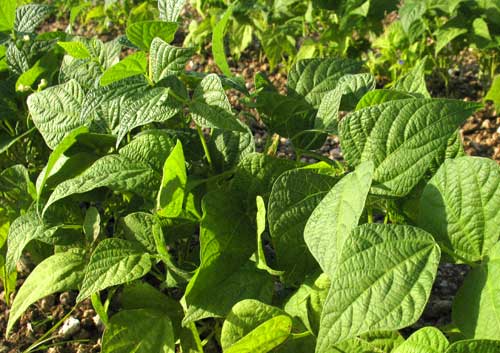
Healthy green bean plant, before the freeze.

Damaged green bean plant, after the freeze.

Read Full Post »

« Newer Posts - Older Posts »