Feeds:
Posts
Comments

Posts Tagged ‘chickens’

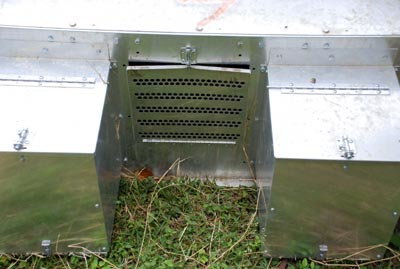
Feral dogs worked open this latch and managed to get inside the chicken tractor.

Last week Farmer Margie told me that feral dogs came on her property again and killed several chickens. Margie had heard her own dogs barking in the middle of the night, got up and went to investigate. She discovered that a chicken tractor closest to the road had been broken into by feral dogs. Four hens lay dead. The big golden rooster known as Fancypants (Margie’s daughter Rachel named him) was injured but survived.

There have been several chicken kills at Bee Heaven over the last three or four years due to feral dogs. They come at night through gaps in the fence, looking for something to eat — or kill. They smell chickens and are big and strong enough to somehow break in to the tractors, the portable metal coops that the chickens live in.  Several dozen chickens so far have been killed by feral dogs.
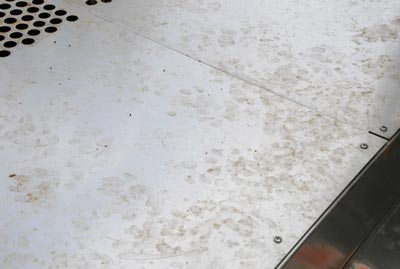
Bloody pawprints on the top of the chicken tractor.

The worst killing happened on January 16, 2009. Two large dogs (you could tell by the bloody paw prints) broke in to three chicken tractors and decimated about two dozen birds. Feathers and blood and torn chicken parts lay scattered in the front yard. Margie lost good birds that night: Goliath (that was my name for him), the large gentle Cuckoo Maran rooster, and Henita, the little black hen with black shiny feathers.

Feral dogs are the biggest reason why egg production is way down for the second season. There just aren’t enough hens at Bee Heaven to meet the demand for eggs. And it takes some time for baby chicks to grow up and start laying.

Feral dogs are also a huge, ongoing problem in Redland. I’ve heard stories about dogs killing chickens at other farms. At least one dog was spotted with a chicken in its mouth. It got shot. End of problem? Not really.
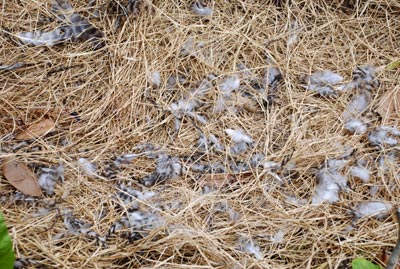
These feathers are all that’s left of a chicken killed by dogs.

The problem continues as long as people keep dumping their unwanted dogs in farm country. What are they thinking when they do that? That someone will magically take in and care for the now-discarded family member? Not likely, and dogs go feral and become hard to catch. They run in the night killing chickens and other animals to survive. Is this what the owners want for their once beloved pets?

Read Margie’s post Requiem for a rooster at Bee Heaven Farm’s blog.
Read Full Post »

Baby chicks: day 16

Sneaking a peek through a hole in the chicken tractor. Chicken food is in the red tray.

The little chicks are growing fast. On my next visit, they were sporting wing and tail feathers. They actually look like little birds now, and a lot less fluffy. They scurry around a lot, very quickly, almost too fast to be photographed without flash.They also still peep a lot, constantly.

Hurrying back to the sleeping box to hide.

When my camera, that glass-eyed cyclops, drops in to visit them in their tractor, they promptly hurry to the relative safety of their sleeping box. They are getting “hoppy” and can jump up to the top of their large water bottle. Have to be careful when I open the lid to the tractor, so a chick doesn’t hop right out and scurry away.

A bird in the hand…

Baby chicks need a lot of petting to get them socialized. That’s a fun job, which I like to do.

Read Full Post »

Baby chicks: day 9

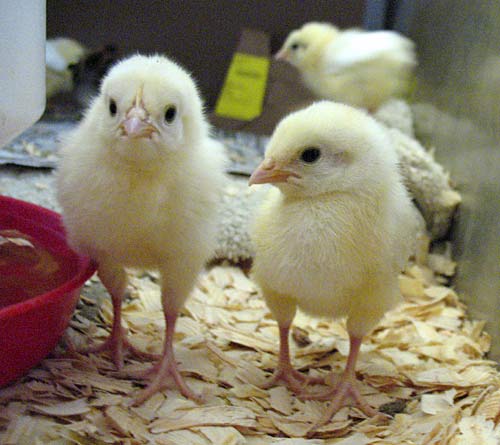
Leghorn chicks checking out the camera

These little birds were hatched on Nov. 10th, and are 9 days old in these pictures. At this stage they are little balls of fluff. The yellow ones will grow up to be Leghorn hens (hopefully), and there are a couple brown ones in the mix too. One is a Rhode Island Red, and the other is a mystery breed selected by the hatchery.

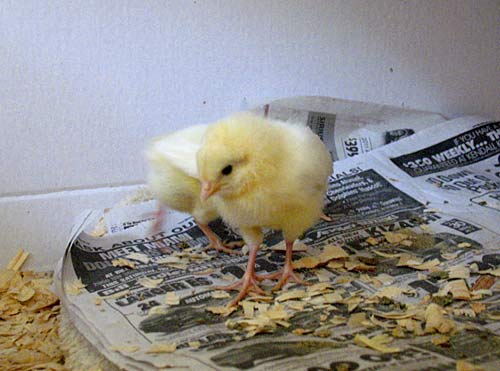
At 9 days, chicks are already pecking and scratching.

They live in a modified half chicken tractor set in the carport of the farmhouse. Their bedding is wood chips, newspaper and old carpet. They get fresh feed and water every day. At night, Farmer Margie tucks them into a cardboard box, where they keep each other warm through the night. She brings the box with chicks inside the house at night, to keep them from getting chilled from the cold.

Peep peep peep peep!

What you don’t hear in these pictures is the constant peeping as they talk to each other. Wonder what a baby chick has to say to the others? And so much peeping, too!

Read Full Post »

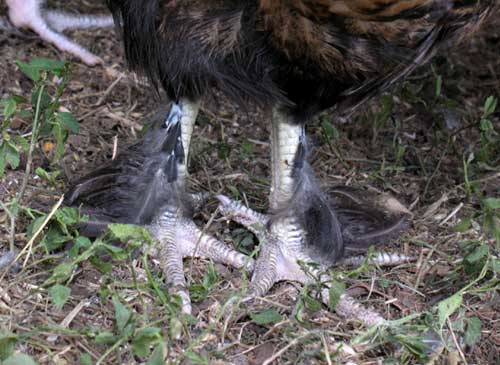
Fluffy chicken feet

Fluffy chicken feet

Fluffy chicken feet

These feet belong to a young hen which is most likely a cross between Auracana and Buff Cochin. The Auracana chickens have lovely tan feathers edged in black, and the Buff Cochin rooster gave her his feathery, fluffy feet. Most likely this young lady is laying blue and green eggs, another Auracana trait. If you’ve been getting eggs this summer, some might have come from her.

Read Full Post »

« Newer Posts