Feeds:
Posts
Comments

Posts Tagged ‘Gabriele Marewski’

Oyster mushrooms have been a welcome addition to the CSA shares so far twice this season. They are grown at Paradise Farm, and are for sale on Saturdays at the Paradise tent at the Coral Gables Farmers Market, and also on Sundays at the Redland Organics tent at the Pinecrest Gardens Farmers Market. The following article was published in the Miami Herald on Thursday. Nancy Ancrum did a great job, couldn’t do better myself. Enjoy!

Homestead farmer, African scientist realize mushroom dreams

BY NANCY ANCRUM
nancrum@MiamiHerald.com

It was an e-mail that just screamed to be spiked. It came from an African country; it mentioned something about a “lottery;” it hinted that there was a wonderful, enriching opportunity to be had.But Homestead farmer Gabriele Marewski didn’t delete the message. She read it. It wasn’t a scam; it was the world working in mysterious ways.

“Those scam e-mails go right into the spam box. But this one had that first sentence that was intriguing,” Marewski says. “It said, ‘I won the lottery to come to the United States.’ The other ones say, ‘You won the lottery, give us an account number.’ ”

She went from intrigued to hooked when she got to this line: “I can show you how to grow oyster mushrooms.”

“This was too bizarre; so bizarre I had to respond.”

Read the rest of the article here:
http://www.miamiherald.com/living/top-stories/story/1448132.html

Read Full Post »

Valentine’s Day, February 14th features LOVIN IN THE GARDEN

Join us for dining, music and dancing under the stars

Come join us once again for the most romantic day of the year by spending an enchanted evening in paradise! LOVIN IN THE GARDEN will tempt you and your lover’s senses throughout the evening as you stroll in the beautiful tropical gardens; recline together under the stars with a glass of delicious wine; indulge in our aphrodisiac-inspired menu kissed with organic herbs; paired with equally sensual wines selected by Sommelier Shari Gherman.

Private chefs and brother/sister team Christopher Siragusa and Mary Siragusa will delight you with their farm fresh tropical cuisine with a specialty in edible flowers. Love songs fill the air to inspire passion and excitement, it will stir your senses, encourage you and your lover’s desire to be close… you’ll be dancing in the moonlight. LOVIN IN THE GARDEN is the sure way to make this Valentine’s Day the one you will always remember.

Please visit www.paradisefarms.net to make reservations.

Read Full Post »

Have you thawed out yet? We had two weeks of record-breaking cold temperatures this month. It seemed each night a new low was recorded, and the cold went on for the longest stretch anyone could remember. “I’ve been down here for 40 years and I’ve never seen a cold snap like this,” marveled Cliff Middleton of Three Sisters Farm. And this long cold spell did break yet another record. Beginning January 2nd, we had 12 days in a row of temps dropping below 50 degrees, and came one day short of breaking the record of 13 days straight, set in Miami in Jan/Feb 1940, according to the National Weather Service.

The weekend of Saturday January 9th brought historic lows that were well below freezing. And by the wee hours of Monday January 11, hopes of any chance of crops escaping harm died as the temperature dropped into the high to mid 20s and stayed there for several hours. That was long enough to destroy cold-sensitive plants.

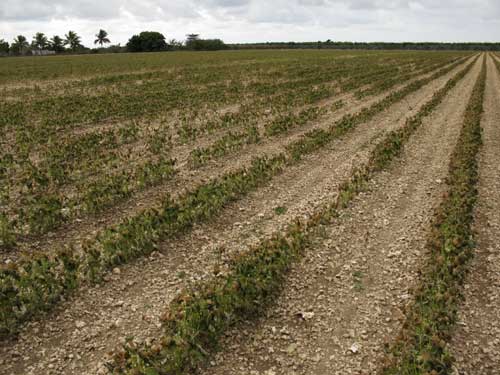
Green bean field, Homestead Organics. Taken on Friday Jan. 8, before the last freeze.

Same green bean field, Homestead Organics. Taken on Friday Jan. 15, after the freeze.

The growers of Redland Organics got hit hard by the freeze this past week. Dan Howard of Homestead Organics had five fields planted with green beans. He watered the crops for days to protect them from the cold. But early Monday Jan. 11th, the temperature fell as low as 28 degrees on his front porch, with the coldest temps around 4 – 5 a.m., and it stayed below freezing until dawn.There was no fighting it. All 22 acres of green beans were damaged.

“Farmers gamble with the weather and are risk takers,” Dan said. Sometimes they gamble and lose. Because of the freeze, Dan says he lost $100K in sales. He has crop insurance, but since beans are not a specialty crop, insurance will only pay for seed and fertilizer and not much more. He’s all ready to replant, though. “Don’t have much of a choice otherwise,” he laughed. The Friday before the last freeze, he cultivated one field, preparing the soil for planting. And just the other day he loaded his truck with bean seeds and was ready to start over again.

Cliff Middleton lost all of his above ground crops, but not as many root crops. He fought the cold by “basically saturating the land with water,” he explained. “But that many hours of cold will kill plants. Callaloo has a very low tolerance for cold and is all burned. The results of the damage will last for a year. All the fruit trees will react to this.”

Robert Barnum of Possum Trot got patchy frost in his grove, and is concerned about long-term damage to his sensitive tropical trees. He grows 300 types, and caimito, anona and guanabana are the most cold sensitive. “The cold will kill cambium, the growing layer between the bark and the wood,” Robert explained. Branches or a trunk less than four inches in diameter will die more easily, depending on how cold the temperature falls and for how long. “A tree looks OK for a while, and then the damage shows up later. Some damage takes months to show up. Lots of things can show up. Buds might not form, or form small, or not set fruit and drop off,” he said. Sounds like there might not be as much fruit this summer, but time will tell.
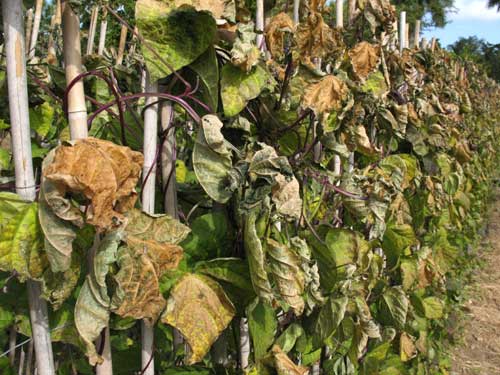
Heirloom pole beans damaged by the cold. Bee Heaven Farm, Jan. 15.

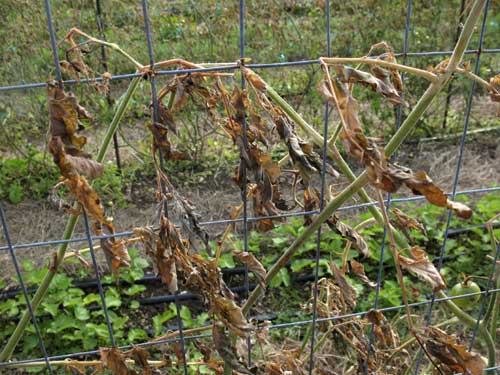
It was simply too cold for too long, and pole beans and heirloom tomatoes at Bee Heaven Farm didn’t make it. Margie Pikarsky and her crew covered them up with Reemay (floating row cover) for two weeks. The plants made it though the first freeze right after New Year’s, and at first it seemed like they would survive the cold. But Reemay wasn’t effective on that fateful Monday morning. Pole beans, including the dappled Dragons Tongue beans blogged about on Mango & Lime are pretty much all dead. Leaves are burned and withered, and it’s uncertain if the plants will have enough energy to grow new leaves and blooms. The heirloom tomatoes are also pretty much destroyed. Don’t expect too many heirloom tomatoes this season at the farmers market. Read more about the freeze at the Bee Heaven Farm blog. Not all was lost, though. I saw carrots, radishes, kohlrabi and dill looking no worse for the wear.

Heirloom tomato plant completely destroyed by the cold. Bee Heaven Farm, Jan. 15.

Gabriele Marewski of Paradise Farms covered her raised vegetable beds with Reemay and her vegetables survived, along with the microgreens. But the edible flowers that she is known for did not. “They were vining too much and it was almost impossible to cover them all,” she explained. “The flowers are a total loss.” Crop insurance doesn’t cover edible flowers or microgreens, and considers them “experimental,” and the quantities she grows are too small to get coverage. Oyster mushrooms slowed down because of the lower humidity, but Gabriele expects a big flush of growth as it warms up, and plenty of mushrooms in time for market this Saturday.

[Note: Heard that Worden Farm had major losses and is replanting fast and furious. They had much colder temps for much longer up in Punta Gorda. Hope to get an interview with them soon.]

So, for the next month or two, pickings might be slim when it comes to local produce. You just may not find some things (like beans) that you got earlier in the season, at least not for a while; and other things (like heirloom tomatoes) may not be available at all or in very limited quantities. Despite that, do make it a point to support your local growers when you shop at farmers markets and grocery stores. They need your help to bounce back from their losses.

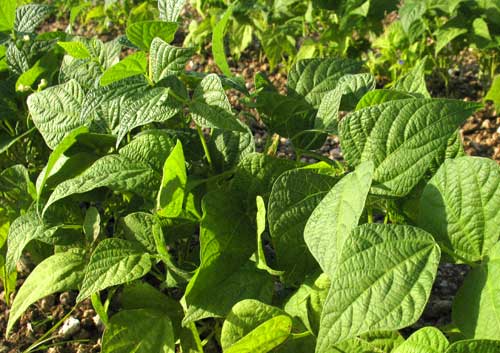
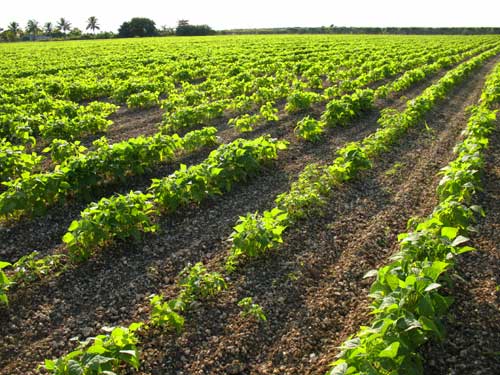
Healthy green bean plant, before the freeze.
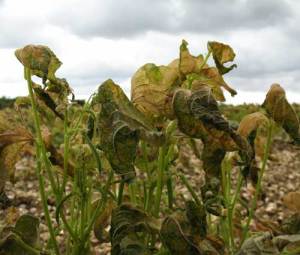
Damaged green bean plant, after the freeze.

Read Full Post »
BREAKING NEWS! Due to unforeseen circumstances, Paradise Farms will not attend the Gables Market this Saturday. However, they do intend to be at market on the following Saturday, Jan. 23rd.

Paradise Farms will be at the Coral Gables Farmers Market beginning this Saturday, January 16th. Farmer Gabriele Marewski says her farm has survived the cold winter blast and she will have carrots, peppers, baby greens, herbs and those fabulous oyster mushrooms for sale.

The Gables market, now in its nineteenth year, takes place every Saturday 8 am to 1 pm, running from January 16 to March 27. It’s located in downtown Coral Gables, in front of Coral Gables City Hall at the intersection of LeJeune Road and Biltmore Way, next to Miracle Mile.

For more information, contact the Economic Sustainability Department at 305-460-5311 or click here.

Read Full Post »

Thank farmers

Today, Americans will take time to sit down and share a Thanksgiving meal with family and friends. Now, more than ever, I am thankful for those who provided the Thanksgiving meal.

I am thankful to live in the United States where the average consumers spend about 10 percent of their disposable income on food, compared to those in India who spend more than 50 percent. According to the American Farm Bureau Federation, menu items for a classic Thanksgiving dinner dropped 4 percent in price this year.

I am thankful that I have the opportunity to serve the people who grow our food. If you bought fresh pole beans for Thanksgiving dinner, then family farmers Larry and Mark Dunagan grew them with care in Redland. If you’re enjoying squash, then family farmers such as Arturo DeLeon, Angela DelliVeneri, Sal Finocchiaro, Vito Strano and Eric Torrese grew them with pride in South Dade.

Family farmers such as John Alger and Robbie Martens grew the super sweet corn in the fertile fields of the East Glade. The red tomatoes you’re enjoying were grown by family farmers such as Freddy Strano, Kern Carpenter and Ed Hagan. The green beans for your casserole were grown by family farmers such as Bruce Dunn, Leo Talarico and Dan Howard. There are so other many family farmers in Miami-Dade County who deserve our thanks for growing safe, affordable and abundant food.

I am thankful for the efforts of Donna Reno, Gabrielle Berryer and Hani Khouri, who are helping consumers reconnect with their food source through Slow Food. I am thankful for the work of Charles LaPradd of Miami-Dade County, who helped launch the Redland Raised regional marketing program at Publix Supermarkets last month. I am thankful for Gabrielle Marewski of Paradise Farms. She cultivates interest in local agriculture from chefs and foodies.

The South Dade farmer holds many titles — businessperson, steward of the environment, neighbor, community leader and grower. Taking seed, soil and water, this farmer produces not only a crop but an economic impact of $2.7 billion and provides jobs for about 20,000 people. Privately owned agricultural land provides wildlife habitat and is an aquifer recharge area. All the farmer asks for is the opportunity to make an honest living growing food for a hungry nation.

All of our farmers, large and small, deserve thanks every time we eat. We take many things for granted. America’s farmers should not be among them.

KATIE A. EDWARDS, executive director, Dade County Farm Bureau, Redland

published in Letters, the Miami Herald, Thursday, Nov. 26, 2009

Read Full Post »

« Newer Posts - Older Posts »