Feeds:
Posts
Comments

Posts Tagged ‘heirloom tomatoes’

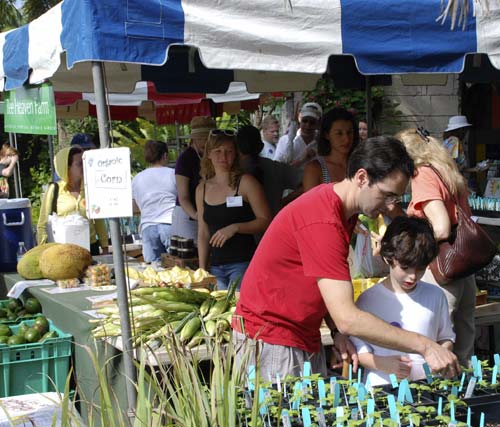
You can buy heirloom tomato starts raised at Bee Heaven Farm this weekend at the Edible Garden Festival held at Fairchild Tropical Botanic Garden.

Here’s a list of what kinds of starts will be available this weekend.

Heirloom tomato starts: Mexico, Speckled Roman, Zapotec Pleated, Homestead 24, Taxi, Tigerella, Black Prince, Amish Gold (an awesome cross between Sun Gold and Amish Paste), Black Cherry, Brown Berry, Black Plum, Black Zebra, Cream Sausage, Green Zebra, Red Zebra, Black Zebra,  Large Red, Lime Green Salad, Italian Heirloom, Federle, Opalka, Orange Banana, Super Snow White Cherry, Pink Ping Pong, Striped German, Tiny Tim, Koralik, Dr. Carolyn, Tommy Toe, Sun Gold, Creole, Healani, Tropic, Jaune Flamme, Matt’s Wild Cherry, Peacevine, Podland Pink, Podland Pink, Yellow Pear and many more!

Several varieties of tomato starts are registered in the Slow Food Ark of Taste. They are: Cherokee Purple, Radiator Charlie’s Mortgage Lifter, Sudduth’s Brandywine, Amish Paste, Aunt Ruby’s German Green, German Pink, Valencia and Red Fig. For a food to be listed in the Ark of Taste, “it has to have something exceptionally good, like flavor, or be in danger of disappearing because not enough people are growing it anymore,” Margie explained.

Veggie & Herb Starts: Arugula, Listada de Gandia Eggplant, Florida Highbush Eggplant, Garlic Chives, and more.

First harvests from Redland Organics growers:

From Redland farms: Certified organic Avocados, Carambola, curryleaf, fresh dried allspice berries, Thai basil, jakfruit, Rachel’s Eggs, local Wildflower Farm Honey and Tropical Fruit Honey.

From Punta Gorda partner Worden Farm: Cukes, squash, radishes, turnips, dandelions, bok choy, scallions, collards, dill & basil.

Prices for any combination of starts are $3 each, buy 5 get an extra one free (6 for $15). Buy 15 get 5 more free (20 for $45). All new this season, Redland Organics will have a credit card terminal and a SNAP terminal to make your shopping easier.

Also at the Festival, Margie is scheduled to give a talk about growing tomatoes called Beefsteaks are BORING! “Get away from beefsteaks, they take too long to grow. Be more adventurous!” she said. “Cherry tomato varieties do so much better down here.”

Several Redland Organics growers, members and others connected to R. O. will be giving presentations. Here’s the select lineup:

Saturday Oct. 23

1:30 p.m. Green Garden Enchiladas cooking demo by Adri Garcia, Greenrocks Foods, LLC.  Mise en Place, LLC., Cooking Tent
2:00 p.m.
Cheese making demonstration with Hani Khouri, Corbin A

Sunday Oct. 24

10:30 a.m. Drip Irrigation workshop, Muriel Olivares, next to Butterfly Garden
11:30 a.m. Tomato time! Beefsteaks are BORING!  Margie Pikarsky, Garden House
12:00 p.m. Urban Food Forests, Marion Yanez, Corbin A
12:30 p.m. How to Make a Raised Bed Garden, Urban Oasis Project, next to Butterfly Garden
2:30 p.m. Your Edible Organic Garden, Ben Thacker, Garden House

Edible Garden Festival
Saturday October 23 and Sunday October 24, 2010
9:30 am to 4:30 pm
Fairchild Tropical Botanical Garden
10901 Old Cutler Road Coral Gables, FL 33156
Phone: 305-667-1651

Read Full Post »


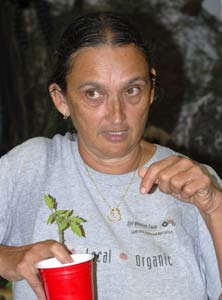
MargieEG

Margie tells all about heirloom tomatoes

notes from presentation by Margie Pikarsky given at Edible Gardens Festival

Heirlooms are varieties handed down from generation to generation of saving seeds. Heirlooms are open pollinated and stabilized cross. Hybrids are cross bred, so planting seeds may result in plants that look like parents and everything in between. With heirlooms, you get the same tomato every time, but with small variables. When you’re selecting generations, you end up with your own variety but adapted to where you are living. Heirlooms are hand me downs valued and treasured for flavor. Hundreds of varieties evolved this way. Some tomato varieties are documented back to the 1800s, brought here by families, or attained classic status. Most open pollinated tomatoes are indeterminate, which means there is no determined end to growth. The plant keeps going until something stops it. In this area, it’s a combination of heat, bugs and humidity.

Varieties. The closer to the wild types the better they do in the tropics. Tomatoes are said to have originated in Chiapas Mexico. They are small cherry types or tiny currant types. Really have to baby the big ones, beefsteak don’t have good pest resistance, have problems with birds and worms. The plant puts out a lot of energy to make 5 large fruit.

Everglades tomato is a small red cherry variety that was grown by Indians and pioneers. Can still find some, need to ask around. Very similar to Matt’s Wild Cherry, which is much like the wild tomato from Chiapas. Indians probably brought the same tomato, they are almost identical. Green tomatoes that grow well here – Green zebra, lime green salad (short plant), green grape, green gage (yellow outside, green seeds inside), Aunt Ruby’s German Green has had mixed results.

Seeds. Get seeds from Seeds of Change, TomatoFest, Seed Savers Exchange (also seed bank for members), Johnny’s Selected Seeds, Southern Exposure Seed Exchange (has varieties that are good for here).
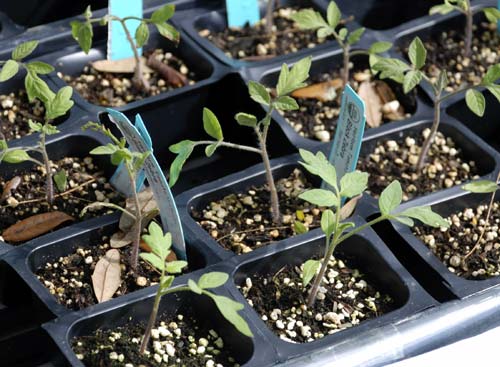
startsEG

Black zebra starts

Seeds or starts. Big box stores grow starts from a handful of hybrids that aren’t ideal for here, and may not do well here. Many heirlooms don’t have any real disease or pest resistance. When adapting to this area, save seeds from the plants that show the most resistance, and grow that variety for 3-4 years to decide keepers. It’s the weather, not the tomato. If it dies during the first year, try it MORE than one year before you decide a variety is a keeper, because growing conditions are often very different from one year to the
next.

Planting and Growing. Grow organic, that means no synthetic fertilizers or chemicals for pest control. Organic on the label doesn’t always mean that it’s acceptable for production. Look for OMRI (Organic Materials Research Institute) paid seal of approval, or NOP (National Organic Program) approval. That indicates that only natural things were used. Same with fertilizers and pest controls. Don’t confuse organic with safe. Read the caution label before applying it.

Can grow in ground or in a pot. In a pot, if the soil is moist to the touch, it’s NOT time to water yet! Pot is easy to mismanage. Tomatoes like to be even when getting water, and a little on the dry side. Better to grow in ground, in raised bed. In most parts of this area, soil is only 1/4 inch deep over solid rock, and needs to be amended with compost, cover crops, and mulch. Put compost onto the bed, let it sit, then turn it over before planting. If growing in pots, use any good potting soil.

When planting from seeds, plant twice the depth of the diameter of the seed. Will come up fast in 2 or 3 days. Can plant directly into the soil or into pots to make starts. Transplant start and plant deeper up to the first leaves. Plant will grow new roots and will be stronger. If the soil is shallow, plant the start sideways. Don’t overwater or the plant will get spoiled and expect a lot of water all the time and that will cause problems. The soil should be moist to touch. Tomatoes prefer to be on the dry side. Will start bearing in 2 months. Some early ones bear in Dec. By April leaves are dying from the bottom up, still producing on top, could go into May.

startsEG2

Learning about tomato plants

Tomatoes grow tall, need trellis support, at least five feet high, and plants grow over and off to the sides. Trellis – use square mesh wire 4×6 or 2×6, hold in place with rebar staked into the ground. Or make a big circle with compost on the inside and plants outside. To pinch side shoots or not — choice of more tomatoes only smaller, or less tomatoes and bigger. Prefer more fruit over bigger. Tied with jute rope or string (natural material) or weave stems through square 2×6 or 4×6 wire mesh as they grow.

Water from underneath, use drip tape on a timer so you don’t have to think about it. Watering overhead can help spread diseases. Wait to pick until after the dew dries, so as to not transfer disease. Pick just as fruit start to ripen, just start turning red and yellow, let them finish ripening on the table. Never refrigerate tomatoes, please! Tropical fruit lose flavor when refrigerated, and tomato is a tropical fruit.

For frost, cover with sheet if a few plants. User Reemay spun polyester material to cover rows. Provides minimal protection, need to attach somehow so it doesn’t blow away. (Plastic will burn plants, so do not use.) Remove after frost has gone. Can find in garden supply stores locally or online. It’s also known as spun polyester floating row cover.
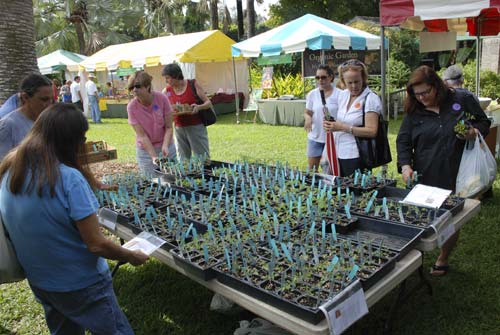
startsEG3

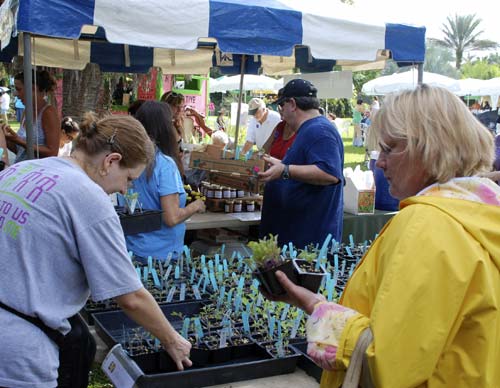
Picking out an assortment of tomato starts

Pest control. Use BT Bacillus Thuringensis for caterpillars. BT is a natural bacteria that makes the caterpillars sick so they stop eating and die, harmless for us. Can hand pick caterpillars if you just have a few plants. Organocide is a combination of sesame and fish oils, use it sparingly. Organocide will help with some diseases. Can do nothing about viruses – plants may or may not die right away. Some are tolerant of viruses, and will still bear tomatoes. To prevent mildew and mold, space plants 2-3 feet apart with good ventilation. Choose seeds that are disease resistant, especially those that resist mosaic virus. Margie doesn’t sterilize soil but other growers do. Nematodes, also known as root knot, are microorganisms that slowly damage plant roots. Start with sterile soil in pot. Use a special kind of marigolds known as nematocidal marigolds grown from seed, grow them intermingled with the tomatoes. Nematocidal marigolds are available from Seeds of Change.

To kill nematodes, solarize the soil with black plastic sheeting for 6-8 weeks before planting. If you use clear plastic, weed seeds will germinate because of the light. The heat kills all microorganisms. Sugar solution will work. Methyl bromide is used by commercial growers but it is very carcinogenic, and is getting phased out. The more organic matter in the soil, the better the plants can defend against nematodes, because there are more beneficial organisms in the soil. If you grow tomatoes in one place last season, grow them in a different spot (crop rotation). Don’t grow tomatoes in the place year after year. Rotate around different plant families each year.  For example, alternate legume-brassica-tomato. Don’t build up disease or pest problems.

Iguanas – build a giant cage around tomatoes to keep iguanas out. Don’t use chicken wire, they will flatten. Bird netting works while plants are young. Electrified fence?

Cover crop. Sunn hemp or mustard greens are good to suppress nematodes, let them go to seed and till under. Mustard has a lot of pest control properties, used to be more popular in the past. Mustards get large and start crowding tomatoes, have to keep picking.

Saving seeds. When harvesting, save the really nice ones before the end of the season. Squeeze out the seeds and dry them on wax paper, not paper towel. Seeds have a gel coating and to remove, soak them in a cup of water. When you start getting scum on top, pour through colander and rinse. If the gel coating is still on, put back in water and watch for a day or two, then strain again. The gel coating inhibits germination. Strain, rinse and dry on more wax paper. Wait until seeds are DRY. Humidity is the enemy, seeds will sprout and that’s no good. Use paper envelopes to store seeds, not plastic because it will trap moisture. Keep in air conditioning, or in jar with packet of desiccant.

startsEG4

Choosing tomato plants at the Edible Garden Festival

Read Full Post »
If you want to get heirloom tomato plants for your own garden, but didn’t make it to the Edible Garden Festival, you have another chance. Bee Heaven Farm will be at The Great Green Family Festival at the Fruit and Spice Park this coming weekend, Nov. 15-16. Farmer Margie will be selling more tomato starts (baby plants, seedlings) along with eggs, honey, lemongrass and who knows what else.

Late breaking news: here’s a list of the heirloom tomato varieties that will be available — Sun Gold, Jaune Flamme, Green Grape, Black Prince, Lollipop, Matt’s Wild Cherry, Black From Tula, Brown Berry, Brandywine OTV, and Homestead 24. Slow Food Ark of Taste varieties:  Cherokee Purple, Red Fig, Sheboygan, and Sudduth Strain Brandywine.

Also available, vegetable and herb starts:  Fordhook Chard, Genovese Basil, Mrs. Burn’s Lemon Basil, Thai Basil, Russian Red Kale, Lacinato (Dinosaur) Kale,  Garlic Chives, and Lemongrass.

According to the Redland Evening Herb Society’s web page, “The purpose of this event is to raise awareness of simple, green-living practices, products and services that local families can put into use in their homes and community.” (For some reason I was thinking of the Jolly Green Giant with his kids in tow… silly me… )

The Great Green Family Festival
November 14 & 15 from 10 am to 5 pm
Admission: $8 (Children under 11 are free)

Fruit and Spice Park
24801 S.W. 187th Avenue
Homestead, Florida 33031
305-247-5727

Read Full Post »

mike-digs-holes

Mike digging holes spaced two feet apart

So, what’s getting planted at Bee Heaven? Radishes, pole beans and lots and lots of heirloom tomatoes. Stopped by last Friday and saw that most of the prep work had been completed. Irrigation drip lines have been run, connected and leaks mended. Rebar stakes were driven into the ground, and rolls of wire mesh trellising stretched across as a support for the tomatoes. As the plants grow, they will get tied to or weaved into the mesh. When I arrived, Mike and Cassidy were digging holes spaced two feet apart for the tomato transplants.

planning

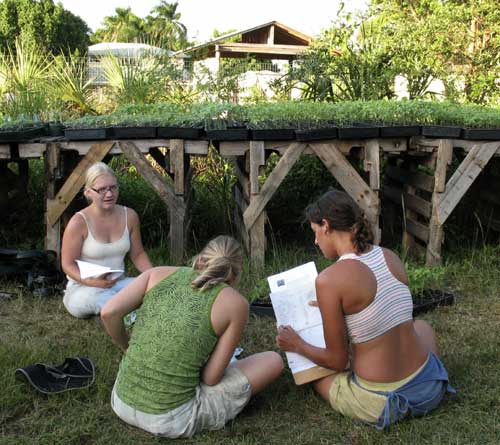
Jade, Devin and Muriel decide which tomato plants go where

Muriel and her crew Jade and Devin planned which varieties would get planted where. At least 30 varieties of heirloom tomatoes are grown on the farm. Chalk’s, Red Fig, Aunt Ruby’s, and Cherokee varieties are from Slow Food’s Ark of Taste list. Muriel explained that first she groups by types — cherry with cherry, or roma with roma. Then the colors are alternated — yellow, orange, green, red, pink, brown and black (actually very dark red) — instead of grouped together. This tomato rainbow, as Jade described, is carefully mapped out. When it’s time to pick, you know what you’re picking. Last season, several varieties of same-colored tomatoes had been planted next to each other, and it was difficult to tell them apart, especially when the fruit wasn’t completely ripe.

cassidy-plants

Cassidy plants a tomato start

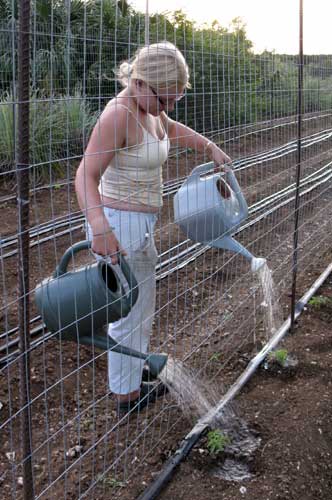
Margie watered the starts (seedlings or baby plants) while they were still in their little plastic pots. Once it was decided which varieties went where, Mike brought over flats of starts, and Cassidy set each plant into its hole and tamped the soil down. Jade followed with watering cans and gave each transplant a good drink. When transplanting tomatoes, remove the bottom leaf or two, and set the plant deeply into the ground, up to the cluster of of leaves. The stem will produce more roots, which results in a stronger plant.

Over in another bed, shunjiku radishes had put up their first leaves, and pole beans were sprouting. Drip irrigation lines bring measured amounts of water directly to the plants. Otherwise, not much is growing yet. Margie explained that she started planting late because rain delayed the bedding process. The CSA season is starting in a couple of weeks and I’m wondering what I’ll find in my box. Rumor has it the first share might have green beans from Homestead Organics and lemongrass from Bee Heaven, among other things. Maybe. Whatever is available, Margie said.

jade-watering

Jade watering tomato transplants

When you get local food from a farmer’s CSA, you get what’s growing at that time, during that part of the season. Each fruit, vegetable and herb takes a certain amount of time to grow and mature. Greens and radishes take a few weeks to grow, so you’ll see a lot of those at the beginning. Carrots, potatoes, beets and onions take longer, so you’ll see those toward the end of the season. The heirloom tomatoes will start appearing in December and January. That’s the experience of eating in season.

Read Full Post »

If you’re new to this area, you might be thinking ah, fall, time for harvest. Not! The growing seasons are upside down this far south. During the long, hot summer, most growers take a break. They start preparing the soil and planting in September and October. This time of year is their “spring.” The first crops are harvested around November, maybe earlier, depending on what you’re planting. So if you’ve had a garden when you lived in northern latitudes, and you want to have one here, you have to adjust for the location and climate and soil.

Farmer Margie was interviewed for a recently published article in the Fort Lauderdale Sun-Sentinel called How to plant a fall vegetable garden in South Florida. In it she discusses all-important soil preparation and how to grow heirloom tomatoes (one of her specialties). You can read the article online. (Hopefully they will keep it in the online archives for a while!)

Read Full Post »

« Newer Posts