Feeds:
Posts
Comments

Archive for the ‘animals’ Category

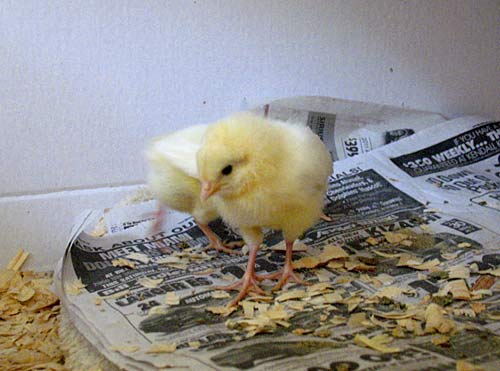
Baby chicks: day 9

Leghorn chicks checking out the camera

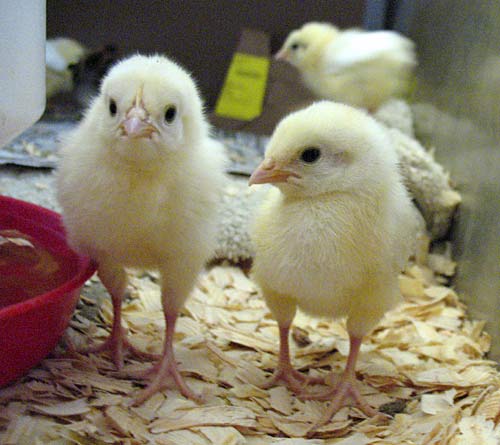
These little birds were hatched on Nov. 10th, and are 9 days old in these pictures. At this stage they are little balls of fluff. The yellow ones will grow up to be Leghorn hens (hopefully), and there are a couple brown ones in the mix too. One is a Rhode Island Red, and the other is a mystery breed selected by the hatchery.

At 9 days, chicks are already pecking and scratching.

They live in a modified half chicken tractor set in the carport of the farmhouse. Their bedding is wood chips, newspaper and old carpet. They get fresh feed and water every day. At night, Farmer Margie tucks them into a cardboard box, where they keep each other warm through the night. She brings the box with chicks inside the house at night, to keep them from getting chilled from the cold.

Peep peep peep peep!

What you don’t hear in these pictures is the constant peeping as they talk to each other. Wonder what a baby chick has to say to the others? And so much peeping, too!

Read Full Post »

Hello Redland Ramblers!


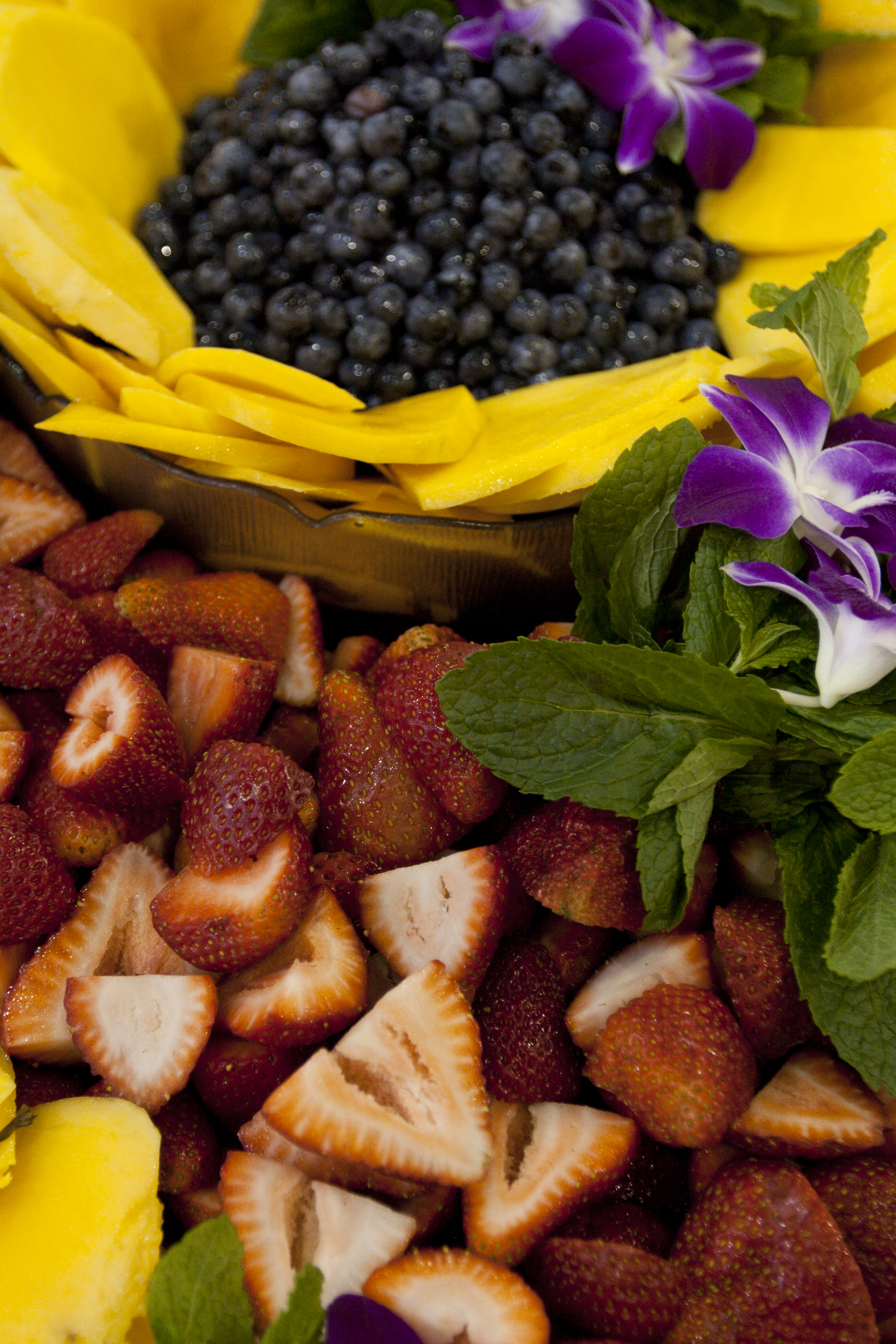
Mangos from Dr. Jonathan Crane at TREC, blueberries from Gail & Mike Waldron in Marion County.

Guest blogger Melissa Contreras here again. It’s been several weeks since the last post, and I apologize for that. Most of that time was spent waiting for photos from the official IFAS photographer, my one reliable source of photos from the conference. The poor overworked guy was traveling with several assignments to keep up with, and apologizes for not getting them out in a timely manner. We forgive him. Life’s too short. As promised, this post details the fabulous Florida local food lunches and the Conference workshops. If it’s not enough, well then I guess you’ll just have to attend next year’s conference!

There are omnivore and vegan options at every year’s conference, and both are amazing, featuring Florida food, real food: meat from pastured animals, vegetables and fruits from our fair state’s wide repertoire, milk from small herds of grass-roaming and grass-eating cows, and eggs from hens which get to freely scratch the soil  and eat a smorgasbord of bugs and assorted plants, expressing their “chicken-ness” under the Sunshine State’s skies.

Omnivores loved the delicious Gilchrist Brand Sausage from Jonnie Thompson of Ocala, who emphasizes humane animal treatment.

The fabulous  selections from this year’s menu:

Menu

These delicious dishes were made with food provided from small farms all over Florida. Our Redland farmers provided ‘Donnie’ avocado (Bee Heaven Farm), mangos (Dr. Jonathan Crane of TREC), and longans from Guara Ki farm. Summer in the Redlands  means tropical fruit, so we gave the rest of Florida a taste of the tropics.

Breakout sessions followed several tracks of interest: alternative energy, business and marketing, livestock, horticulture, organic and sustainable farming, policy and regulations. This conference is geared toward small farmers, and there were lots of them present looking for ways to make their farms better, branch out into new enterprises, market their products, and more. This year’s  included urban farmers and local food enthusiasts and activists, in addition to farmers.

Yummy Florida okra and blackeye peas from William Moore at Bluefield Organic Farm in Okeechobee.

The different tracks of interest included valuable lectures and workshops. Here’s a sampling of the workshops: Earth Wind and Fire: Renewable Energy Options; Agritourism; Aquaculture and Aquaponics; Minor Fruit Crops; The Excitement about Social Marketing – How it Can Help Your Operation; Pasture Management; Grass Fed Beef: How Do We Get There?; Poultry Management; Expanding Your Fruit Portfolio: Stone Fruit & Muscadine Grapes; Healthy Schools, Healthy Kids – Florida Farm to School Programs; High-Quality Compost for Organic and Conventional Farms; Advanced Disease Management for Organic Vegetables; Small Farm Friendly Approaches to Food Safety; Diversifying the Income Portfolio for Organic Products; and Direct Marketing Regulations (How to Get Products to Market Legally).  Next year’s workshops will be scheduled according to feedback from this year’s conference.
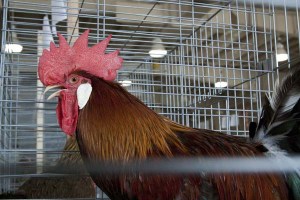
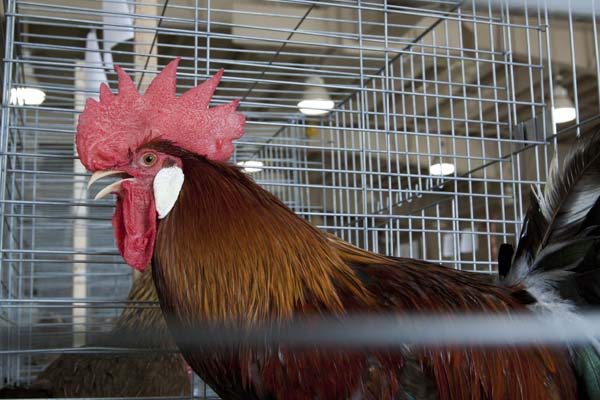
I am the handsomest rooster at the Small Farms Conference and I approve this message.

It was an information-packed weekend, with plenty of fun and networking.  Vendors in the exhibition hall sold everything from organic t-shirts with organic slogans on them, to fish emulsion fertilizer, to packaging for tomatoes and strawberries, to complete aquaponics systems, to worm poop fertilizer, to hydroponic growing systems, to Florida grass-fed beef, to info about becoming certified organic, and so much more.

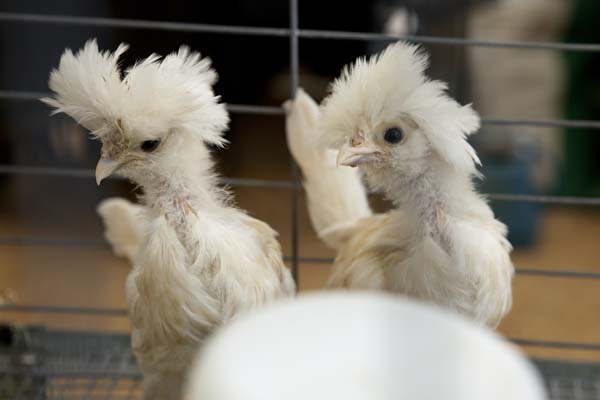
And who doesn’t love seeing the animals at the livestock exhibit? I spent an hour in there looking at and sometimes petting cows, llamas and alpacas with babies (below), and lots of interesting and unusual poultry breeds.
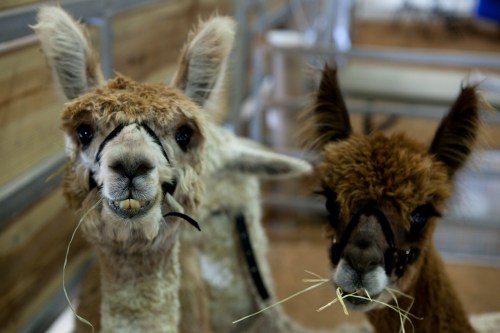
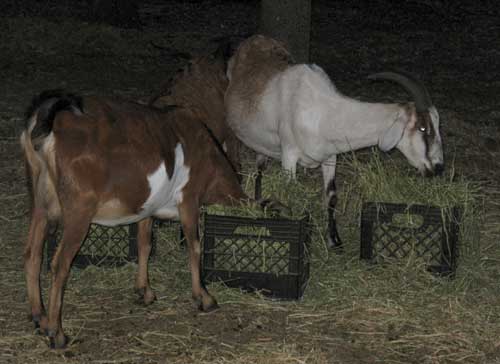
We love the local, organic hay at the Small Farms Conference--mmm...

Did I mention that this conference was next door to the national convention of Jehovah’s Witnesses? This made for heavy traffic on Sunday morning, with the JWs in their Sunday best. This explains why they did not come knocking on your door that weekend….(I stand corrected- it was a regional conference, thanks for finding that out Margie. There sure were lots of them… )

So, Marian will be back soon. I have to stop or someone might think I have taken her blog over. A coup de blogue, golpe de blogo, or other messy affair could be suspected, but no worries, she will be back to tell you more of the Redlands and its farmers. Thanks for letting me share…
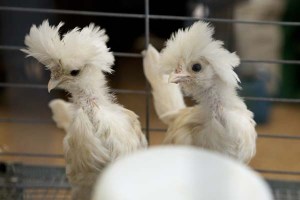
Gratuitous cuteness.

Read Full Post »
Summer has just begun and it’s already a scorcher! We’ve had above normal temperatures since April 26, according to the National Weather Service. Highs have been 90 degrees or above since May 30 (except for a slight dip to 88 on June 1). The heat index has been 100+ degrees most days. Last June was even hotter. Record temperatures were set on June 22, 2009 in Miami with a high of 98. Fort Lauderdale had a high of 100, tying an all time record. This summer feels hotter because temps have consistently been at 90 or above for 59 days and counting, while last summer temps were mostly in the high 80s with a few spikes in the 90s.

The last picture I took before getting chased off by a hot and cranky bee.

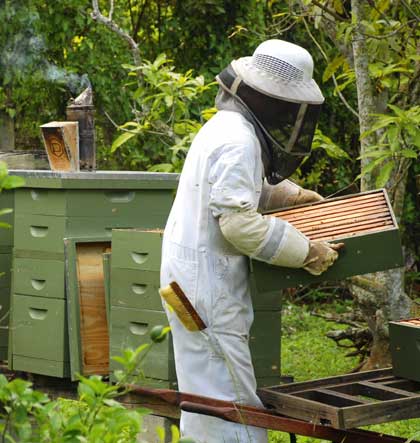
This crazy heat has an effect on livestock at Bee Heaven Farm. Chickens stand with their beaks open, panting, and hold their wings out a bit to their sides to try to cool off. Bees don’t like heat and get cranky. I passed by the hives when beekeeeper Miguel Bode was working with them a few weekends ago. One bee took offense to where I was standing, buzzed around my head, and chased me for a good distance. Lucky for me, I didn’t get stung but it felt close! Even the worms in the vermiculture bin have been suffering mightily. Instinctively they’ve dived down to the bottom of the bin, seeking cooler soil, but hit bottom instead. The Worm Guy (that’s what Margie calls him) advised chilling them down with frozen water bottles buried in the bin. Wigglers on the rocks, anyone?

I asked Farmer Margie what grows well in this kind of heat. “Weeds!” she exclaimed. Those weeds completely took over vegetable beds after Gleaning Day. Margie mowed them down, and now that she’s had two days without rain, she’s out on her tractor tilling the soil, preparing to plant cover crops.

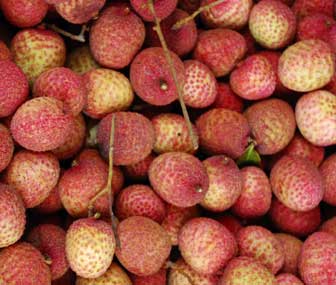
Some summer fruit is finally starting to get ready, but running a little behind schedule because of the freeze this winter. The extended period of super cold weather caused plants to go dormant for weeks. Lychees (Mauritus variety) are bearing late this year. Margie pointed out that last year, a bumper crop of lychees were harvested in late May. This year the harvest began in mid-June, and the quantity isn’t quite as much.

Mauritus lychees from last summer.

Another casualty of the cold are mango trees which were in bloom in January when the freeze hit. The long stretch of freezing temperatures damaged blossoms. Some fruit set and grew, but then aborted and fell off. I’ve seen trees that don’t have as much fruit, and if they do, they’re not as plentiful and not as big or developed.

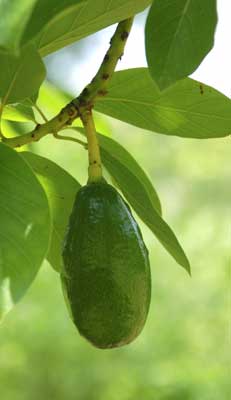
Half-grown Donnie avocado.

Avocado trees seemed to escape significant damage from the freeze in January. Branches are loaded with fruit several inches long, about the size of Haas avocados in the groceries. If you’re not familiar with Florida avocados, and you have a tree in your yard, don’t get confused and pick early! The varieties that grow here, especially the Donnies that Margie raises, get much much, much bigger than the Haas variety from California or Mexico. Last summer many Donnie avocados weighed in at 3 pounds apiece, and one giant weighed 4 pounds. Avocado picking will start in mid-July, also several weeks later than last summer.

Read Full Post »

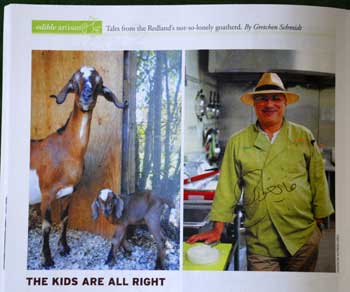
If you have been reading the local food blogs, then you knew goatherd-cheesemaker-chef Hani Khouri’s kids started arriving in March. No, not his children home for spring break. His kids, as in baby goats.

These kids have been been the focus of a small media frenzy. They must be the most famous goats in the area. Hani is very excited about it. Celebrity kids, imagine that!

Laurie Jennings introduces The Goat Herder.

Most recently, Jonathan Vigliotti did a story on Hani’s transition from businessman to goatherd, which aired on Local 10 WPLG on May 11. If you missed it, the story and video are posted online here.

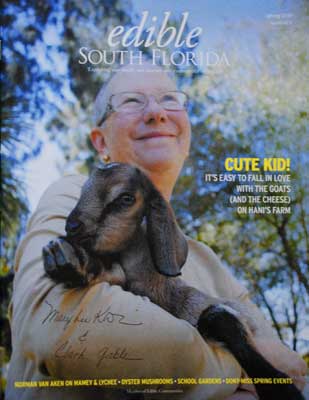
Mary Lee Khouri and Clark Gable

In their latest issue, Edible South Florida has a great cover picture of Hani’s wife Mary Lee, holding one of the kids, accompanying a nice article. The article is by Gretchen Schmidt and photos by Alfredo Añez. Look for the magazine this month at Whole Foods and other locations.

If you look carefully, Mary Lee and Hani autographed their pictures. Want my copy? Be the fifth (5th) person to comment on this post as to which is your favorite flavor of HANI’S ice cream and why, and the autographed magazine is yours! Only one comment per person allowed. Offer expires Thursday May 20 Saturday May 22 at midnight.

Back in March, two local food blogs have also posted about the goats. Genuine Kitchen featured the pregnant does, including the very huge Cleopatra.

Shortly after, Mango & Lime came out and took pictures of Cleo’s kids, including the very pregnant doe Maria. Paula’s post about the goats and Hani was featured as Blog Post of the Week on the South Florida Daily Blog.

The kids are growing up. They are cute and friendly, and better yet, they are weaned. That means that Hani is back in full production with goat cheese and goat milk ice cream, and it’s as good as you remember. You can get some from Hani’s Mediterranean Organics at the Pinecrest Gardens Green Market this Sunday. Yes, it’s still going strong through the end of this month.

5855 S.W. 111th Street, Pinecrest, 33156
Open Sundays, 9 a.m. to 2 p.m.

Hani signed his name in Arabic.

Read Full Post »

A very pregnant doe

Hani Khouri of Redland Mediterranean Organics is waiting for his kids to arrive. Actually, his does (female goats) are pregnant and due to deliver their kids (baby goats) in mid-February or early March. Giving birth to a baby goat is called kidding, I was told. Really, I’m not kidding.

Cleopatra takes a sip of water

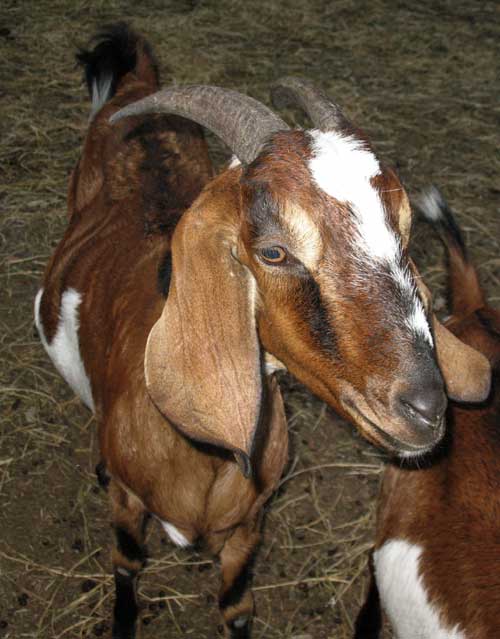
Hani keeps a small herd of Nubian goats, six pregnant does and one buck, and they’re all about one to two years old. This is the first kidding for the goats. This is also Hani’s first kidding and he’s excited, nervous and watchful of his herd. One doe named Cleopatra (whose picture you might have seen in the CSA newsletter last Saturday) is huge and very round. She started standing off to one side and went off her feed, which goats do when they’re sick, and that gave Hani the worries. But the vet checked out Cleo and said she’s ok, that’s also what pregnant goats do. So it’s watch and wait for now.

All this family excitement means no cheese and no ice cream in the CSA shares and at market. Too bad for us humans! The does need to save their milk for their kids. Hani can start milking three to four days after the births, after the kids get the colostrum. But even then he can’t milk as frequently or as much, until the kids are weaned at about two months age. Only then will Hani be back into full production.

Can all you hungry cheese fans wait until April or May? Looks like you’ll have to. Hani checked with other goat cheese producers in the state, and all their does are pregnant too. No fresh, local goat cheese to be had anywhere. Eating with the seasons — including goat seasons — is part of eating local food supplied by local growers, so you’ll have to be patient!

Goats love alfalfa

Read Full Post »

« Newer Posts