Feeds:
Posts
Comments

Archive for the ‘chef’ Category

Gabriele Marewski of Paradise Farms Organic announces another season with a stellar line up of Miami’s best chefs! Prepare yourself for an incredible evening of rustic decadence as Dinner in Paradise takes you away to a lush and tropical setting.  Upon arrival, guests enjoy a welcome reception with delicious hor d’oeuvres, before heading off on a farm tour, conducted by Gabriele that encompasses this beautiful five acre organic paradise and its fruit trees, edible flowers, mushrooms, and fragrant herbs.  As the sun sets on the evening, the magic truly gets underway.

This year, Dinner in Paradise proceeds benefit the Urban Oasis Project, a not for profit organization, whose mission it is to make fresh local food available to every one. Paradise Farms’ Ready to Grow garden beds will be installed in Liberty City and homeless shelters that house children in Miami Dade County.

Dinners are scheduled from December through February and begin at 5 PM with a cocktail reception followed by a farm tour. Dinner begins at 6 PM. March & April dinners will begin at 7PM with the cocktail reception at 6PM. Each dinner, priced at $165.50 (tax and google fee included), features five courses made with local, organic products, paired with top quality wines. Schedule/Chefs subject to change. Please visit the Paradise Farms web site for updates and to make reservations.

Read Full Post »

Robert Barnum AKA the Cantankerous Chef sent me an email about a recent event at his place, Possum Trot Tropical Fruit Nursery. Text and photos by Robert.

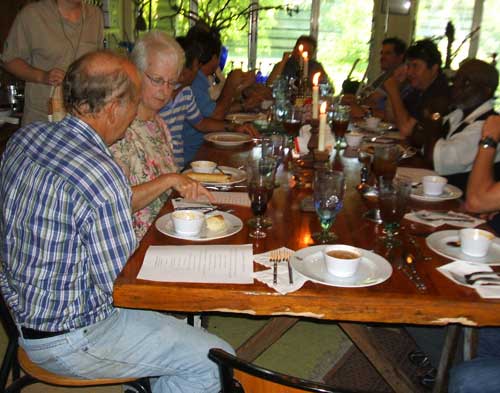
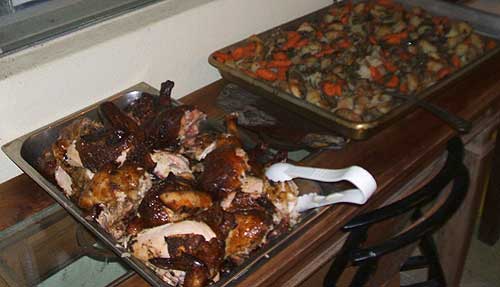
Possum Trot hosted 16 Brazilian farmers for lunch and a tour on October 28th. They were on a South Florida farm tour after attending the PMA (Produce Marketing Association) meeting in Orlando. The farmers first visited Burr’s Berry Farm, and owner Charles Burr and his wife accompanied them for lunch here. Stuffed jackfruit pouches and boiled jackfruit seeds, with pumpkin sauerkraut soup, and wood oven fired bread sticks started out the meal. Wood oven roasted betel potato and carrots, and carambola glazed wood roasted chicken followed as the main course. Carambola pie with cas guava ice cream finished the meal. Homemade jaboticaba and bignay tropical fruit wines accompanied the meal. A tour of the plantings finished my portion of their farm tour day of South Florida.

The Cantankerous Chef would be delighted to host your next event. Lunch or dinner includes a tour of his 40 acre grove of tropical fruit trees. For information and reservations, call Robert Barnum at 305-235-1768 or email possumplentious(at)yahoo.com.


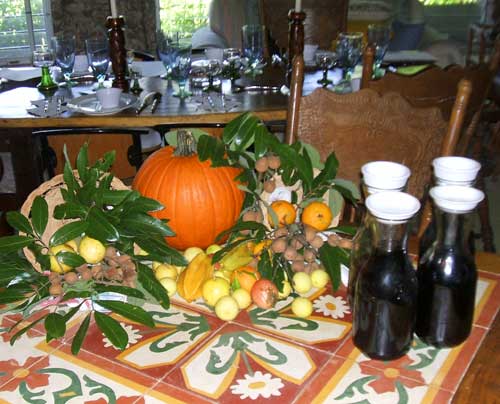
Tropical table setting of cas guava, star fruit, longans and rangpur limes, all grown at Possum Trot. Carafes contain jaboticaba and bignay fruit wines. Only the pumpkin isn't local!

Brazilian framers and the Burrs seated at the rustic table in Robert Barnum's home.

Bread that had been baked in the outdoors wood oven.

Wood oven roasted chicken, and betel-seasoned potatos and carrots.

Brazilian farmers with Robert Barnum (back row, third from right).

Read Full Post »

You can buy heirloom tomato starts raised at Bee Heaven Farm this weekend at the Edible Garden Festival held at Fairchild Tropical Botanic Garden.

Here’s a list of what kinds of starts will be available this weekend.

Heirloom tomato starts: Mexico, Speckled Roman, Zapotec Pleated, Homestead 24, Taxi, Tigerella, Black Prince, Amish Gold (an awesome cross between Sun Gold and Amish Paste), Black Cherry, Brown Berry, Black Plum, Black Zebra, Cream Sausage, Green Zebra, Red Zebra, Black Zebra,  Large Red, Lime Green Salad, Italian Heirloom, Federle, Opalka, Orange Banana, Super Snow White Cherry, Pink Ping Pong, Striped German, Tiny Tim, Koralik, Dr. Carolyn, Tommy Toe, Sun Gold, Creole, Healani, Tropic, Jaune Flamme, Matt’s Wild Cherry, Peacevine, Podland Pink, Podland Pink, Yellow Pear and many more!

Several varieties of tomato starts are registered in the Slow Food Ark of Taste. They are: Cherokee Purple, Radiator Charlie’s Mortgage Lifter, Sudduth’s Brandywine, Amish Paste, Aunt Ruby’s German Green, German Pink, Valencia and Red Fig. For a food to be listed in the Ark of Taste, “it has to have something exceptionally good, like flavor, or be in danger of disappearing because not enough people are growing it anymore,” Margie explained.

Veggie & Herb Starts: Arugula, Listada de Gandia Eggplant, Florida Highbush Eggplant, Garlic Chives, and more.

First harvests from Redland Organics growers:

From Redland farms: Certified organic Avocados, Carambola, curryleaf, fresh dried allspice berries, Thai basil, jakfruit, Rachel’s Eggs, local Wildflower Farm Honey and Tropical Fruit Honey.

From Punta Gorda partner Worden Farm: Cukes, squash, radishes, turnips, dandelions, bok choy, scallions, collards, dill & basil.

Prices for any combination of starts are $3 each, buy 5 get an extra one free (6 for $15). Buy 15 get 5 more free (20 for $45). All new this season, Redland Organics will have a credit card terminal and a SNAP terminal to make your shopping easier.

Also at the Festival, Margie is scheduled to give a talk about growing tomatoes called Beefsteaks are BORING! “Get away from beefsteaks, they take too long to grow. Be more adventurous!” she said. “Cherry tomato varieties do so much better down here.”

Several Redland Organics growers, members and others connected to R. O. will be giving presentations. Here’s the select lineup:

Saturday Oct. 23

1:30 p.m. Green Garden Enchiladas cooking demo by Adri Garcia, Greenrocks Foods, LLC.  Mise en Place, LLC., Cooking Tent
2:00 p.m.
Cheese making demonstration with Hani Khouri, Corbin A

Sunday Oct. 24

10:30 a.m. Drip Irrigation workshop, Muriel Olivares, next to Butterfly Garden
11:30 a.m. Tomato time! Beefsteaks are BORING!  Margie Pikarsky, Garden House
12:00 p.m. Urban Food Forests, Marion Yanez, Corbin A
12:30 p.m. How to Make a Raised Bed Garden, Urban Oasis Project, next to Butterfly Garden
2:30 p.m. Your Edible Organic Garden, Ben Thacker, Garden House

Edible Garden Festival
Saturday October 23 and Sunday October 24, 2010
9:30 am to 4:30 pm
Fairchild Tropical Botanical Garden
10901 Old Cutler Road Coral Gables, FL 33156
Phone: 305-667-1651

Read Full Post »

Pie…. ah, who doesn’t love pie. Fruit pie, custard pie, pie with whipped cream on top, pie with ice cream, pie with a light flaky crust. Pie! As much as I love eating pie, I haven’t had much luck making it. Have been thwarted by the most important step — making a crust that is light and flaky, not tough and rubbery.
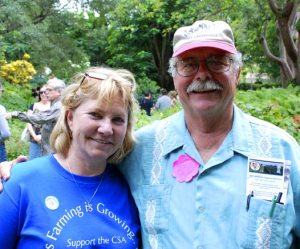
Growers Teena Borek and Robert Barnum

The Cantankerous Chef aka Robert Barnum spent his summer vacation patiently working on pie crust. He was passionately in pursuit of the perfect light, flaky crust to use in his tropical fruit pies. He told me that I could get a taste of that perfection in his homegrown longan-walnut-‘bola raisin pie at the Slow Food Miami “Pie on the Porch” competition this past Saturday.

It was a great afternoon to hang out on the wide wraparound porch at the historic Merrick House while sipping lemonade. Kids ran around on the lush green lawn under the shade of huge live oak trees. A vegetable garden had been set up on a side lawn. It was round, with coral rock borders, and looked very much like a pie cut into four slices. Boy Scouts from

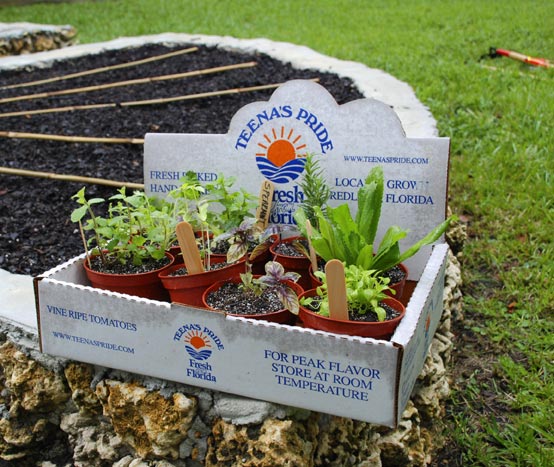
Little plants ready to grow.

Troop 4 tilled the soil, and starter plants provided by Teena’s Pride Farm were waiting to get planted into the beds. Slow Food Miami director Donna Reno explained this would be a historically accurate kitchen garden, growing foods much like the ones the Merrick family ate. The garden and pie competition are two of several events to  commemorate the 100th anniversary of the Merrick House.

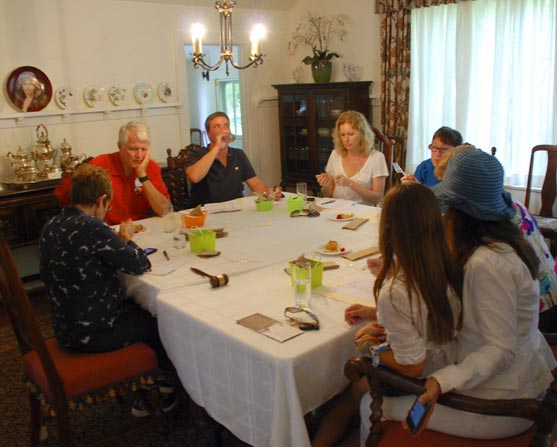
By the time I arrived, the porch was packed with eager, hungry people. Serving tables were set up, but where were the pies? They were inside the house getting judged. The seven judges aka the Supreme Court of Pie, led by Chief Justice of Pie Hedy Goldsmith herself, were ensconced in the dining room of the Merrick House. They were seated around a large table, armed with scorecards, plastic forks and glasses of water.
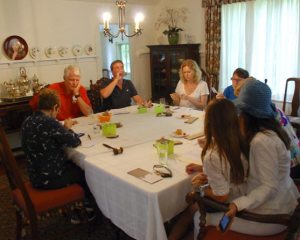
The Supreme Court of Pie

In the adjoining kitchen, 23 pies were arrayed on the counter. The pies were judged one by one. Three thin slices were cut and brought out to the table. The judges sampled and passed around the slices, discussed them briefly, and made their marks on score sheets. The judges evaluated pies on overall appearance, taste, overall impression, creativity, regional ingredients, and name. It was serious, intense work.
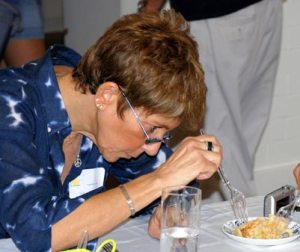
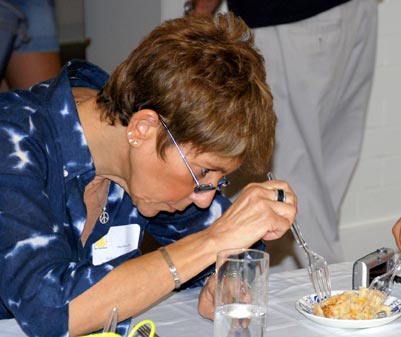
Pastry chef Hedy Goldsmith goes eyeball to eyeball with coconut pie.

According to the competition rules, “All pies must be made with a fruit or main ingredient that grows locally.” The pies had to be homemade, using home grown or local, and non-artificial ingredients. The pies had small cards describing what they were, but contestants were not identified.

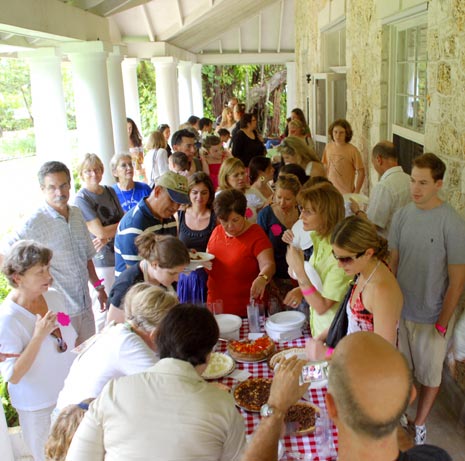
Once the pie was judged, a runner brought it out to the porch, where hungry guests were waiting for a taste. As a Slow Foodie began slicing and doling out pieces, people immediately mobbed the table. You’d think they hadn’t eaten pie in ages. “It’s a feeding frenzy out there,” the runner commented when she returned to the kitchen. I was intrigued by a green avocado pie and a salmon-colored mamey pie, but those vanished before I made it to the table.
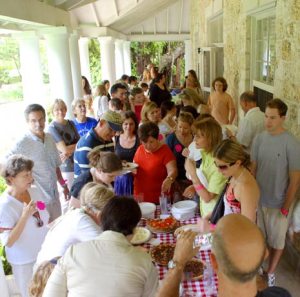
The first pies to emerge from judging got mobbed.

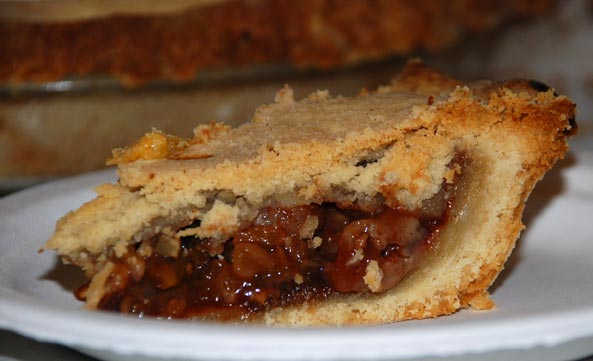
Tracked down Robert’s longan-walnut-‘bola raisin pie and dug in. It was a pie of complex flavors and unusual textures. Am not a fan of fresh longan, but baking mellowed and sweetened its flavor, and it tasted more like lychee. Encountered chewy bits of ‘bola raisins made from dried carambola, and crunchy bits of walnut. The texture reminded me of mincemeat pie, but count on Robert to push a recipe and turn the familiar into something different. As for the perfect crust, yes, it was light and crumbly, as promised. (If you want The Cantankerous Chef to make you a pie, and maybe dinner to go with it, give him a call at 305-235-1768.)

Most of the pies that I tasted (but I didn’t taste them all) followed the competition rule that the predominant ingredient must be local — mango, avocado, mamey, passion fruit, guava, coconut and longan to name the ones I saw. Some were nowhere near local — apple, apricot, pecan, chocolate — but they sneaked into the competition anyway.

The official winners were blueberry (could be local, blues grow in Florida), chocolate pecan (not local), and papaya (could be local). Details are posted on the Slow Food Miami web site.
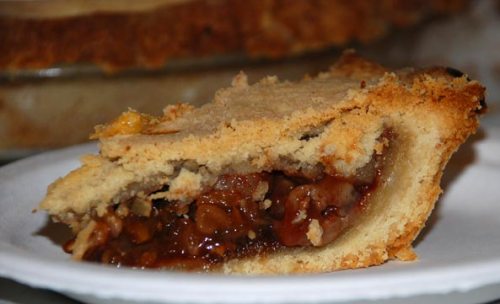
Robert Barnum's longan-walnut-bola raisin pie.

Robert’s longan-walnut-‘bola raisin pie won an Honorable Mention. His cantankerousness vanished for a few moments. “Yippee!” he cried out happily. “I’m in fourth place,” he kept telling me. Yes, indeed. Good to see his work receive public recognition on its merits alone. Good to see SFM inching closer to recognizing local food.

In the past, SFM was chided about using (or not using) local food at its locavore events. With this pie competition, the group came one step closer to walking the walk. If the Holy Grail of a locavore event is that the ingredients (all, most, or as much as reasonably possible) are sourced locally, this event came a bit closer. However, pies made from non-local ingredients (for example apple, chocolate, pecan, apricot) should have been kept out of competition.
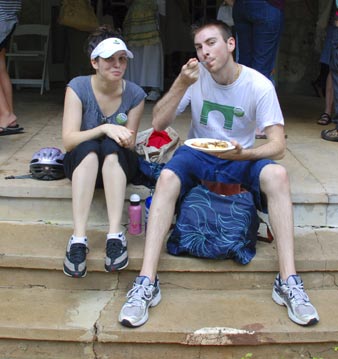
Foodies Naomi Ross and Brian Lemmerman enjoying pie bliss on the porch. They bicycled over from UM in the rain to taste something good to eat.

If you missed the pies, you can still visit Merrick House. It’s a lovely place, and one of the few structures that still remain from an earlier era. I’m glad I was able to visit it briefly, and want to come back another time to tour the house and grounds.

Merrick House
907 Coral Way
Coral Gables, FL 33134
305-460-5361, 305-460-5095

Kara Kautz, Historic Preservation Officer

Read Full Post »
Three very local ice cream makers presented their frozen creations at the Ice Cream Social at Bee Heaven Farm on the Fourth of July. All of the flavors were made from local, tropical fruit. Two fruits — lychee or mamey — were common to all three ice cream makers, and each brought at least one more flavor. Guests got a ballot when they checked in, and voted on their favorite flavors. (For official results, go see the Bee Heaven Farm blog.) Altogether, a person could indulge in more than 10 different flavors of ice cream and sorbet — a locavore ice cream eater’s heaven!

Hani Khouri and his ice cream scooper ready to go!

Hani Khouri, of Hani’s Mediterranean Organics, has been making ice cream with fresh goat milk for about two years now. He was definitely the artisan of the group. All ingredients were super local — goat milk from his herd of Nubian goats, fruit from Redland groves, and even local sugar. Hani bought guarapo, or sugar cane juice squeezed from locally grown cane, and evaporated it slowly over a low heat to molasses, then cooked it longer to get a brown sugar similar to panela. That process alone took several days.

His mamey ice cream tasted mellow and fruity. Lychee was sweet but not too sweet. Lime was most unusual, bright yellow from turmeric, more on the savory side with ginger, cinnamon and other spices added for flavoring. It wasn’t obviously lime-y, and seemed to change flavor with every spoonful. Very interesting, because I hadn’t considered savory as a possible direction for ice cream (or sorbet). Hani also brought a pale yellow, sweet-tart cas guava ice cream with a light refreshing flavor. Saw passion fruit ice cream circulating, but didn’t get a chance to taste it. Overall, Hani’s ice cream was very light and refreshing, and the fruit flavors of lychee and mamey were bright and clear. The home made sugar gave a slightly gritty texture, and the lime ice cream also had little bits of lemon zest in its texture. Goat milk has a slightly tangy after taste that seems to work best with tart flavors. This summer I like cas guava very much (my new favorite?), and last summer I liked arazá, another sour tropical fruit that is impossible to eat by itself but was terrific in ice cream.

You can order ice cream online at Hani’s Mediterranean Organics. There are two pick up locations. In Dade, pick up at Sous Chef 2 Go, and in Broward, pick up your order at BM Organics.

Enid and Albert Harum

Gabrielle Berryer of Gaby’s Farm ice cream is the queen of the local ice cream scene. She has been making her frozen goodies from local fruits for 15 years and retailing for the last 5 years. Black sapote was the first flavor that she introduced to the public at the Fruit and Spice Park, and since then her line has expanded to 30 flavors, which are locally produced. All fruit is locally grown, and most comes from her two-and-a-half acre farm.

Lev and Liz discovering Gaby's mamey ice cream.

Gaby brought mamey, guava and canistel ice creams, and lychee sorbet. Her ice cream flavors taste more creamy than fruity, and the texture is silky smooth. Overall, her ice cream tastes and feels a lot like store bought. Dark pink mamey tasted much like a milk shake. Light pink guava was incredible combined with a slice of mango pie. (Yes, there was pie — and cookies too.) Canistel was egg yolk yellow (that’s why it’s also called egg fruit) and likeable with the addition of cream and sugar, but I’m still not a big fan. It could be more exciting if pumpkin pie spices were blended in. Lychee sorbet had a clear fruit flavor and was quite refreshing, but just a tad sweet.

Find Gaby’s Farm ice cream at area Whole Foods, Fruit and Spice Park, Schnebly’s Winery and various local hotels.

Katie Edwards with ballot in hand and one of the candidates.

Robert Barnum was the jack of all trades of the bunch. He brought the above-mentioned mango pie — and pie lovers, this one was for you! It was very tasty, especially with guava ice cream. Two Pie Are Squared, as he called it, was baked in two large sheet pans. He joked that he used “rectangular mangoes” for the pie filling. “I never do anything normal,” he explained. Rectangular or not, the mangoes were his very own Yellow Bellied Possum variety. Robert also brought lychee and peach ice creams and white sapote sorbet.

Mmmmmmmm mango pie!

Most intriguing was his Florida peach ice cream. Yes, peaches do grow here, and don’t let those Georgia folks tell you otherwise. Robert has several Red Ceylon trees, a wild naturalized variety that was cultivated in his grove since the 1950’s. The fruit has white flesh, red at the seed, with a pale green skin that never turns peachy yellow. The ice cream made with those peaches was rosy pink with little flecks of darker red skin and tasted sweet-sour, peachy-ish, a bit like strawberry but not quite. Robert explained that he picked early to keep fruit flies from infesting the peaches, “to keep the protein content down,” he chuckled. The fruit hadn’t completely ripened by the time it was mixed into ice cream. Would love to taste the ice cream made with a more ripe fruit, but it was pretty good the way it was.

Robert also brought lychee ice cream, which tasted pretty good, having a nice balance between fruit and cream, and wasn’t outrageously sweet. The daring experiment of the bunch was white sapote sorbet, sweetened with local honey instead of palm sugar. To my tongue, which was already addled by sugar from the other two ice cream makers, this combination of fruit and sweetener had a slightly bitter bite. Robert describes the fruit as having an “astringent” flavor. Am not sure about this one, but then, I don’t remember if I’ve even tasted white sapote fruit. But I saw other people enjoying the sorbet’s unusual qualities, so it could just be me, spoiled by sweetness.

Head over to Possum Trot, Robert’s place,  for dinner and a tour of his 40 acre grove, one of the last bits of Old Florida left in the area. And best of all, you can ask him to make ice cream and pie for dessert! If you want to grow your own Red Ceylon peaches, seedlings will be available next spring.

Possum Trot Tropical Fruit Nursery
14955 SW 214th St
Miami, FL 33187-4602
305-235-1768

Read Full Post »

« Newer Posts - Older Posts »