Feeds:
Posts
Comments

Archive for the ‘food’ Category

Hello Redland Ramblers!
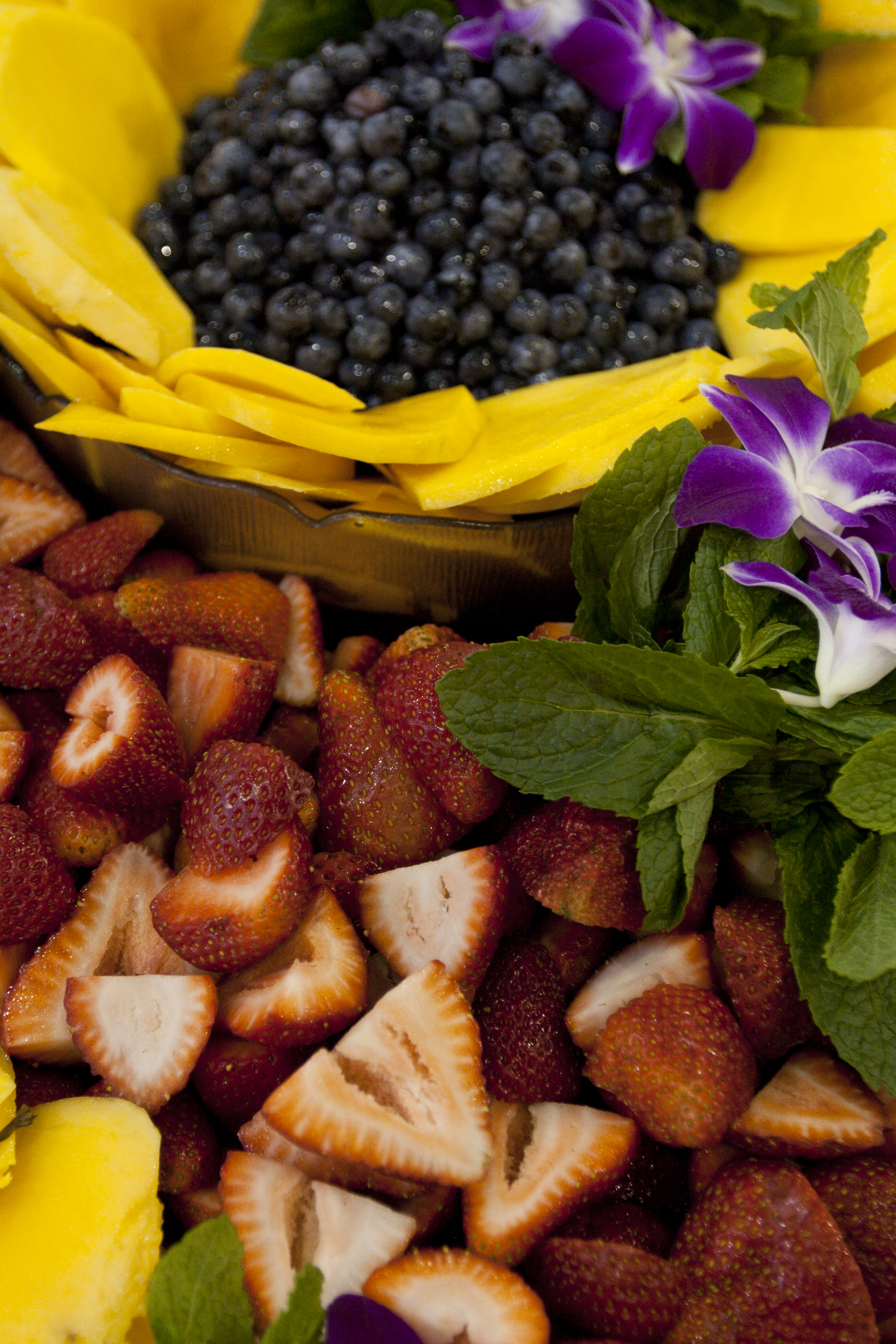

Mangos from Dr. Jonathan Crane at TREC, blueberries from Gail & Mike Waldron in Marion County.

Guest blogger Melissa Contreras here again. It’s been several weeks since the last post, and I apologize for that. Most of that time was spent waiting for photos from the official IFAS photographer, my one reliable source of photos from the conference. The poor overworked guy was traveling with several assignments to keep up with, and apologizes for not getting them out in a timely manner. We forgive him. Life’s too short. As promised, this post details the fabulous Florida local food lunches and the Conference workshops. If it’s not enough, well then I guess you’ll just have to attend next year’s conference!

There are omnivore and vegan options at every year’s conference, and both are amazing, featuring Florida food, real food: meat from pastured animals, vegetables and fruits from our fair state’s wide repertoire, milk from small herds of grass-roaming and grass-eating cows, and eggs from hens which get to freely scratch the soil  and eat a smorgasbord of bugs and assorted plants, expressing their “chicken-ness” under the Sunshine State’s skies.

Omnivores loved the delicious Gilchrist Brand Sausage from Jonnie Thompson of Ocala, who emphasizes humane animal treatment.

The fabulous  selections from this year’s menu:

Menu

These delicious dishes were made with food provided from small farms all over Florida. Our Redland farmers provided ‘Donnie’ avocado (Bee Heaven Farm), mangos (Dr. Jonathan Crane of TREC), and longans from Guara Ki farm. Summer in the Redlands  means tropical fruit, so we gave the rest of Florida a taste of the tropics.

Breakout sessions followed several tracks of interest: alternative energy, business and marketing, livestock, horticulture, organic and sustainable farming, policy and regulations. This conference is geared toward small farmers, and there were lots of them present looking for ways to make their farms better, branch out into new enterprises, market their products, and more. This year’s  included urban farmers and local food enthusiasts and activists, in addition to farmers.

Yummy Florida okra and blackeye peas from William Moore at Bluefield Organic Farm in Okeechobee.

The different tracks of interest included valuable lectures and workshops. Here’s a sampling of the workshops: Earth Wind and Fire: Renewable Energy Options; Agritourism; Aquaculture and Aquaponics; Minor Fruit Crops; The Excitement about Social Marketing – How it Can Help Your Operation; Pasture Management; Grass Fed Beef: How Do We Get There?; Poultry Management; Expanding Your Fruit Portfolio: Stone Fruit & Muscadine Grapes; Healthy Schools, Healthy Kids – Florida Farm to School Programs; High-Quality Compost for Organic and Conventional Farms; Advanced Disease Management for Organic Vegetables; Small Farm Friendly Approaches to Food Safety; Diversifying the Income Portfolio for Organic Products; and Direct Marketing Regulations (How to Get Products to Market Legally).  Next year’s workshops will be scheduled according to feedback from this year’s conference.
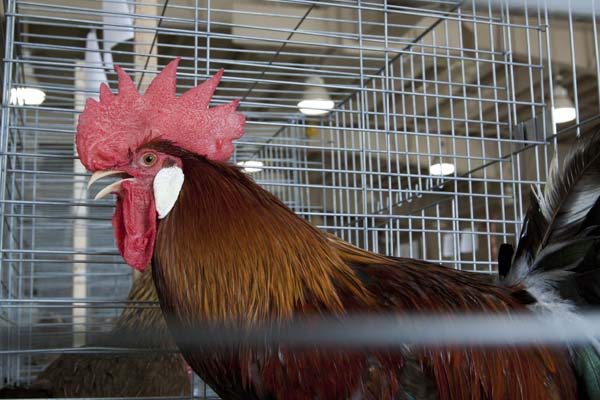
I am the handsomest rooster at the Small Farms Conference and I approve this message.

It was an information-packed weekend, with plenty of fun and networking.  Vendors in the exhibition hall sold everything from organic t-shirts with organic slogans on them, to fish emulsion fertilizer, to packaging for tomatoes and strawberries, to complete aquaponics systems, to worm poop fertilizer, to hydroponic growing systems, to Florida grass-fed beef, to info about becoming certified organic, and so much more.

And who doesn’t love seeing the animals at the livestock exhibit? I spent an hour in there looking at and sometimes petting cows, llamas and alpacas with babies (below), and lots of interesting and unusual poultry breeds.

We love the local, organic hay at the Small Farms Conference--mmm...

Did I mention that this conference was next door to the national convention of Jehovah’s Witnesses? This made for heavy traffic on Sunday morning, with the JWs in their Sunday best. This explains why they did not come knocking on your door that weekend….(I stand corrected- it was a regional conference, thanks for finding that out Margie. There sure were lots of them… )

So, Marian will be back soon. I have to stop or someone might think I have taken her blog over. A coup de blogue, golpe de blogo, or other messy affair could be suspected, but no worries, she will be back to tell you more of the Redlands and its farmers. Thanks for letting me share…
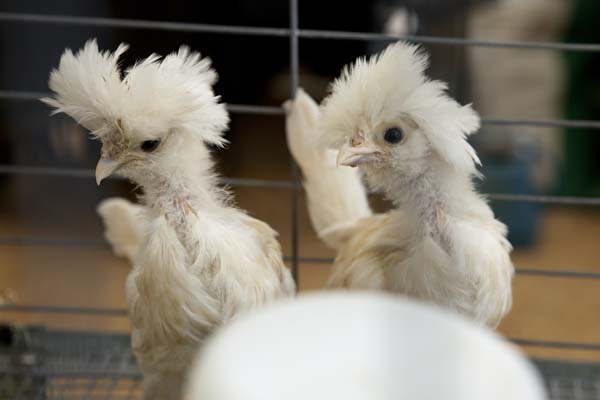
Gratuitous cuteness.

Read Full Post »

Greetings once again, Redland Ramblers! Guest blogger Melissa Contreras here again, founder of Urban Oasis Project, urban micro-farmer.  I’m back to tell you about day two of my trip to the Small Farms/Alternative Enterprises Conference last weekend.

After rising early, we all piled into Margie’s van and headed over to the Osceola Heritage Park for the official beginning of the conference. Since I know that all you local foodies want to know about the food, let me start with breakfast: rather light fare was provided at the conference, but like our full lunch, it consisted mostly of Florida farm-grown food. A deep dish frittata of free-range Florida eggs with cream from grass-fed cows was served, accompanied by Lambeth Groves’ orange juice, cold and fresh, a perfect blend of sweetness and acidity. We were treated to Florida’s “other juice,” Muscadine grape juice: crisp, lightly sweet, and perfumed of dewy-misted grapes, from Lakeridge Winery and Vineyard in the high country of Clermont. Certified organic blueberries from Gail and Mike Waldron of Bay Lake Blueberries in Marion County mingled with mangos from our own Dr. Jonathan Crane of TREC in Homestead.  Fair trade coffee was provided by Sweetwater Organic Coffee Company of Gainesville, which purchases from Rainforest Alliance-certified small farmers in the Tropics. For our coffee, we actually had the luxury of choosing milk from 2 small dairies, Dakin Dairy Farm of Myakka City, or Kurtz and Sons Dairy of Live Oak. Bubba and Leslie Kurtz run a “grass-fed dairy farmstead” of Jerseys and Shorthorns, and work to keep their milk as close to Nature as possible. This is not a business slogan for them, it is a way of life. After coffee finished with Nature’s perfect food, I was ready for a full day of conference and break-out sessions.

We all headed over to the big lunch room for the opening session. Welcomes came from kick-off speakers Dr. Joan Dusky of UF/IFAS in Gainesville and Dr. Ray Mobley of FAMU in Tallahassee, a co-sponsor of the event. FAMU and UF and are Florida’s 2 land grant universities, dating back to the ugly days of segregation, when black people went to one university and white people went to another. (Beside the obvious injustice of this, it begs another question- where did the original inhabitants of this land go? But that is another story.)

Next came the Florida Innovative Farmer Awards! These awards are given to farmers and ranchers who are leaders and innovators, based on the following criteria (quote):

  • Success in making farming systems more profitable over the long term.
  • Ability to use farming practices that enhance, rather than harm, natural resources.
  • Leading -or participating in-  activities that support viable communities, either through economic development or contribution to regional food systems.
  • Effective outreach and/or education about sustainable agriculture ideas and practices to others, such as producers, community leaders, agricultural educators, and the general public.

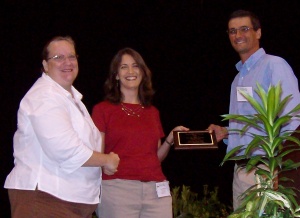
There were 3 winners of these awards, the first being Chris and Eva Worden of Worden Farm in Punta Gorda. They got up on the stage in front of their small farmer peers, and were given a well-deserved round of thunderous applause. Both are Ivy League educated, Yale and Cornell, but are very down-to-Earth and in love with their vocation and avocation, farming. Upon acceptance of the award, Chris said to the audience, “We love to grow crops.” They grow 50 different varieties, mostly vegetables, some fruit, and do it organically, using soil and water conservation techniques. They have a CSA, sell at farmers markets, have workshops at the farm, art programs, and “grow future farmers and gardeners.” They help community gardens, about which Eva knows a thing or two, having authored papers on the subject. She said “anyone who works with community gardens knows that it is easy to start one, harder to maintain them, so we stay with them, encourage and help them.” Eva explained that they “grow great crops, connect with the local community, and promote the viability of the family farm.”

(L-R) Christine Kelly-Begazo, Eva Worden, Chris Worden. The Wordens receiving the Florida Innovative Farmer Award, a happy achievement for the work they love!

I went to Worden Farm last year with Farmer Margie and the WWOOFers, and my folks from Urban Oasis Project. We had a tour of the farm, and got to see the amazing results Chris and Eva get from good stewardship of their 55 certified organic acres. Because they supply some of the food in Redland Organics CSA shares, I thanked them for feeding my family. By the way, have you thanked your farmer lately?

The second recipient of the awards was Trish Strawn of Deep Creek Ranch in Deland. Trish and her dad, David, work the family farm which has been around since 1883. Trish said they got into grass-fed beef because her dad had a health issue, but she said if you ask her dad, he’ll say it’s because they’re “cutting edge.” The room broke into laughter.Trish is Co-Leader of Slow Food Orlando, and a founding member of the Florida Food Policy Council. She is also a lot of fun to go out and have a beer and a lot of good laughs with, which we did later that night. Trish and her dad are the real deal. Joel Salatin must be proud.

The third award recipient was George Owens of Chipley, FL, who has a mixed cattle and timber/forestry operation, or silvopasture. George could not be present for the awards because his son had just come home for a short visit from Afghanistan. All were very happy for him. The award presenters said “we tend toward a monoculture system, so when we get someone who does integration, we want to encourage it.”  I am a believer in agroecology, and it is very encouraging to hear agricultural professionals talk about moving away from monocultures!

I was very excited to hear my friend Will Allen of Growing Power, Inc. give the keynote address. Unfortunately, Will had some knee surgery which made it impossible for him to travel to the conference, though that was the original plan. Technology to the rescue! The AV geeks got the satellite/internet hookup to Will Allen up and running, and we were able to see and hear him on 2 large screens, and he was able to see and hear us.

That's me with Will Allen at a Growing Power workshop last year. Will loves scooping Lake Perch out of his aquaponics tanks! He loved to fish when he lived in Miami too.

Larger than life on the big screen, Will spoke about the history of Growing Power, all the amazing past, present and future projects they have, and was enthusiastic and inspirational as always. Larger than life is a profound statement when referring to Will Allen, who stands tall at 6’7” and weighs 230 pounds. Will played basketball for the University of Miami in the 1970’s, and still wears an orange and green UM cap with his signature royal blue Growing Power sweatshirt with cut-off sleeves. His biceps are bigger than many supermodel’s waists, and he keeps them that way by working hard every day, growing food for Milwaukee’s inner city on 3 acres, 2 blocks from one of the country’s largest low-income housing projects, in what was an urban food desert until Will’s good food movement became a good food revolution. Will is not an armchair CEO. He gets his hands dirty. He loves farming like Chris and Eva Worden do. I think some of us are born agrarian. It is not a choice, it’s in our blood, and it’s who we are.

Will showed many slides of Growing Power in action: composting thousands of tons of Milwakee’s food and brewery waste and “growing soil” as he says; passing compost through the digestive tracts of thousands of worms, creating rich worm castings fertilizer; raising tilapia and lake perch in the bottom level of a 3-tiered, homemade aquaponics system, with watercress growing in the middle layer, and tomatoes on top; raising chickens and bees in the city; providing a safe after-school space for urban youth to learn green job skills; feeding senior citizens healthy food with a “food basket” CSA; providing a retail grocery space with their fresh salad greens, eggs, and so much more to the neighborhood in which Growing Power’s urban farm resides.

“If people can grow safe, healthy, affordable food, if they have access to land and clean water, this is transformative on every level in a community.  I believe we cannot have healthy communities without a healthy food system.”

Will is a major inspiration for what we do in Urban Oasis Project, doing our part to make good, clean, safe, healthy, and local food accessible to all. Access to real food should be a right of all citizens. Will says “we can’t wait around for government or others to do it, we have to do it, just start doing things.”

I could go on about Will Allen forever, but I’ll stop here. Please come back for Part Three, highlighting local food lunches and conference workshops!

Read Full Post »

Avocado bliss

Seen at the the Pinecrest Whole Foods on Friday.

The time has come to pick avocados. Last week Farmer Margie mustered her crew of mostly volunteers and they went through the grove to gather the first of the season. Thirty bushels of certified organic Donnie avocados went straight to the area Whole Foods warehouse, and I’m told that the fruit just flew out of the stores. This week Margie’s crew picked again, and she took 30 more bushels to the WF warehouse on Thursday. I found her Donnie avocados at the Pinecrest Market on Friday afternoon. They are selling for $3.49 each, ouch! But even at that price, there may not be many left today.

But all is not lost. I’ve learned about Number Two fruit. Those are avocados that have scuff marks on their skins, superficial blemishes that that are bigger than a certain allowed size.  The fruit rubbed against a branch while it was maturing and it made for a dark mark. Stores don’t like blemished fruit, but they are just as good.

Last week I bought a half bushel of Number Twos to re-sell to friends and co-workers for $2.50 each. Like their pristine brethren that went to WF, these avocados sold very fast. This week I sprang for a full bushel of Twos. People wanted more, or saw they missed out and were calling me with orders.

This dramatic scuff mark is cosmetic, doesn't affect the flesh inside. Whole Foods doesn't want this fruit, but I do!

Local fruit makes people happy! Case in point, I took a half bushel of avocados to my doctor’s office. She is a holistic practitioner, and she and her hard working staff and patients know that avocados are good for you. I staggered in with the heavy box of fruit, set it on the floor, and everybody pounced. My doctor did the most interesting thing — she cradled a large green avocado to herself, stroked it with her hand, and giggled with delight. Other staffers were smiling as they sorted through the box. One woman picked out a fruit, then another, then went off with three avocados clutched to her chest. Altogether a dozen avocados found new homes so quickly I felt almost giddy.

I saw that grin, heard that giggle, and watched people pet and stroke the smooth, green shiny skinned avocados over and over on Thursday and Friday as I made my deliveries. And once you’ve actually eaten a Donnie from Bee Heaven, that’s it, you’re hooked on the creamy, nutty flavor. Last week a friend got one avocado, then ask me for four more this week. “Are you sure,” I asked. “Oh yes,” was her answer, said with a smile and sigh of bliss. “I want them. They’re buttery.”

Another thing I heard often is, “I’m going to eat the whole avocado for lunch.” Easy to say now, when the fruit is only about a pound and a half in size. Wait a few weeks when they have increased to three pounds — or more. Last summer a friend claimed that he could eat a whole three pound avocado by himself in one sitting. “That’s a pretty big avocado. I can only eat half or less at one time,” I cautioned. My friend boasted, “I’m a big guy, and I have a big stomach. I can eat it.” He took the avocado home and that was the last I heard of it. It’s quite possible that a three pound avocado defeated a 200 pound man.

So, I get a little crazed this time of year, phoning people — “Hey, I got some green crack*, let me know how many you want” — and driving around town with a bushel of avocados in my car. I do it because Margie’s fruit makes people happy, and I’m glad I can bring them a bit of joy. That’s the power of local food. Once you’ve tasted it, you know.

*That’s a Margie joke.

Nutrition facts and analysis for Florida avocados

Read Full Post »

July 24, 2010
8 pm to 1 am

Come hang out in the laid back tropical atmosphere of the Everglades Hostel’s back yard. Event organizer and artist Kristin Jayd will be applying henna/mehndi designs. The gazebo will be set up as a hookah lounge, with carpets and cushions to recline on. A DJ will be playing laid back, ambient Mediterranean-flavored music. And Hani Khouri will reprise his role as chef, with an endless buffet of delicious goodies.

On the menu: hummus, fool muddamas (fava and garbanzo beans), lentils, okra, maybe a fish dish, tabbouleh, shish kabob, chicken rolls with sumac, falafel, and nammourah (semolina tea cake flavored with rose water), among other things.

A cover charge of $5 gets you in the door, rain or shine. Everything else is a la carte. Check out the package deal which includes all three for $35.

Details and tickets available at Kristin Jayd Unlimited or call/text 305-342-5844
Facebook: Henna Hookah & Hani

Location:

Everglades Hostel
20 SW 2nd Ave.
Florida City, Florida 33034
305.248.1122

Read Full Post »

Three very local ice cream makers presented their frozen creations at the Ice Cream Social at Bee Heaven Farm on the Fourth of July. All of the flavors were made from local, tropical fruit. Two fruits — lychee or mamey — were common to all three ice cream makers, and each brought at least one more flavor. Guests got a ballot when they checked in, and voted on their favorite flavors. (For official results, go see the Bee Heaven Farm blog.) Altogether, a person could indulge in more than 10 different flavors of ice cream and sorbet — a locavore ice cream eater’s heaven!

Hani Khouri and his ice cream scooper ready to go!

Hani Khouri, of Hani’s Mediterranean Organics, has been making ice cream with fresh goat milk for about two years now. He was definitely the artisan of the group. All ingredients were super local — goat milk from his herd of Nubian goats, fruit from Redland groves, and even local sugar. Hani bought guarapo, or sugar cane juice squeezed from locally grown cane, and evaporated it slowly over a low heat to molasses, then cooked it longer to get a brown sugar similar to panela. That process alone took several days.

His mamey ice cream tasted mellow and fruity. Lychee was sweet but not too sweet. Lime was most unusual, bright yellow from turmeric, more on the savory side with ginger, cinnamon and other spices added for flavoring. It wasn’t obviously lime-y, and seemed to change flavor with every spoonful. Very interesting, because I hadn’t considered savory as a possible direction for ice cream (or sorbet). Hani also brought a pale yellow, sweet-tart cas guava ice cream with a light refreshing flavor. Saw passion fruit ice cream circulating, but didn’t get a chance to taste it. Overall, Hani’s ice cream was very light and refreshing, and the fruit flavors of lychee and mamey were bright and clear. The home made sugar gave a slightly gritty texture, and the lime ice cream also had little bits of lemon zest in its texture. Goat milk has a slightly tangy after taste that seems to work best with tart flavors. This summer I like cas guava very much (my new favorite?), and last summer I liked arazá, another sour tropical fruit that is impossible to eat by itself but was terrific in ice cream.

You can order ice cream online at Hani’s Mediterranean Organics. There are two pick up locations. In Dade, pick up at Sous Chef 2 Go, and in Broward, pick up your order at BM Organics.

Enid and Albert Harum

Gabrielle Berryer of Gaby’s Farm ice cream is the queen of the local ice cream scene. She has been making her frozen goodies from local fruits for 15 years and retailing for the last 5 years. Black sapote was the first flavor that she introduced to the public at the Fruit and Spice Park, and since then her line has expanded to 30 flavors, which are locally produced. All fruit is locally grown, and most comes from her two-and-a-half acre farm.

Lev and Liz discovering Gaby's mamey ice cream.

Gaby brought mamey, guava and canistel ice creams, and lychee sorbet. Her ice cream flavors taste more creamy than fruity, and the texture is silky smooth. Overall, her ice cream tastes and feels a lot like store bought. Dark pink mamey tasted much like a milk shake. Light pink guava was incredible combined with a slice of mango pie. (Yes, there was pie — and cookies too.) Canistel was egg yolk yellow (that’s why it’s also called egg fruit) and likeable with the addition of cream and sugar, but I’m still not a big fan. It could be more exciting if pumpkin pie spices were blended in. Lychee sorbet had a clear fruit flavor and was quite refreshing, but just a tad sweet.

Find Gaby’s Farm ice cream at area Whole Foods, Fruit and Spice Park, Schnebly’s Winery and various local hotels.

Katie Edwards with ballot in hand and one of the candidates.

Robert Barnum was the jack of all trades of the bunch. He brought the above-mentioned mango pie — and pie lovers, this one was for you! It was very tasty, especially with guava ice cream. Two Pie Are Squared, as he called it, was baked in two large sheet pans. He joked that he used “rectangular mangoes” for the pie filling. “I never do anything normal,” he explained. Rectangular or not, the mangoes were his very own Yellow Bellied Possum variety. Robert also brought lychee and peach ice creams and white sapote sorbet.

Mmmmmmmm mango pie!

Most intriguing was his Florida peach ice cream. Yes, peaches do grow here, and don’t let those Georgia folks tell you otherwise. Robert has several Red Ceylon trees, a wild naturalized variety that was cultivated in his grove since the 1950’s. The fruit has white flesh, red at the seed, with a pale green skin that never turns peachy yellow. The ice cream made with those peaches was rosy pink with little flecks of darker red skin and tasted sweet-sour, peachy-ish, a bit like strawberry but not quite. Robert explained that he picked early to keep fruit flies from infesting the peaches, “to keep the protein content down,” he chuckled. The fruit hadn’t completely ripened by the time it was mixed into ice cream. Would love to taste the ice cream made with a more ripe fruit, but it was pretty good the way it was.

Robert also brought lychee ice cream, which tasted pretty good, having a nice balance between fruit and cream, and wasn’t outrageously sweet. The daring experiment of the bunch was white sapote sorbet, sweetened with local honey instead of palm sugar. To my tongue, which was already addled by sugar from the other two ice cream makers, this combination of fruit and sweetener had a slightly bitter bite. Robert describes the fruit as having an “astringent” flavor. Am not sure about this one, but then, I don’t remember if I’ve even tasted white sapote fruit. But I saw other people enjoying the sorbet’s unusual qualities, so it could just be me, spoiled by sweetness.

Head over to Possum Trot, Robert’s place,  for dinner and a tour of his 40 acre grove, one of the last bits of Old Florida left in the area. And best of all, you can ask him to make ice cream and pie for dessert! If you want to grow your own Red Ceylon peaches, seedlings will be available next spring.

Possum Trot Tropical Fruit Nursery
14955 SW 214th St
Miami, FL 33187-4602
305-235-1768

Read Full Post »

« Newer Posts - Older Posts »