Feeds:
Posts
Comments

Archive for the ‘photo’ Category

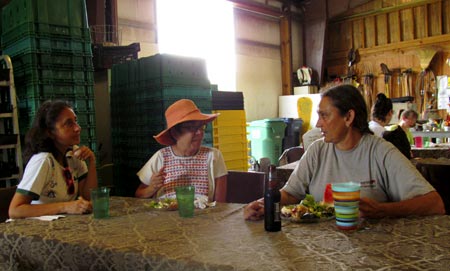
Potluck lunch in the barn.

CSA members gathered at Bee Heaven Farm recently for Gleaning Day. They brought potluck dishes to share, and bags and containers for their loot. Because on Gleaning Day, you’re allowed to forage for your veggies.

Lisa and Alex chat with Farmer Margie.

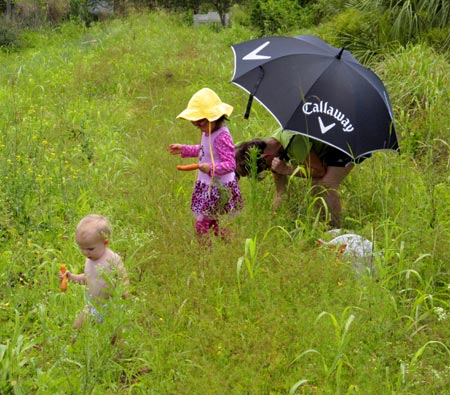
Digging for treasure among the weeds.

The challenge is to find what’s left. To the uninitiated, frondy carrot tops look like the weeds that surround them. But with a little effort, the orange treasures release their grip on the soil jump into your bag.

Hanging out in the pump house.

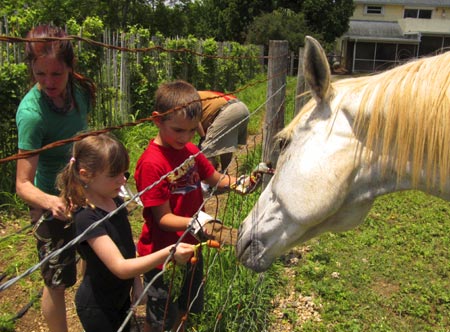
Bali the horse loves Gleaning Day, because people want to feel him carrots. Bali looooves carrots!

Making new friends.

Browsing for raspberries.

Gleaners braved scratchy thorns in the raspberry brambles and had a berry berry good day.

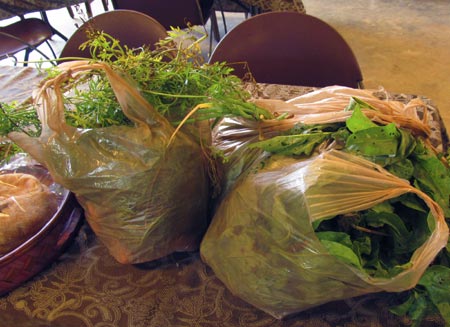
Bags of veggie loot (mostly carrots — berries went straight into the mouth).

Napping in the shade of the java plum tree.

Seeking beets.

Read Full Post »

Bagging the beans

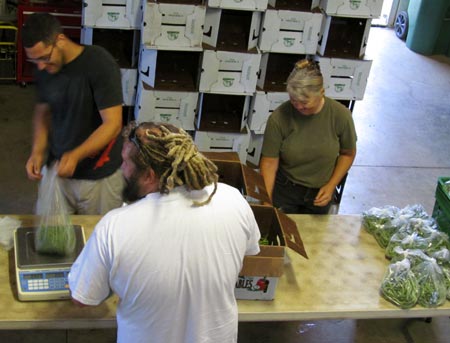
Luis (left) weighs a bag of beans, with Victor and Donna.

Early on the last Friday of the CSA season, the sun rose steadily in the sky, and late season tomatoes in vegetable beds overrun with weeds glittered with the last fat drops of morning dew. Inside the big metal barn at Bee Heaven Farm, work had already started on packing the last shares of the season.

Bagging bushels of beans.

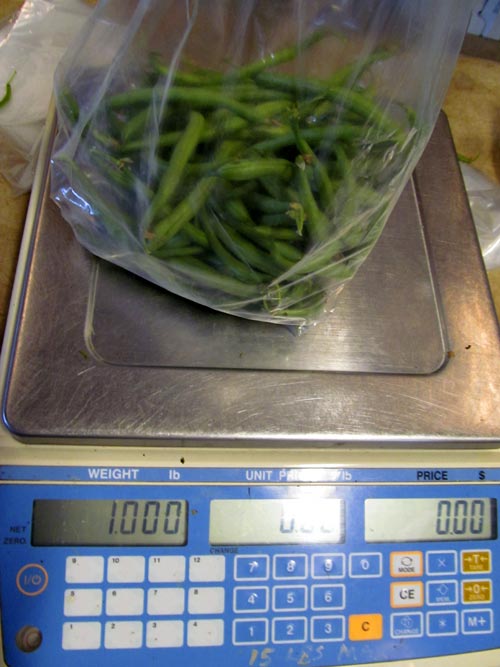
First, green beans had to be weighed and bagged. They had arrived the day before from Witt Road Farms in La Belle. Several full bushel boxes needed to be portioned out equally. Family shares got one pound, and small shares got half a pound. The farm interns got into two teams to divide up the work. In each team, two people bagged and weighed, and two tied and counted the bags.

Exactly one pound of green beans.

On my team, Victor and Luis bagged and weighed. Donna and I had the job of tying and counting. Donna showed me a cool, quick technique to tie a bag. She explained, “First you smush the air out of it, then fold over the top edge. Hold the two corners, flip the bag around a couple times, then knot the corners together.” The first time I tried flipping the bag, I smacked myself in the chest and Donna and I both laughed. “Better than your face,” she teased. She and I placed bags of beans into rows of five, counted, then loaded them into a green tote.

Bag, weigh, tie, count. Bag, weigh, tie, count.  The two teams bantered back and forth as they packed with a quick and easy flow that came from weeks of working together. Bag, weigh, tie, count. In 20 minutes it was all over — the crew packed 115 one-pound bags and 242 half-pound bags — and it wasn’t even 7:30 yet!

L to R: Victor, Sadie (hidden behind) Margie, Tim (hand showing, behind) Marsha, Luis, Donna

Read Full Post »

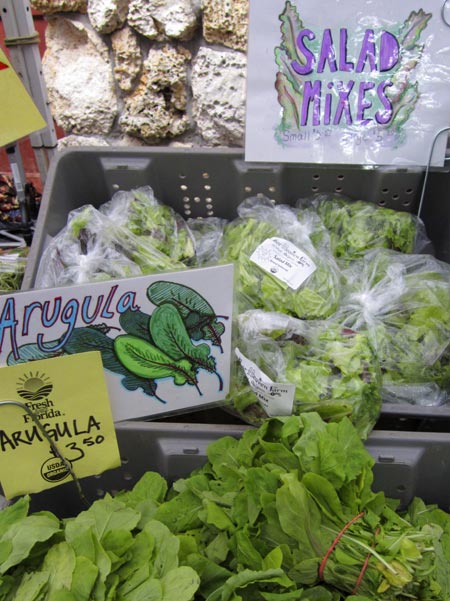
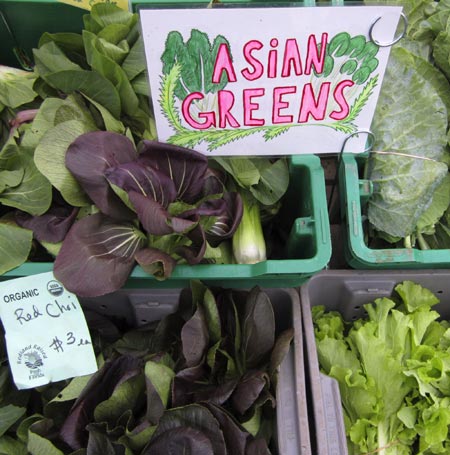
A couple months ago, a crop of fresh new market signs popped up at the Bee Heaven Farm tent at Pinecrest Gardens Farmers Market. The colorful creations were drawn by Rachel, farmer Margie’s daughter, who is studying illustration arts at SUNY Purchase.

But hurry, you don’t have much time!

This coming Sunday, April 15th, is the last day that Bee Heaven will be at the Pinecrest market. (The market runs through May, but Bee Heaven’s growing season is already winding down.)

It’s also going to be quite the day, with the 3rd Annual Pinecrest Earth Day Festival going on throughout the Gardens. Admission is free.

By the way… these pictures were taken back in January…. so they’re not necessarily representative of what’s in season and available now at market. Different signs will be up, too. Go take a look for yourself!

Read Full Post »

The Firework Flower

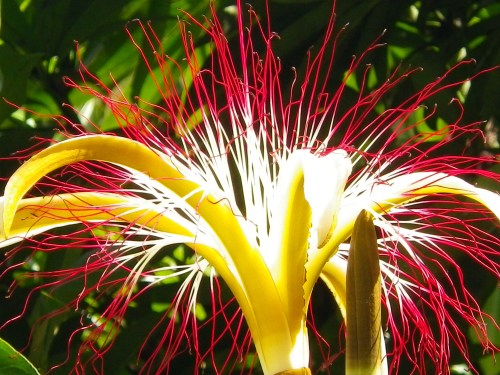
The Incendiary Blooms of the Guiana Chestnut are hard to miss. Combining arches of vibrant yellow with electric red and white hairs…you could almost call this The Firework Flower.

[Welcome to guest blogger Alex Norelli, contributor to the Organic Gardening blog. Alex is a blogger, poet, and photographer. Here is his view of a month’s visit to Redland. – marian33031]

My first introduction to the Redland was through the Fruit and Spice Park, a great place to see the potentials of this land and climate. When I arrived in the Redlands I expected to see an intense iron-colored soil like the almost inhuman Mars-red fields in La Mancha I remember driving through while in Spain. But I didn’t see it in the soil as much as I found it in the air, in a host of blooms and fruit, some edible, others strictly for the eye.
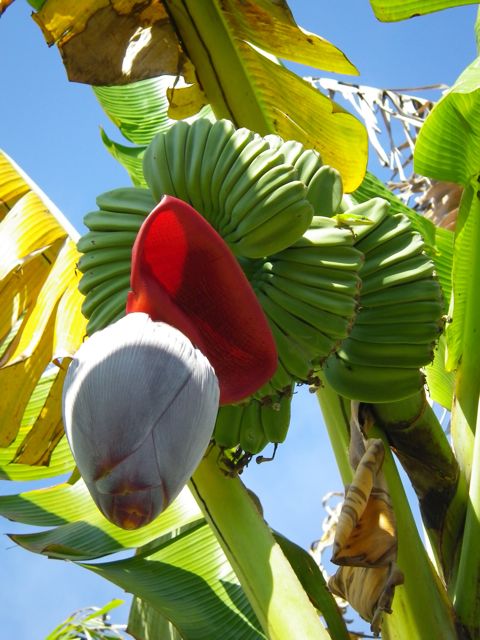
Such Mainifold color, with red at the center.

Such manifold color and form…the red of the flower’s petals contrasting with the green of unripe bananas is an eye-catching combination. The size of this fruit has no equal where I come from, and perhaps only a rose, or cardinal flower, has a comparably red.

Coming from the north and spending nearly my entire life in zone 6, with short forays into other zones, I was in for a wealth of newness. For one thing, fruits and flowers in zone 6 are usually quite reserved, petite and constrained, nonetheless beautiful, but of a different scale. In the sub-tropics, without a winter to hold back growth, there is never a thought for conservation, or preserving energy to make it through a many-month winter. And so things just grow; wildly, gaudily, loudly, abundantly, fruiting multiples times a year. That simple fact allows for a startlingly different display of color than I am used to, and it’s been an eye-opening pleasure encountering it in the last two months.
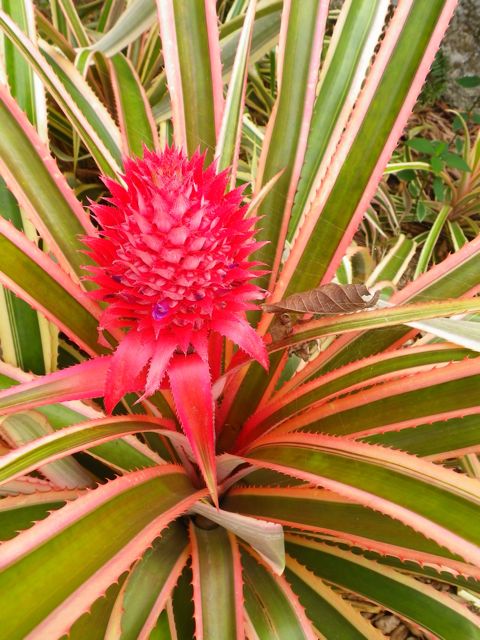
This Red is otherworldly…This neon red is too bright for my camera to capture in detail, the luminosity of the color is so great it becomes a iridescent smudge of wild color.

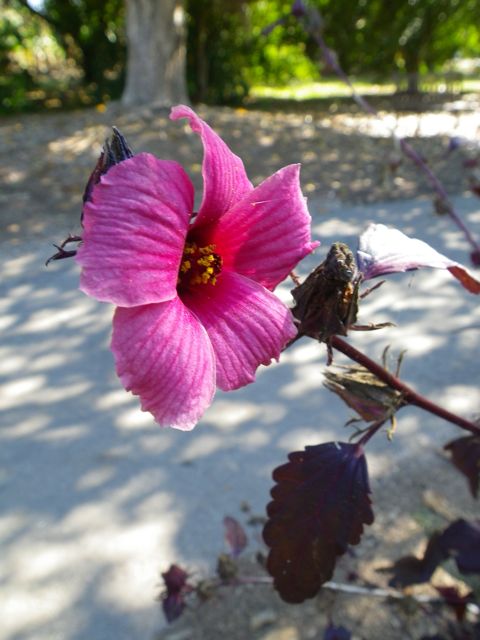
Cranberry Hibiscus, An edible red…its leaves can be steeped to make a tart tea high in Vitamin C
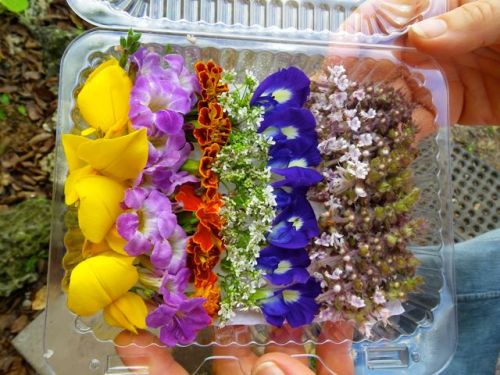
A row of edible red/orange marigolds among an impressive selection from Paradise Farms

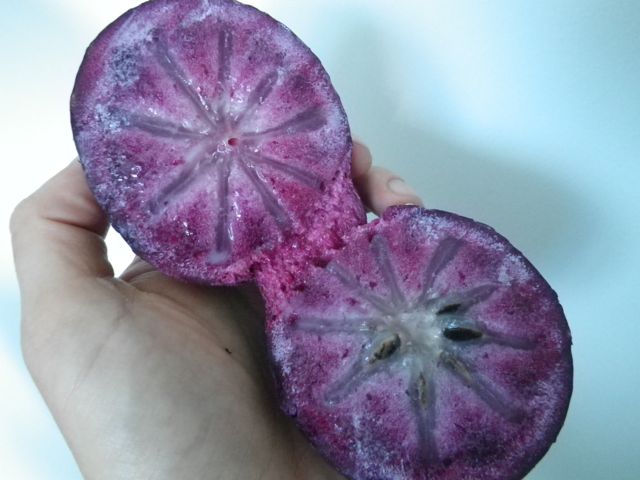
This purple star apple shows a bit of the red and blue that make up its color
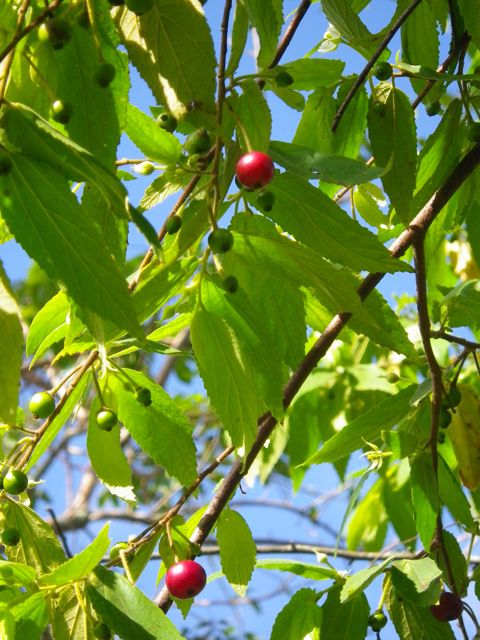
The Strawberry Tree with its Cotton Candy flavored fruit

I am sure the examples of red are more numerous than I have experienced in only one season. I didn’t even hit on the tomatoes, of which the Cherokee has always caught my eye, not to mention they are one of the tastiest you’ll find. I’ve heard the nearly 150 varieties of mango are truly something to taste and see, and I have not spoke of the orchids. The one red I wish I captured was the rosy blush of a ripe mango, but I was too busy eating them to pause to take a photograph, and anyway, the interior is more delicious to the tongue than the exterior to the eye.

Alex Norelli spends his time between Pennsylvania and New York City where he works as a Roof-top gardener and writes poetry and paints. Recently he found himself in South Florida for a time and has set out to see its many wonders with his own brown eyes. You can see some of his works at www.AlexNorelliArt.com

Read Full Post »
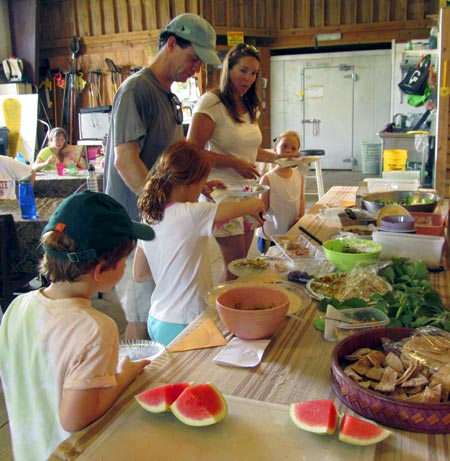
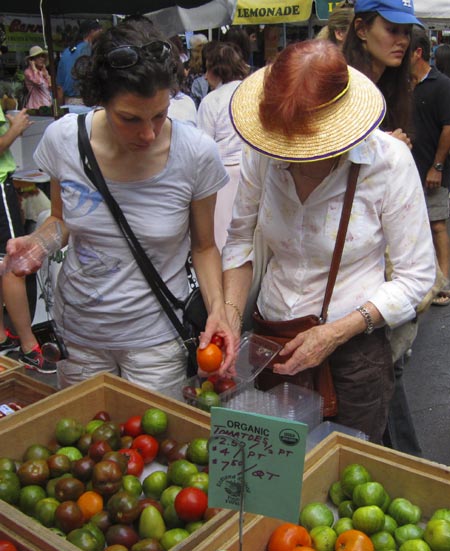
It’s that time of year when heirloom tomatoes are coming in thick and fast. You’ll find them in all shapes and sizes and colors at the Redland Organics tent at Pinecrest Gardens Farmers Market on Sundays.

Big ones, small ones, green, red, yellow, even orange, looking like jewels, enticing you to gather them from their wooden trays.

Eat one and you’ll know why people are crazy about heirlooms. Not only are they beautiful, but they’re just bursting with real flavor, their seed saved for generations.

Green ones tend to be a bit more tart, yellow and orange are sweet, and “black” ones have the richest flavor of all.

To serve, slice and add a little bit of good olive oil and sea salt and you’ve got locavore heaven on your plate and in your mouth.

Read Full Post »
« Newer Posts - Older Posts »