Feeds:
Posts
Comments

Archive for the ‘photo’ Category

A very pregnant doe

Hani Khouri of Redland Mediterranean Organics is waiting for his kids to arrive. Actually, his does (female goats) are pregnant and due to deliver their kids (baby goats) in mid-February or early March. Giving birth to a baby goat is called kidding, I was told. Really, I’m not kidding.

Cleopatra takes a sip of water

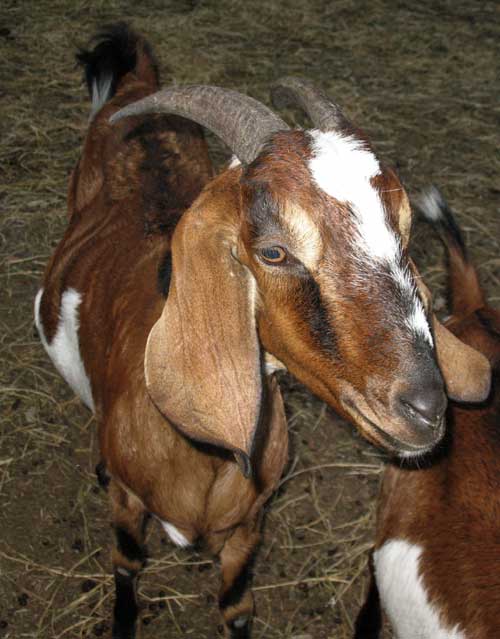
Hani keeps a small herd of Nubian goats, six pregnant does and one buck, and they’re all about one to two years old. This is the first kidding for the goats. This is also Hani’s first kidding and he’s excited, nervous and watchful of his herd. One doe named Cleopatra (whose picture you might have seen in the CSA newsletter last Saturday) is huge and very round. She started standing off to one side and went off her feed, which goats do when they’re sick, and that gave Hani the worries. But the vet checked out Cleo and said she’s ok, that’s also what pregnant goats do. So it’s watch and wait for now.

All this family excitement means no cheese and no ice cream in the CSA shares and at market. Too bad for us humans! The does need to save their milk for their kids. Hani can start milking three to four days after the births, after the kids get the colostrum. But even then he can’t milk as frequently or as much, until the kids are weaned at about two months age. Only then will Hani be back into full production.

Can all you hungry cheese fans wait until April or May? Looks like you’ll have to. Hani checked with other goat cheese producers in the state, and all their does are pregnant too. No fresh, local goat cheese to be had anywhere. Eating with the seasons — including goat seasons — is part of eating local food supplied by local growers, so you’ll have to be patient!
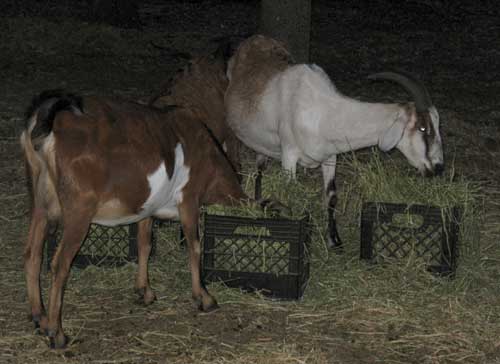
Goats love alfalfa

Read Full Post »

Invasion of giant calabazas

28 pound calabaza

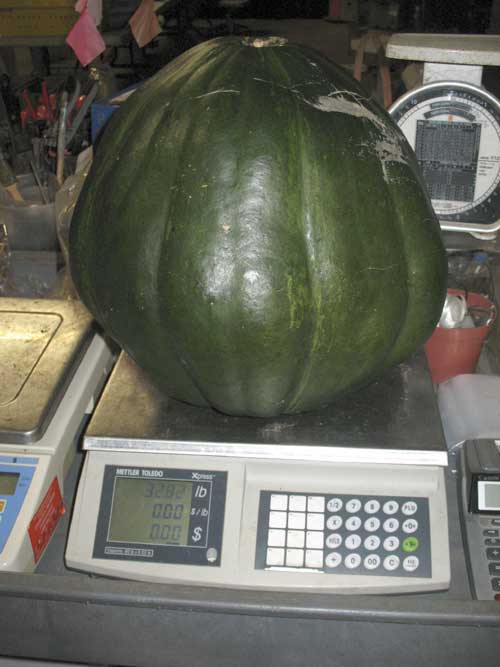
Last week Cliff Middleton brought over two giant calabazas. They were huge! One could fit inside a full share box, maybe. Grabbed a squash and waddled across the barn to weight it — 28 pounds! Weighed the other one — 32 pounds! What kind of organic goodness is Cliff doing over at Three Sisters Farm to get things to grow like that?? Or maybe it’s just the nature of the squash — they want to rule the world.

32 pound calabaza

Margie cut up and sold both at market last Sunday, and farm intern Emily took a picture of one of them cut open and posted it on her blog Crooked Row. Just one squash could have fed a family of four four a week. Hmmm, wondering what kinds of goodies are waiting in the barn to be photographed this week…

Read Full Post »

Mystery of the bees

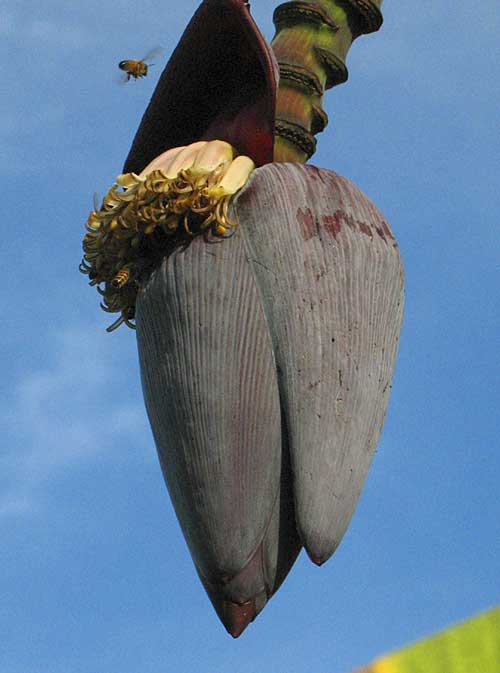
Bees like bananas. Taken in happier times a couple months ago.

About half the honey bees are dead at Bee Heaven Farm, according to Miguel Bode, the beekeeper. He checked his hives after the last freeze and again this past weekend. The bottom of the hives had a layer about an inch thick of dead bees, and there were plenty more dead bees outside the hive entrances. And hives he keeps down the road at Paradise Farms also suffered casualties, but not quite as many, and bees there were more active.

Without a doubt, Miguel suspects pesticide spraying [in the mass casualties in one hive]. No telling where it occurred, because a bee can range as far as a mile from the hive in its search for food. When a bee brings back contaminated pollen to the hive, it will get distributed to the other bees, which will also sicken and die.

Miguel was surprised by the huge quantity of deaths because the hives were in decent shape before the cold weather rolled in. The bulk of his hives, which he keeps in the suburbs, remain in good condition.

It’s not likely that it was the cold that caused the mass die off. Miguel pointed out that bees which live Up North make it through much harsher winters than ours without significant problems. Bees can survive cold weather. When the temperatures drop, the bees inside the hive cluster into a ball, and vibrate the muscles of their wings to generate heat to stay warm. The temperature inside the cluster is about 90 degrees. The bees rotate from the warm inside of the cluster to the cooler outside, so that all can get warm. [But on the other hand, if the bees didn’t have enough food to make it though the abnormally long cold spell, they could have very well been affected by the cold, Miguel told me on Jan 30th.]

So, because the bees have been diminished, it doesn’t look like there will be much avocado honey this next season. The trees are putting out buds and will start blooming in a couple weeks. By the time the next generation of bees is old enough to go out and forage (about six weeks from now), the blooming season might be past its peak. There’s also a chance there may not be as many avocados this summer. [All of this is might and maybe, because mother nature doesn’t work on an exact schedule. A lot of variables are involved.]

This incident is all the more reason why Miguel is searching for that special yard somewhere in the suburbs where he can move his bees. (There isn’t as much mass spraying of pesticides there.) If you have a big yard and love bees and honey, contact him at beemyhoneymiami(at)yahoo.com for the details of the deal.

Read Full Post »

Freeze damaged heirloom beans, two weeks after the last freeze. Bee Heaven Farm, Jan. 22.

A week later, the freeze damage appears even worse at Bee Heaven Farm. Leaves that were brown last week look almost black and withered. Heirloom pole beans are totally fried. The last of the Gold of Bacau beans sold at market last Sunday. Margie says she’ll replant beans, but it’s going to be a couple months before you see them at market again.

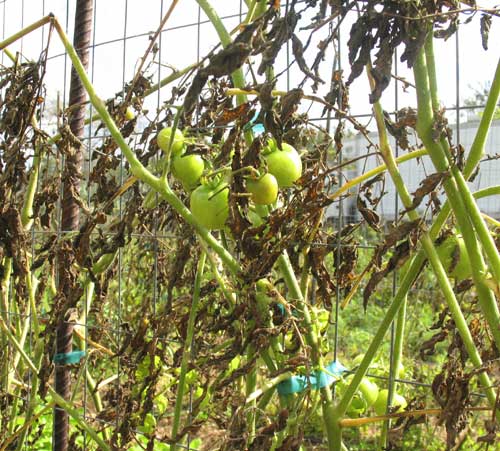
Heirloom tomatoes after the last freeze. Bee Heaven Farm, Jan. 22.

Most of the heirloom tomatoes look pretty rough, too. The leaves of some varieties are completely black and shriveled, and other varieties look just fine. Cold resistance clearly depends on the variety. Most tomato plants dropped green, unripe fruit because of the cold, but enough stayed on the vines for a moderate, hopeful harvest. Irrigation and light fertilizing continues, and it’s wait and see as to how much can be salvaged. “As long as the plant has some green leaves, there’s hope for recovery,” Margie said. She’s also going to replant, but it’ll be a while before there will be more tomatoes at market.

Avocado buds forming two weeks after the freeze.

Some avocado trees got their leaf tips burned by the freeze, but otherwise don’t seem the worse for the wear. They started putting out buds last week. Ideally, the buds will turn into blooms, which when pollinated, will turn into fruit. But time will tell. The freeze could still have a hidden impact on the trees that may show up months later. The blossoms may not form properly, or not set fruit, or drop fruit before it matures. Anything can go wrong, all because of so much harsh cold weather.

Over at Worden Farm, they were affected by the freeze but they are bouncing back, Eva Worden told me. It was very cold for quite a while, with 23 degrees at ground level at the coldest. They had freezing cold weather for 10 days to two weeks, and that abnormally long stretch of cold weather was “definitely record breaking,” according to Eva. In very cold weather, seeds don’t germinate, and plants don’t grow. “They just kinda hang out,” as Eva put it, and that delay pushes back the harvest schedule.

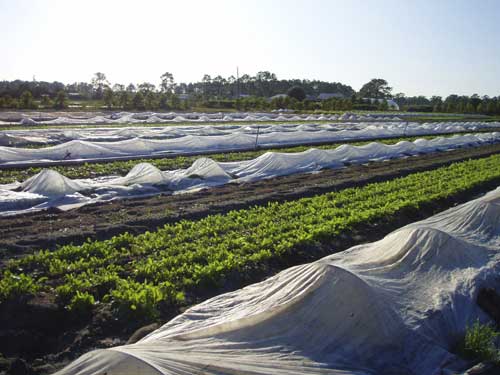
Crops protected by floating row cover. Courtesy of Worden Farm.

Crops were protected with floating row cover. The Wordens and their crew did plant vegetables planning for a freeze to happen (as they get at least one every winter up in Punta Gorda), choosing those that would be minimally affected. Collards, carrots and beets didn’t die from the cold. In fact they will be kissed with sweetness. The cold causes those plants to get a higher sugar concentration. But the warm weather crops — tomatoes, peppers, eggplant and basil — were destroyed by the extreme cold. The leafy potato tops also died from the cold, and now they are harvesting baby potatoes fast and furious. Worden Farm will have enough for us in Miami in a couple weeks, as things get replanted and start to mature. We might get mostly greens and radishes from them, and maybe those small potatoes.

Read Full Post »

edible South Florida premieres

Last week edible South Florida came out with its first issue. The magazine is all about local food, foodies, chefs and growers. Farmer Margie and Bee Heaven Farm were mentioned in a well-written article about CSAs and buying clubs, and several CSA blogs — Eating Local in the Topics, Food For Thought, and Tinkering With Dinner — were also mentioned in a sidebar.

Photo courtesy of edible South Florida

The picture of a CSA share did catch my eye. Nice picture, well done. A few people thought it was mine. After all, there’s no credit line. Nope, not me, I didn’t take it. You can’t blame me for this one. But it sure looks like it could have been mine, couldn’t it? Why, all that was missing were the speech bubbles. Imitation is the sincerest form of flattery!

You can read about the launch party at Mango & Lime and Genuine Kitchen. The magazine is available for free at Whole Foods, or you can subscribe. Looking forward to the next issue!

Contributor Caroline Hatchett and publisher/editor Katie Sullivan

Read Full Post »

« Newer Posts - Older Posts »