Feeds:
Posts
Comments

Archive for the ‘recipe’ Category

Cabbage, cabbage, cabbage!

Mom used to call me cabbagehead.

Last week I fished through the extras box and grabbed a giant cabbage as big as my head. Forgot to weigh it, but my guess is that cabbage was at least twice the weight of the average cabbage in the shares. There certainly was enough to make a large pot of Lithuanian Cabbage Soup. Mmmmmm almost as good as Mom’s.

Lithuanian Cabbage Soup
(kopustu sriuba)

1/2 head of medium cabbage, shredded
1 lb. sauerkraut with liquid
5 cups chicken (or vegetable) stock
2 cups water
1 1/2 lbs. smoked ham hocks (optional)
5 whole peppercorns
2 whole bay leaves
2 medium tomatoes, cored, seeded, diced
1 medium onion, chopped

In a large pot, place the sauerkraut, chicken stock, smoked meat, peppercorns and bay leaves. Add water to cover. Bring to a boil, reduce temperature and simmer for 1-2 hours. Meat should be tender. Remove meat, discard bones, dice and return to pot. Add the shredded cabbage, tomatoes and onion. Bring to a boil, reduce to a simmer, and cook another hour or so. Add water as necessary to keep it soupy. Adjust seasonings to taste. Serve with hot boiled potatoes on the side.

Note: You can substitute smoked turkey for ham hock. If you use chopped piper betel leaves in a vegetarian version, reduce cooking time to 45-60 minutes.

Lithuanian Heritage Magazine, January/February 2009

Read Full Post »

How to make cheese

notes from workshop given by Hani Khouri at Fairchild Ramble

1 gallon fresh raw goat milk milk will produce approximately 1 pound cheese.

Heat milk to a boil. Add 1/3 cup lemon juice, apple cider vinegar or another acidic medium. This will cause the milk to curdle. Remove from heat.

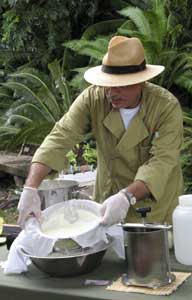
Hani Khouri strains curds from whey with a cheesecloth-lined colander.

Have a colander lined with cheesecloth, set inside a larger bowl. Pour curdled milk into it to strain out whey (liquid). What to do with whey – can use in baking instead of water, use as base for soup or smoothies, or in pickling. (Hani pours it on his plants.)

Stir in salt to preserve, can use coarse or pickling salt. Don’t use iodized. Optional: can add fresh chopped herbs — oregano, thyme, sage. At this stage, if you hang the cloth and let a ball form, you get mozzarella.

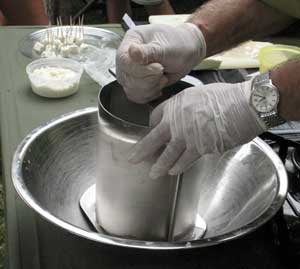
Pushing whey out with cheese press. Finished cheeses are in background.

After it’s fully drained, put into cheese press (can get online at Gaiam). Press all the whey out, keep turning the press and keep pushing the whey out. Let it stand overnight. Don’t let the press stand in the whey.

Take out cheese from press and remove cheesecloth, and let cheese air dry on bamboo mat for three days, turning frequently. Rub the cheese with coarse salt every day.

Cook the cheese in brine (3 parts water, 1 part salt). The longer it boils, the more crumbly the texture. Be careful so the buttermilk doesn’t separate from the cheese. After cooking cheese, need to keep it in brine for storage.

Serve as you would in a Greek salad, or with chopped tomato and olive oil, or with watermelon.

Read Full Post »

It took a bit of arm twisting, but Robert Barnum, the Cantankerous Chef, sent over recipes for Possum Pizza and pictures. Enjoy!

Possum Pizza Dough

7 cups plus 2 tbsp. King Arthur flour
2 cups plus 2 tbsp. tepid water
1/3 cup olive oil
1 pkt. yeast
1 tsp. salt

Put 2 tbsp. flour, 1 tsp. sugar and 2 tbsp. tepid water in mixing bowl and let sit at room temperature for several hours or over night. Put bowl in mixing stand (Kitchen Aid) with dough hook and mix slowly as you add the flour, oil, salt and water. Mix and knead till smooth, 2-3 minutes. Put out on a smooth surface with some flour dusted over the kneading surface. Knead for several minutes and return to the now oiled mixing bowl and cover with dry towel for 1-3 hours. Then place the dough on a smooth flour dusted surface and knead for several minutes and form a ball. Cut the ball into 8 pieces of similar size and roll into balls and place on a tray to double in size again. Each ball can then be made into a 6-8″ thick or 12″thin crust pizza. For outdoor baking on gas or real wood fired smoker/oven, the thick crust works easier for handling. It takes about 4-6 minutes to cook. (I leave the 8 balls of dough on the tray and after they rise place the whole tray into the smoker and bake for about 30 minutes for king sized hamburger buns with a smoky flavor.

Possum pizza cooking on a wood fired grill. Those are smoked eggs off to the side. Photo by Robert Barnum.

Possum Pizza Sauce and Toppings

Herb Onion Butter Sauce
1-2 sticks butter
1-3 onions peeled and sliced either way
2 tbsp. minced garlic
2 tbsp. thyme

Saute all till onions either soft or caramelized, your preference.

Tomato Sauce
2-3 cups of homemade tomato sauce
1 small can tomato paste
2 small cans tomato sauce
1/2 cup cooking wine or beer
— seasonings if no homemade tomato sauce (canned tomatos with basil, garlic, onions, celery, green pepper, salt, black pepper, oregano, hot sauce and soy sauce).
— simmer browned Italian sausage in the sauce to cut and use for toppings while preparing other ingredients for the pizza. It adds flavor to the sauce and the cut medallions of sausage for topping the pizza. Heat and reduce till desired consistancy.

Toppings:
smoked eggs sliced thin
thin sliced green and or red pepper
thin sliced onion
thin sliced mushrooms
thin sliced black olives
thin sliced pepperoni
thawed green peas and corn
thin sliced heart of palm
small chunks of ham
sliced italian sausage
shreded cheeses (can use 1 to many different types, what ever is left over in the fridge)
1 small tin of flat or rolled anchovies

Flatten the dough sort of thick if using outdoors grill for easier handling. Then put herb butter and tomato sauces on 1/2 of each pizza for variation. Each pizza feeds one to overfull. The herb butter side gets the corn, peas, onions, egg, ham, olives, heart of palm and shredded cheese. The tomato side gets cheese, italian sausage, pepperoni, mushroom, green pepper, onions and anchovies.

Read Full Post »

jade-pressing

Mike looks on as Jade juices carambolas

A long hot day of work transplanting tomatoes calls for a cool drink. Jade, a volunteer worker on Bee Heaven Farm, explained that she’s is partial to pineapple juice because it’s more than just a drink, it’s a snack, it’s that substantial.

But what to do with all the Fwang Tung carambolas that are ready now at Bee Heaven? There were too many to eat (how can there ever be too many star fruit to eat?), so making juice was in order. Jade pulled out the antique citrus press (that Muriel blogged about earlier here) and started squeezing cut up chunks of carambola. I didn’t think they would produce that much juice, but with the first press, a good bit of liquid poured out. Not one to waste anything, Jade also hand-squeezed the pulp to get the last drops. What to do with the pulp? I suggested putting it in fritters with chopped jalapenos, or maybe add it to banana bread. What do you suggest?

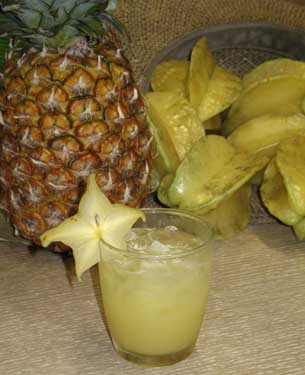
The fresh carambola juice was mixed with (canned) pineapple juice, and then some rum was added. The recipe is: 1 ounce rum, and 1.5 ounce carambola juice, 1.5 ounce pineapple juice, shaken not stirred, serve over ice with slice of carambola as garnish.

carambola-drink

Carambola pineapple rum drink

Read Full Post »

Arazá the "Amazonian pear"

Arazá the "Amazonian pear"

A box of arazá (eugenia spititouta stipitata) showed up in Farmer Margie’s barn last week. Robert Barnum had dropped it off. The fruit is round and yellow, with soft velvety skin like a peach but smoother — “smooth as a baby’s behind,” as Robert described. Arazá is very soft when ripe, smells sweet and perfumey but tastes incredibly tart.

Farmer Gabriele stopped by and tried to eat a whole fruit but failed at the attempt. “It got me in the glands in my neck,” she said as she pointed to the sides of her throat. Each fruit has twice as much vitamin C as one orange, so it is said on the Internet.

Because of the fruit’s tartness, you don’t eat it fresh out of hand, Robert cautioned, and suggested that it might be better used to make a bebida (drink), daiquiris or ice cream. Here’s a recipe from The Cantankerous Chef himself:

Arazá Bebida

Cut up fruit, removing seeds and calyx. The skin is thin and can remain. Put fruit in blender and puree. You can freeze some in ice cube trays if you aren’t going to use it all at once. Add banana (to thicken it), sugar (or honey or agave) to taste, ice, and water and blend thoroughly.

For sorbet, leave out the banana and freeze the mixture. For daiquiris, add rum. For ice cream, add heavy cream and freeze.

Robert has been growing arazá at Possum Trot Nursery for the last 30-40 years. He learned about it on a trip to Costa Rica visiting friends who have a grove and run the Tiskita Lodge. (The fruit originally comes from the Ecuadorean rainforest.) Robert brought back seeds and planted them among the avocados in his grove, where the shrubby understory trees tolerate partial shade. They bear three or four crops a year. The trees are blooming now and will bear fruit again in about four months. If you want to buy arazá fruit, you can give Robert a call at 305-235-1768.

Read Full Post »

« Newer Posts - Older Posts »