Feeds:
Posts
Comments

Watch FRESH: The Movie

FRESH: The Movie is back is this area, for a rare, one-night community screening.

FRESH celebrates the farmers, thinkers and business people across America who are re-inventing our food system.  Forging healthier, sustainable alternatives, they offer a practical vision for a future of our food and our planet.

Among several main characters, FRESH features urban farmer and activist, Will Allen, the recipient of MacArthur’s 2008 Genius Award; sustainable farmer and entrepreneur, Joel Salatin, made famous by Michael Pollan’s book, The Omnivore’s Dilemma; and supermarket owner, David Ball, challenging our Wal-Mart dominated economy.

Friday, Dec. 17th, 7:30pm
Artspace MAGQ
8747 SW 134th St, Miami FL 33176

Tickets are $10. Proceeds donated to local non-profits. An art show focused on food will also be on display in the gallery.

Please RSVP to Barbara & Martha by Evite or call 305-301-4894.

Rangpur lime

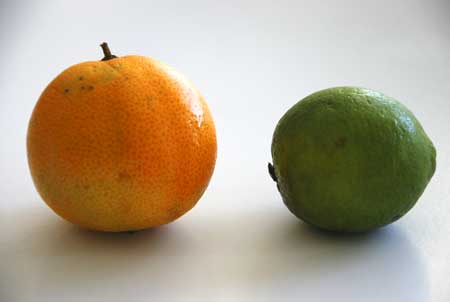
Rangpur lime on the left, and persian lime on the right. The rangpur is a bit bigger than a golf ball. No, it is not an orange, it’s a lime.

Rangpur lime is one of the more unusual fruits at the Redland Organics tent. The fruit is round and greenish-orange, bigger than a persian lime and about the size of a golf ball. Its flavor is both tart and sweet, similar to tangerine. These limes don’t look like limes, but they are. You could use this instead of the usual lime for a different twist on flavor, and once you taste the fruit, you’re hooked. Recently, I had the chance to taste pie made with rangpur instead of key lime, and it was amazingly delicious, with an almost orange-y flavor but still tart, making key lime pie taste almost too sour by comparison.

If you want to try some of these unusual limes, I saw Farmer Margie had a bin full of them at the Roots in the City Farmers Market on Wednesday. If she didn’t sell out, there might be some available on Sunday at the Pinecrest market.

Half-devoured rangpur lime pie. I had to work fast to photograph it before it was all gone. Yes, it was that good!

These rangpur limes were grown at Possum Trot Tropical Fruit Nursery but originate from Rangpur, India, thus the name. Robert Barnum says he has a couple trees which he’s been growing for about 30 years. He claims these lime trees seem to resist canker and “tolerate” greening, two afflictions that have had quite an impact on Florida citrus. He said that most of the citrus he has on his property have died from greening, but rangpur lime is about the only one that still stands up to it.

If you are interested in growing your own rangpur lime, Robert has a few seedlings available for sale. To propogate this tree, you can air layer or grow from seed. This lime is fairly sturdy and will tolerate heat up to 130 degrees, along with too much sun, rain, or salt air. The tree reaches a height of 6 to 8 feet and spreads about 12 feet wide. It can be trained or pruned, and grows well in a container on a patio or balcony. It takes about 3 to 5 years to come to fruit when planted from seed.
CSA share: week 3

CSA share: week 3

Roselle

A bin full of roselle at farmers market.

One of the more unusual things in the last CSA box was roselle, grown by Cliff Middleton of Three Sisters Farm. Roselle, also known as Jamaican sorrel, is a species of hibiscus used to make cranberry-tasting beverages. You might also know the drink as “jamaica” (pronounced ha-MAI-ka), popular in Latin countries.

This is what to do:

1. Remove the buds from the stems using a sharp paring knife.
2. Carefully trim the fleshy red calyx away from each inner seed pod.
3. Boil the calyxes with some ginger root  in a pot of water and let them steep for a good long time, 12 hours to overnight. The longer they steep, the stronger the flavor.
4. Sweeten with honey, or not, and enjoy the tart drink. Typically, you drink it chilled, but I suppose you could try it warm on a cold day.

Pictures of boiling calyxes and the final drink are over on Farmer Muriel’s Little River Market Garden blog.

Throw away the seed pods. They are immature and will not grow. You can’t eat them, either. The buds or calyxes will keep for a while in the refrigerator, but make sure the plastic bag they’re in is unzipped so they can breathe (or use those new zipper plastic bags with little holes in them for keeping produce). Fresh roselle was available at the Liberty City, South Miami farmers markets last week, and Overtown Roots in the City farmers market this week. Dried sorrel is available at Jamaican markets.

Download last year’s CSA newsletter with a similar recipe and a bit more info on roselle.

Baby chicks: day 9

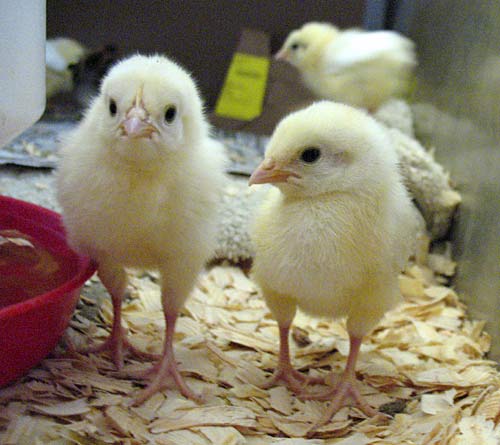
Leghorn chicks checking out the camera

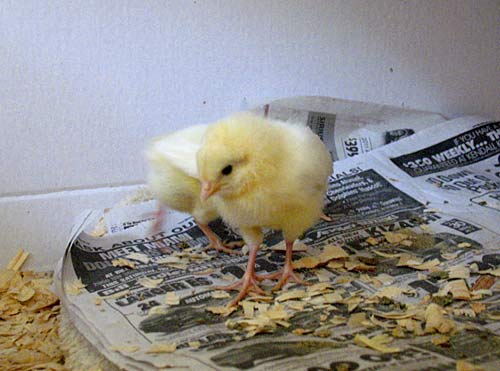
These little birds were hatched on Nov. 10th, and are 9 days old in these pictures. At this stage they are little balls of fluff. The yellow ones will grow up to be Leghorn hens (hopefully), and there are a couple brown ones in the mix too. One is a Rhode Island Red, and the other is a mystery breed selected by the hatchery.

At 9 days, chicks are already pecking and scratching.

They live in a modified half chicken tractor set in the carport of the farmhouse. Their bedding is wood chips, newspaper and old carpet. They get fresh feed and water every day. At night, Farmer Margie tucks them into a cardboard box, where they keep each other warm through the night. She brings the box with chicks inside the house at night, to keep them from getting chilled from the cold.

Peep peep peep peep!

What you don’t hear in these pictures is the constant peeping as they talk to each other. Wonder what a baby chick has to say to the others? And so much peeping, too!