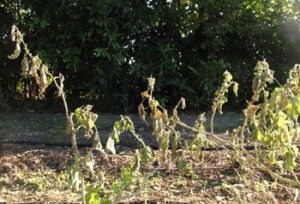
December: Warm weather veggies like asian eggplant weren’t able to take the cold.
It’s balmy now, but last month was a long, bitter December. Three cold spells hit Redland hard with night after night of record-breaking low temperatures that dropped to freezing and below. It was the coldest December on record in South Florida, according to the National Weather Service, and the coldest stretch of temperatures in the South Dade agricultural areas since 1989. The last time temperatures were even slightly this cold was last January, when we had almost two weeks straight of severely cold weather, also with lows in the 30s and below.
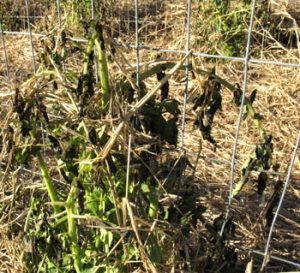
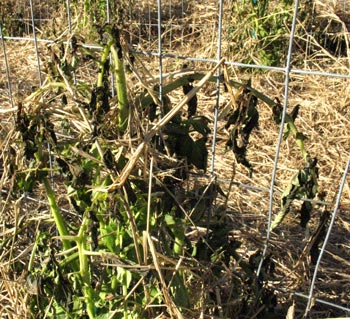
December: Tops of tomato plants froze despite being covered in straw to keep warm.
Farmer Margie told me Bee Heaven Farm got “a blanket of frost” during the second freeze early in December. (She posted many pictures of frost damage on the farm’s Facebook page.) Besides running irrigation, she had her own ideas about how to protect her plants from the freezing temperatures. If you came by for Farm Day in mid-December, you saw a lot of straw piled along rows of plants. That straw was piled on top of young pole beans and young tomatoes, forming “teepees,” as Margie put it. The straw acted like a blanket to keep the cold out. It mostly worked, except in places here and there where wind pushed straw aside and exposed plants to killing cold. Some tomato plants showed damage, and some in the same row looked ok. On my latest visit last Friday, I noticed that a few survivor tomato plants were blooming and a couple others already had fruit growing. Heirloom tomato lovers, have hope!
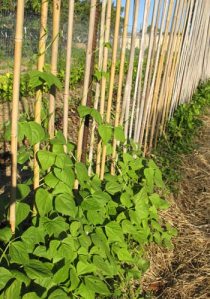
January: Some pole beans survived freezing temperatures. The smaller plants down the row replaced the ones that couldn’t take the cold.
Pole bean plants that survived looked vigorous last week with promising tendrils twirling up bamboo poles. Bush beans (Tongue of Fire and Dragon’s Tongue) were looking pretty good too. They had been covered with a two layers of a long white blanket of spun polyester called Reemay, its sides weighted down with straw so they wouldn’t get blown around by the wind. It worked fairly well, and lots of those beautiful purple and red colored beans made it to market the last two weeks.
The cold made plants go dormant, and their growth slowed down for a while. In the last few days of warmer weather, they suddenly hit a growth spurt. Tomato and pole bean plants with significant damage were removed and replanted. As I looked around Bee Heaven, it was hard to tell where the freezes had left damage.
But not everybody fared so well. After the second freeze in mid-December, I went out to look at one of Dan Howard’s bean fields. (Dan runs Homestead Organic Farms, and plants about 100 acres of beans and other vegetables every season.) The bean plants were still on the small side, not even half
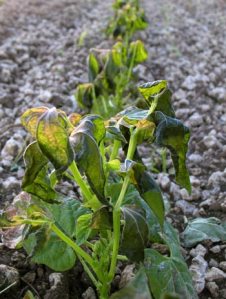
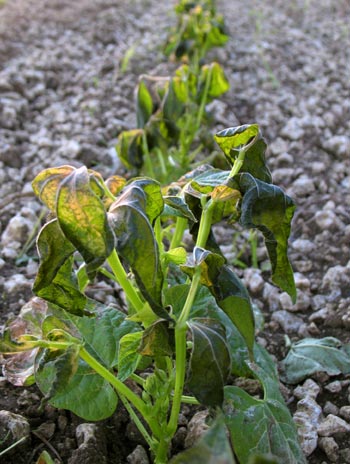
December: Green beans in one of Dan’s fields didn’t make it. See the damaged leaves? Imagine a 20 acre field looking like this.
grown, and in the late afternoon sun, they seemed ok. But when I stooped down and looked more closely, I saw that almost almost every plant had discolored leaves damaged from the cold. Dan said he had sprayed water on his fields all night long. Ideally, water would freeze and ice would coat the plants to preserve them from further damage. Didn’t look like it worked all that well in the field I visited, yet Dan said that some of his other fields got less damage. He’s replanting beans and starting over this month.
December’s freezes hurt large commercial growers in South Dade with $273 million in crop losses, according to the Florida Dept. of Agriculture. (Last January, growers were hit with $280 million in crop losses.)
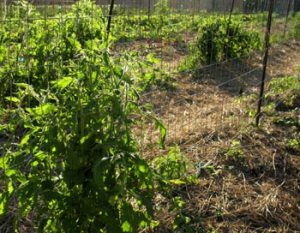
January: Some tomatoes survived. This plant is about knee high. Note gaps in the rows where damaged plants were removed and replanted.
The recent losses have their impact on us eaters as well. According to a recent article in the Miami Herald, prices for green beans, corn and yellow squash have gone up dramatically due to short supplies. And we still have a couple more months of winter to go. The long-range forecast did call for temperatures warmer than average. Hopefully that will turn out to be the case.
Read Full Post »






 Redland Rambles