Feeds:
Posts
Comments

Archive for the ‘farmer/grower’ Category

Margie, Dan, Robert, Muriel, Meghan

Margie, Dan, Robert, Muriel, Meghan

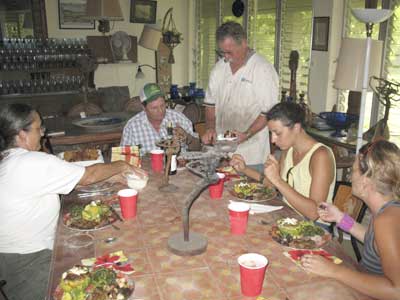
Last week Robert Barnum of Possum Trot Nursery invited several people over for a test tasting of several dishes on the brunch menu. Farmer Margie brought along intern Muriel; and Meghan the forager, along with Farmer Dan Howard and myself, gathered at the table.

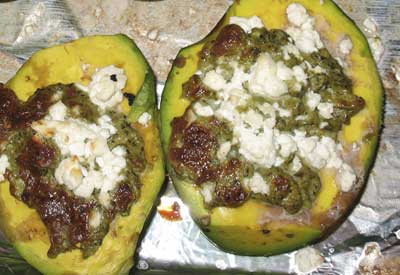
Broiled avocados stuffed with scrambled eggs and goat cheese

Broiled avocados stuffed with scrambled eggs and goat cheese

The avocado half stuffed with scrambled eggs was unique, to say the least. The eggs were speckled with minced betel leaf that gave a sort-of peppery flavor. It was topped with Hani Khouri’s goat cheese, that browned slightly. This concoction is Robert’s own recipe. The betel leaf came from a tree on his property.

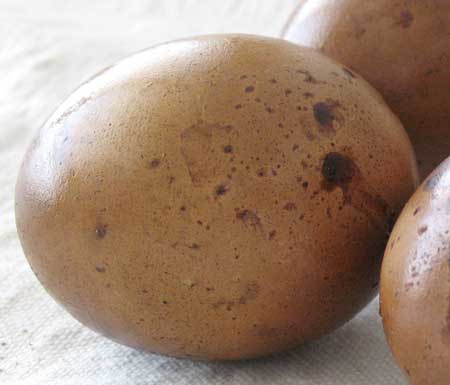
Smoked eggs

Smoked eggs

Speaking of eggs, don’t miss out on the smoked eggs. Robert puts the eggs in his open-air smoker and lets them cook for several hours. The egg shell gets a rich brown color, and the inside is hard cooked, with a mild smoky flavor.

The allspice muffins tasted like spice cake. Be sure to spread honeyed labneh (also from Hani) over the muffins as a sweet-tangy topping. The passion fruit sorbet sweetened with agave is a delightful finish to the meal. The taste of the fruit comes through clearly, and the agave takes the edge off its tartness. The passion fruit and allspice were also grown at Possum Trot.

After eating, we took a stroll to where the tables will be set up under trees off to the side of the house. It’s a shady and breezy spot, and should be a delightful place to dine.

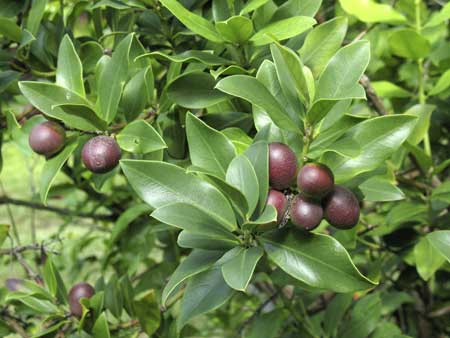
WARNING! Do not eat the fruit of this tree!

WARNING! Do not eat the fruit of this tree!

Not too far off is the African bushman poison tree. Its fruit looks enticing, like plump olives waiting to be gobbled down. But Robert explained that the tiniest nibble can actually kill an elephant. This tree will have a fence around it on the day of the brunch, but I thought I’d give warning.

I’ll be at the brunch taking photos and video of the event. Will post a link where you can view and download pictures.

Read Full Post »

Farmer Margie's blog!

Farmer Margie's blog!

Farmer Margie has posted on this blog, and now she’s got the blog fever and started her own, Bee Heaven Farm’s blog. The news and details will be a lot more specific to daily operations at the farm. Meanwhile, Redland Rambles will keep rambling about Bee Heaven, the CSA and its members, other growers in Redland Organics, and whatever’s going on in Redland that’s relevant and that I find out about in a timely manner. Am cutting back on the politics, though…

Read Full Post »

If you bought smoked eggs or fruit this summer, the jakfruit, starfruit and passion fruit (among others) came from Possum Trot Nursery. Later this month owner Robert Barnum will host a brunch outdoors on his property. You’ll get a tour, then eat a sumptuous meal — The Possum Trot Experience — prepared by Robert himself. He calls himself The Cantankerous Chef and invents all kinds of tasty dishes that use his fruits. This month’s brunch should be an easy challenge for Robert — use only local ingredients except for salt, pepper, sugar and the like.

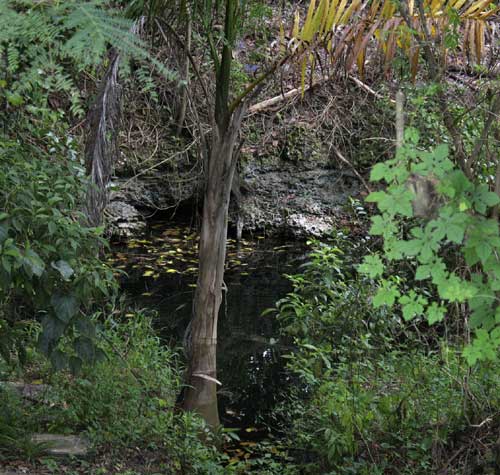
Possum Trot is completely unlike any plant nursery you have ever seen before. It’s a cross between a grove and a primeval jungle, 40 acres of Old Florida wildness that makes Fairchild Tropical Gardens look like a manicured rosebush. Robert has collected all kinds of trees that have useful purposes, whether it be fruits, herbs or wood for smoking food. The property also has a sinkhole — or is it a spring? — and a bomb shelter right in the ground.

Here are pictures of my first visit to the nursery in September 2007.

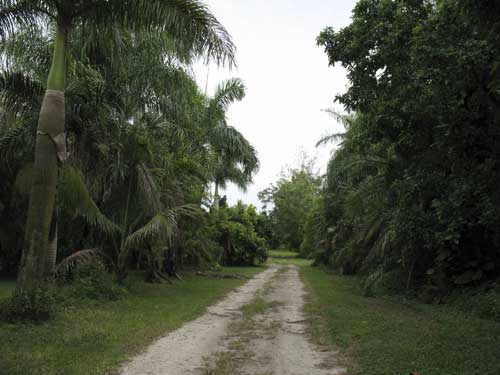
Entering Possum Trot Nursery

Entering Possum Trot Nursery

Ye olde swimming hole

Ye olde swimming hole

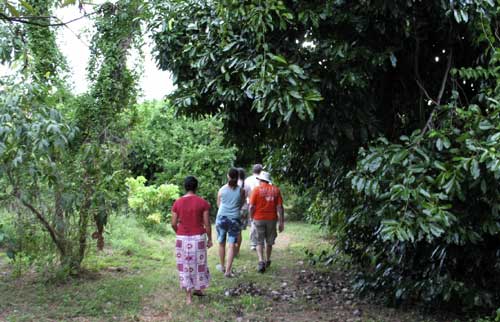
Strolling through 40 acres of tropical trees

Strolling through 40 acres of tropical trees

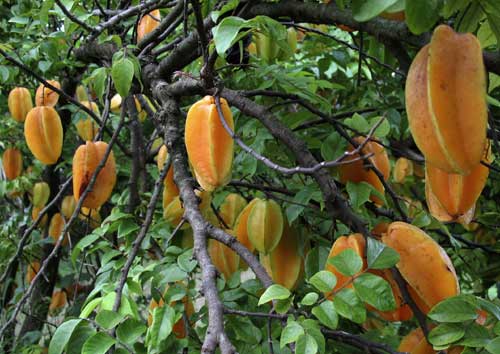
Star fruit hang like golden lanterns

Star fruit hang like golden lanterns

Read Full Post »

John Ikerd

John Ikerd

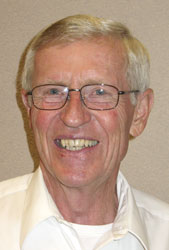
Back again to the Small Farms Conference. (Nope, I’m not done blogging about it.) The keynote speaker was Dr. John Ikerd, author and Professor Emeritus of Agricultural Economics from the University of Missouri, whose speech was Small Farms in the Year 2050. (An earlier version is on his web site.) According to the conference bio, Ikerd “came to the conclusion that not only was American agriculture not sustainable but neither was the American economy or society.” He is a huge advocate of sustainability and local food systems, and has written a great number of papers with that perspective.

Ikerd posed the question, “Can farmers meet the challenges of creating a sustainable agricultural system? Innovative farmers commit to meet needs of the present without diminishing future productivity.” He said that the current industrial approach to farming is simply not sustainable, and that lack of sustainability is a major part of a growing global economic problem. Industrial farming uses an enormous amount of fossil fuel, generates over one fifth of all greenhouse gas emissions in the US, and maintains an income disparity for farm and food workers working for low wages.

So what’s the solution? According to Ikerd, the local food movement (which evolved from the organic food movement in the 1980s) has more potential for transforming society. It requires a fundamental change in thinking, primarily that local growers are producing food that is good, clean and fair, not a commodity that large, industrial farmers produce.

Sustainable agriculture is based on people compared to industrial agriculture which is centered on capital and technology. Ikerd described local farmers who choose to grow high-quality food that is natural, organic and sustainable. They work with the forces of nature, and fit their farm to the land and climate. Their crops are diverse and complex because nature is diverse and complex.

In 2050, Ikerd predicted a connectedness among local growers who create regional liaisons among themselves to market their crops, forming the backbone of a national network of community-based food systems. Out of local/regional connectedness comes farmers markets, CSAs, farmers selling directly to restaurants and markets, farm-to-school and farm-to-hosptal programs. Ikerd mentioned Alice Waters and her legendary restaurant Chez Panisse which set the trend decades ago by serving fresh, local and seasonal food from local and sustainable farms.

He also predicted in 2050 the major trend in food marketing is targeted toward a specific group of consumers, not the mainstream. Sustainable farmers work to build relationships with their customers instead of making a quick sale. Their customers are not naive hippies, but conscious buyers looking for food with ecological and social integrity, and expect farmers to have the same integrity and care about their customers and society. Ultimately there is a sense of connectedness — between growers and their customers, and between customers connecting with their food and the place it comes from — which ensures ecological and sustainable integrity.

Ikerd’s speech was full of fire and brimstone, and got a standing ovation. It was fascinating to hear Ikerd’s predictions for a new food system. But it’s not that far off into the future. Something similar to what he describes is happening right in our own backyard. Redland Organics is a group of local organic and natural growers that Farmer Margie organized to market their diverse foods directly to the CSA members and buyers at the farmers market. You could say that Redland Organics is cutting edge.

“Change happens one person at a time. Never underestimate the power of individual choices,” Ikerd said. So, here’s some questions to chew on: What are your choices? How are you making changes? How do you connect with your food and where it comes from? Most importantly, have you returned to the common sense pursuit of happiness?

Read Full Post »
The spread in Sunday's Outlook section

The spread in Sunday's Outlook section

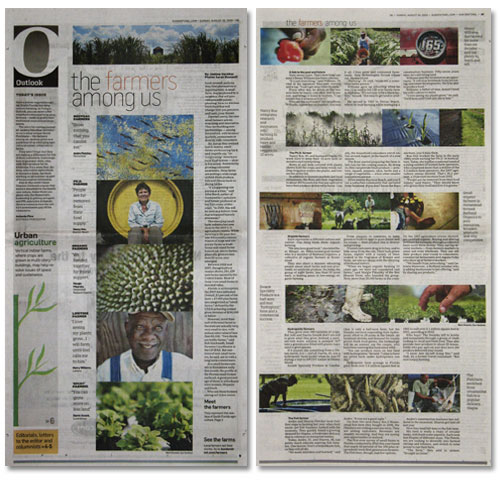
Did you happen to see the article about local farmers in Sunday’s Sun Sentinel? Margie Pikarsky, Hani Khouri and Gabrielle Marewski, among others, were interviewed by Jaideep Hardikar, a journalist from Nagpur, a city in central India. His beat is rural India and agriculture. Jaideep is here in South Florida finishing up a six month fellowship through the Alfred Friendly Press Fellowship program. He is one of 10 fellows selected this year to work in American newspapers. He also met up with us at the Small Farms Conference earlier this month.

Note: Jaideep’s article The Farmers Among Us has been removed from the Sun-Sentinel online archive. Discovered that on Oct. 13, 2009.

Read Full Post »

« Newer Posts - Older Posts »