Feeds:
Posts
Comments

Archive for the ‘photo’ Category

Local fruit at Whole Foods

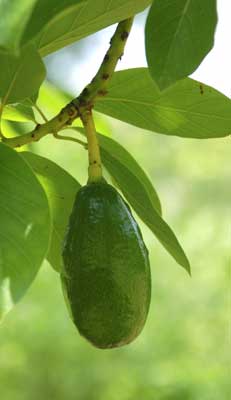
Donnie avocado

Farmer Margie just got back from dropping off 30 bushels of her certified organic Donnie avocados at the area Whole Foods warehouse. Look for her fruit in South Florida stores starting this Thursday. If you don’t see them, ask the produce manager to get them for you.

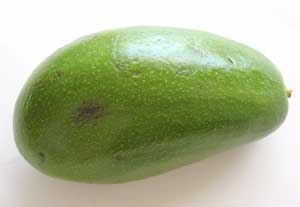
Here’s a picture of a Donnie that I got at last Saturday’s fruit sale. I can hardly wait to sink my teeth into it! These are mild and creamy and I can only eat half at a time. This particular fruit weighs one and a half pounds, but by the end of the season, they will grow to 3 to 4 pounds!

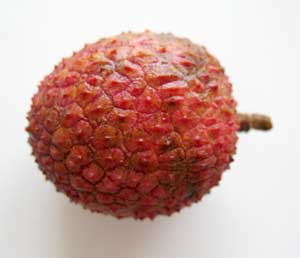
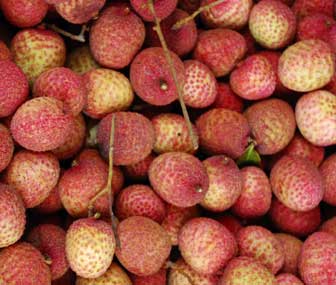
Mario's lychee

Margie also dropped off certified organic lychees that are Certified Naturally Grown by Mario Yanez, which will also be in Whole Foods this week. His lychees are plump and sweet and juicy. It’s getting toward the end of lychee season, so get them while you can because there aren’t going to be any more.

Read Full Post »

Three very local ice cream makers presented their frozen creations at the Ice Cream Social at Bee Heaven Farm on the Fourth of July. All of the flavors were made from local, tropical fruit. Two fruits — lychee or mamey — were common to all three ice cream makers, and each brought at least one more flavor. Guests got a ballot when they checked in, and voted on their favorite flavors. (For official results, go see the Bee Heaven Farm blog.) Altogether, a person could indulge in more than 10 different flavors of ice cream and sorbet — a locavore ice cream eater’s heaven!
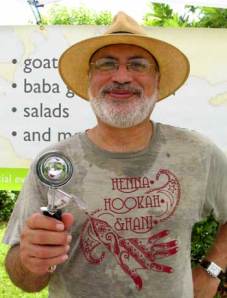
Hani Khouri and his ice cream scooper ready to go!

Hani Khouri, of Hani’s Mediterranean Organics, has been making ice cream with fresh goat milk for about two years now. He was definitely the artisan of the group. All ingredients were super local — goat milk from his herd of Nubian goats, fruit from Redland groves, and even local sugar. Hani bought guarapo, or sugar cane juice squeezed from locally grown cane, and evaporated it slowly over a low heat to molasses, then cooked it longer to get a brown sugar similar to panela. That process alone took several days.

His mamey ice cream tasted mellow and fruity. Lychee was sweet but not too sweet. Lime was most unusual, bright yellow from turmeric, more on the savory side with ginger, cinnamon and other spices added for flavoring. It wasn’t obviously lime-y, and seemed to change flavor with every spoonful. Very interesting, because I hadn’t considered savory as a possible direction for ice cream (or sorbet). Hani also brought a pale yellow, sweet-tart cas guava ice cream with a light refreshing flavor. Saw passion fruit ice cream circulating, but didn’t get a chance to taste it. Overall, Hani’s ice cream was very light and refreshing, and the fruit flavors of lychee and mamey were bright and clear. The home made sugar gave a slightly gritty texture, and the lime ice cream also had little bits of lemon zest in its texture. Goat milk has a slightly tangy after taste that seems to work best with tart flavors. This summer I like cas guava very much (my new favorite?), and last summer I liked arazá, another sour tropical fruit that is impossible to eat by itself but was terrific in ice cream.

You can order ice cream online at Hani’s Mediterranean Organics. There are two pick up locations. In Dade, pick up at Sous Chef 2 Go, and in Broward, pick up your order at BM Organics.

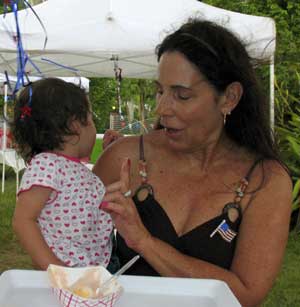
Enid and Albert Harum

Gabrielle Berryer of Gaby’s Farm ice cream is the queen of the local ice cream scene. She has been making her frozen goodies from local fruits for 15 years and retailing for the last 5 years. Black sapote was the first flavor that she introduced to the public at the Fruit and Spice Park, and since then her line has expanded to 30 flavors, which are locally produced. All fruit is locally grown, and most comes from her two-and-a-half acre farm.

Lev and Liz discovering Gaby's mamey ice cream.

Gaby brought mamey, guava and canistel ice creams, and lychee sorbet. Her ice cream flavors taste more creamy than fruity, and the texture is silky smooth. Overall, her ice cream tastes and feels a lot like store bought. Dark pink mamey tasted much like a milk shake. Light pink guava was incredible combined with a slice of mango pie. (Yes, there was pie — and cookies too.) Canistel was egg yolk yellow (that’s why it’s also called egg fruit) and likeable with the addition of cream and sugar, but I’m still not a big fan. It could be more exciting if pumpkin pie spices were blended in. Lychee sorbet had a clear fruit flavor and was quite refreshing, but just a tad sweet.

Find Gaby’s Farm ice cream at area Whole Foods, Fruit and Spice Park, Schnebly’s Winery and various local hotels.

Katie Edwards with ballot in hand and one of the candidates.

Robert Barnum was the jack of all trades of the bunch. He brought the above-mentioned mango pie — and pie lovers, this one was for you! It was very tasty, especially with guava ice cream. Two Pie Are Squared, as he called it, was baked in two large sheet pans. He joked that he used “rectangular mangoes” for the pie filling. “I never do anything normal,” he explained. Rectangular or not, the mangoes were his very own Yellow Bellied Possum variety. Robert also brought lychee and peach ice creams and white sapote sorbet.

Mmmmmmmm mango pie!

Most intriguing was his Florida peach ice cream. Yes, peaches do grow here, and don’t let those Georgia folks tell you otherwise. Robert has several Red Ceylon trees, a wild naturalized variety that was cultivated in his grove since the 1950’s. The fruit has white flesh, red at the seed, with a pale green skin that never turns peachy yellow. The ice cream made with those peaches was rosy pink with little flecks of darker red skin and tasted sweet-sour, peachy-ish, a bit like strawberry but not quite. Robert explained that he picked early to keep fruit flies from infesting the peaches, “to keep the protein content down,” he chuckled. The fruit hadn’t completely ripened by the time it was mixed into ice cream. Would love to taste the ice cream made with a more ripe fruit, but it was pretty good the way it was.

Robert also brought lychee ice cream, which tasted pretty good, having a nice balance between fruit and cream, and wasn’t outrageously sweet. The daring experiment of the bunch was white sapote sorbet, sweetened with local honey instead of palm sugar. To my tongue, which was already addled by sugar from the other two ice cream makers, this combination of fruit and sweetener had a slightly bitter bite. Robert describes the fruit as having an “astringent” flavor. Am not sure about this one, but then, I don’t remember if I’ve even tasted white sapote fruit. But I saw other people enjoying the sorbet’s unusual qualities, so it could just be me, spoiled by sweetness.

Head over to Possum Trot, Robert’s place,  for dinner and a tour of his 40 acre grove, one of the last bits of Old Florida left in the area. And best of all, you can ask him to make ice cream and pie for dessert! If you want to grow your own Red Ceylon peaches, seedlings will be available next spring.

Possum Trot Tropical Fruit Nursery
14955 SW 214th St
Miami, FL 33187-4602
305-235-1768

Read Full Post »
Winter melon for summer

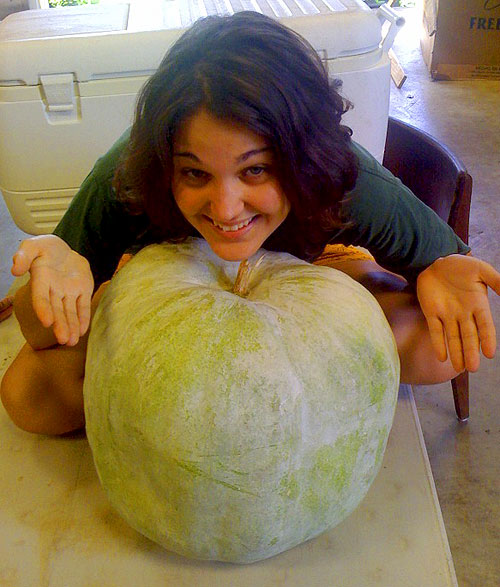
Rachel presents the winter melon. Photo by Daniel.

One of the more unusual offerings at the Bee Heaven Farm summer fruit sales has been winter melon, also known as wax gourd. It’s called that because of the white, waxy coating on its green skin. A few weeks ago, I rode up with Farmer Margie to fetch them from C&B Farms up in Clewiston. The growers boxed and shipped the giant melons to various northern cities that have large Asian populations.  I’m told the Chinese consider winter melon a cooling food, and that these melons grow much larger in China.

A slice of winter melon.

These melons are huge and heavy! The one in the picture weighed at least 20 pounds. There’s no way that you could sit down and eat the whole thing, nor would you want to. Usually you buy it by the chunk. The flavor is very mild and slightly sweet, similar to a honeydew, and the flesh is white. The melon is very juicy and releases a lot of clear liquid after you cut it. A slice doesn’t keep very long in the frig, maybe a couple days at most, and then it starts to get mushy in places. If you’re not going to use all of it, wrap peeled and seeded chunks in plastic and freeze.

Winter melon is best eaten cooked, not raw. Recipes abound on the Internet for winter melon soup, stir fry, drinks and even pickles. You can also freeze peeled and seeded chunks for later use. After sifting through all kinds of possibilities, I settled on making soup. I had all the ingredients on hand — homemade vegetable broth, a couple skinless chicken thighs, carrots, mushrooms, scallions, garlic and ginger. The melon chunks softened as they cooked and turned translucent. They took on the color and taste of the broth. I added salt and pepper, and finished with some toasted sesame oil for more flavor. The soup was good, but I can’t say for certain if it was cooling. It was hot soup, after all.

Chicken vegetable soup with chunks of winter melon and a drizzle of toasted sesame oil.

Maybe next time I’ll try making a simple drink to test the cooling properties of the melon. A drink recipe I found on asianhealthyrecipe.com calls for one pound of melon and 5-6 cups of water. These are the instructions: Cut the melon into chunks and cook it skin, seeds and all, until some liquid comes out of the melon. Then add water, bring to a boil. Remove from heat. Add honey to taste, and serve either hot or cold. The recipe didn’t say if you’re supposed to strain the chunks out, but if you did that, I suppose you could eat the melon in a separate dish, maybe mixed in with something else. (It is, after all, quite mild flavored.) The drink is supposed to be cooling — and slimming, if you leave out the honey.

Have you tried winter melon? What recipes do you have for it?

Read Full Post »

Summer has just begun and it’s already a scorcher! We’ve had above normal temperatures since April 26, according to the National Weather Service. Highs have been 90 degrees or above since May 30 (except for a slight dip to 88 on June 1). The heat index has been 100+ degrees most days. Last June was even hotter. Record temperatures were set on June 22, 2009 in Miami with a high of 98. Fort Lauderdale had a high of 100, tying an all time record. This summer feels hotter because temps have consistently been at 90 or above for 59 days and counting, while last summer temps were mostly in the high 80s with a few spikes in the 90s.

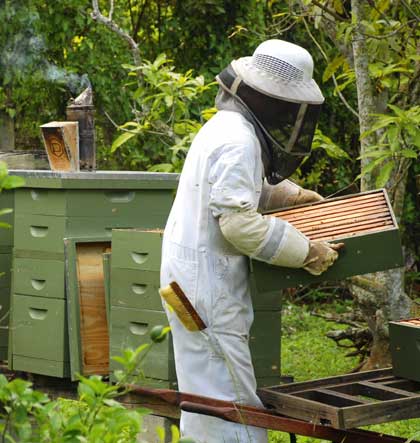
The last picture I took before getting chased off by a hot and cranky bee.

This crazy heat has an effect on livestock at Bee Heaven Farm. Chickens stand with their beaks open, panting, and hold their wings out a bit to their sides to try to cool off. Bees don’t like heat and get cranky. I passed by the hives when beekeeeper Miguel Bode was working with them a few weekends ago. One bee took offense to where I was standing, buzzed around my head, and chased me for a good distance. Lucky for me, I didn’t get stung but it felt close! Even the worms in the vermiculture bin have been suffering mightily. Instinctively they’ve dived down to the bottom of the bin, seeking cooler soil, but hit bottom instead. The Worm Guy (that’s what Margie calls him) advised chilling them down with frozen water bottles buried in the bin. Wigglers on the rocks, anyone?

I asked Farmer Margie what grows well in this kind of heat. “Weeds!” she exclaimed. Those weeds completely took over vegetable beds after Gleaning Day. Margie mowed them down, and now that she’s had two days without rain, she’s out on her tractor tilling the soil, preparing to plant cover crops.

Some summer fruit is finally starting to get ready, but running a little behind schedule because of the freeze this winter. The extended period of super cold weather caused plants to go dormant for weeks. Lychees (Mauritus variety) are bearing late this year. Margie pointed out that last year, a bumper crop of lychees were harvested in late May. This year the harvest began in mid-June, and the quantity isn’t quite as much.

Mauritus lychees from last summer.

Another casualty of the cold are mango trees which were in bloom in January when the freeze hit. The long stretch of freezing temperatures damaged blossoms. Some fruit set and grew, but then aborted and fell off. I’ve seen trees that don’t have as much fruit, and if they do, they’re not as plentiful and not as big or developed.

Half-grown Donnie avocado.

Avocado trees seemed to escape significant damage from the freeze in January. Branches are loaded with fruit several inches long, about the size of Haas avocados in the groceries. If you’re not familiar with Florida avocados, and you have a tree in your yard, don’t get confused and pick early! The varieties that grow here, especially the Donnies that Margie raises, get much much, much bigger than the Haas variety from California or Mexico. Last summer many Donnie avocados weighed in at 3 pounds apiece, and one giant weighed 4 pounds. Avocado picking will start in mid-July, also several weeks later than last summer.

Read Full Post »

A lot was going on at the Fairchild Farm & Garden Festival. Here’s another post from the Festival, about growing your own oyster mushrooms.

On Saturday April 24th, Gabriele Marewski and Drake Kurlander of Paradise Farms were set up for a talk on her oyster mushroom operation. “Growing mushrooms is an art and a science,” Gabriele said as she introduced Drake, an FIU student with a passion for mushrooms. He works closely with Benjamin Masope, the mushroom expert from Ghana who is responsible for successfully starting Gabriele’s mushroom production. (You can read more about his story in the April issue of edible South Florida.) Here are my notes from Drake’s presentation.

Drake Kurlander

“Anyone can grow mushrooms once the process is understood,” Drake said. He went on to explain the life cycle of mushrooms. You start with spores, which germinate, grow in substrate and result in the fruit body, or edible part of the mushroom. Spores are in the air everywhere. Spores are both male and female, and once they germinate, they make a simple structure called hypha that replicates itself, combines, and creates a network called mycelium. This network colonizes, and two and a half to three months later, produces pin or baby mushrooms. From that stage, it takes only two to three days for a pin mushroom to grow to full size. A full grown fruit body (as the edible part of the mushroom is called) has a hollow structure full of spores, and it can reach out and put spores in the atmosphere. A fruit body will also grow by cloning. You can sever it and put it in substrate (special growing medium) and it will expand.

The production process on the farm follows a specific process. The growers start the spore culture in a petri dish. Next, they sterilize grain (they use organic chicken feed at Paradise) under high heat and crush it. The grain, or primary substrate, is inoculated with spores and incubated in jars. While it’s growing, Drake and Benjamin mix up the secondary substrate — a top secret formula! — and put it into bags. Those go in the pasteurizer which cooks the substrate at a high heat to kill any wild spores which might dominate the mushroom spores. The spawn is then inoculated into the sterilized substrate and left to grow in a chamber which circulates humidified air. “The challenge is to maintain sterility in the grow room,” Drake explained. “Air has fungi and contaminants floating in it.” Currently they are harvesting 200 to 300 pounds a week, and want to increase production to 800 pounds a week.

Oyster mushroom starter kits. Each bag of substrate is inoculated with mycelium. Just add water and light, and wait for signs of growth!

If you’re adventurous and want to grow your own oyster mushrooms, Gabriele has starter kits available. The kits consist of a large bag of secondary substrate inoculated with mycelium, and a larger bag with perlite. Drake explained the home growing process with the starter kits. Soak the perlite with water, strain, then set the bag of colonized material in it. The water provides humidity that the mycelium needs to grow and set fruit. “Open it up and air it out every day and mist with water. After a week or two, you will see the mushrooms start growing.” The best place to grow is on a windowsill or near a source of light. “The mycelium need light to trigger pin set,” Drake explained. He recommended that you harvest all the mushrooms at one time, or it will shut down growth and start to rot. Once picked, the fruit body growth will start again, and you can re-harvest several times. Click here for a copy of Paradise Farms’ mushroom growing instructions. (If you want to learn more, Drake recommended this book — The Mushroom Cultivator: A Practical Guide to Growing Mushrooms At Home by Paul Stamets.)

The starter kits are available for $40. Each bag or inoculated substrate will last for about four to six months of growing, and you can harvest six to twelve pounds of mushrooms from it. Gabriele pointed out this is a pretty good deal, since mushrooms retail for $10-12 per pound. You can order a mushroom growing kit from Paradise Farms, and pick it up from Benjamin where he works at the Crackerman booth at the Coconut Grove Farmers Market on Saturdays.

Paradise Farms
305.248.4181
Info(at)paradisefarms.net

Read Full Post »

« Newer Posts - Older Posts »