Feeds:
Posts
Comments

glean to gather grain or other produce left by reapers; to pick up after a reaper; to strip (as a field) of the leavings of reapers.

Gleaning Day at Bee Heaven Farm is a laid back end-of-season tradition. CSA members are invited to bring a potluck dish, and rummage through vegetable beds and pick what’s left. About 80-100 people showed up last Sunday and many families brought their kids.
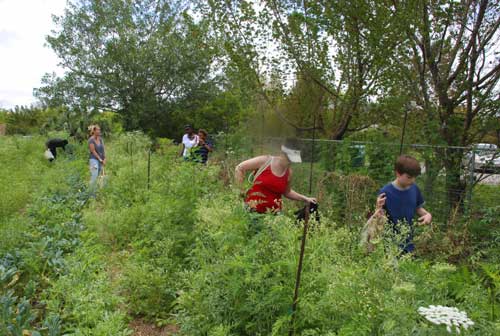
Waist high in weeds serching for morsels of food.

People started trickling in at 11:30 am. Those who had done this before knew the drill. They brought totes and snippers, and wore hats and sunblock. Instead of sitting down to eat first, they wasted no time in finding things to pick. It felt like an Easter egg hunt, only in this case you were looking for tomatoes and other comestibles.

Friends put me to work showing things to their grade school age boys. “Do you have carrots?” Mark asked. “Look, there’s some in this row,” I pointed out. He and Devin and I browsed down the row peering through weeds to wiggle carrots out of the ground. Getting fingers in the dirt was fun. Several sow bugs trundled out and the boys got animated. Forget playing video games. When was the last time you stuck your fingers in the dirt, tugged on fat orange roots, and communed with bugs? Heaven! Moments later we found ourselves over by the kohlrabi when the the horse snorted. Devin started. “What was that?” he asked. “Look at the other side of the fence,” I said. “It’s a horse, it’s a horse!” Mark exclaimed. You should have seen his eyes shine. I mean, it was a real, live horse!

Like peas in a pod.

Grown up kids were also having adventures and making small discoveries. Over in the next vegetable bed, I showed Nathan how to hunt for snow pea pods hiding among withered vines. Some pods were bulgy, and sure enough, had small peas growing inside. “This tastes amazingly good,” Nathan said, munching on a raw pea. One row over were small bull’s blood beets, perfect for roasting whole. He could see round roots showing above the ground and it made sense to him what he was looking at. One good tug and a beet came up, dirt and and all. “It’s a beet!” he exclaimed (just like a kid). And thus a connection was made: here is a plant growing, part of a mass of undifferentiated greenness, but as you pick it, it changes to food. Magic!

It was getting hot and I went back inside the barn, which was full of people eating and talking. The tables were loaded with lots of good food. A carrot and garbanzo salad seasoned with cumin was tasty, and I liked the Thai flavored mango salad. People ate almost all of the turnip slaw that I brought (recipe below). Managed to snag one of the last slices of Sylvia’s tart made with asian mixed greens, Hani’s goat cheese, and hard boiled eggs. She made her own crust and crimped the edge empanada style. You could taste the care that went into making it. The party was supposed to end at 2, but people were still hanging out when I left at 3. Once you get a taste of the farm, it’s hard to let go.
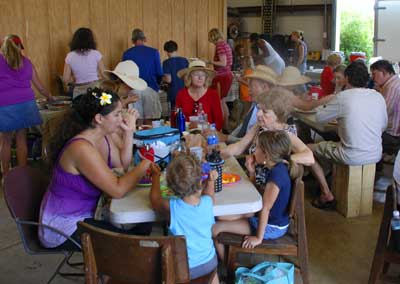
Everybody brought food, and it was all good.

Turnip Slaw

1/4 cup chopped red bell pepper
1/4 cup thinly sliced green onions
4 cups turnips
oil and vinegar
thyme (to taste)
salt and pepper

Peel and slice turnips, then cut into matchsticks. (Or, you can shred them in a food processor.) In a bowl, combine turnips with red peppers and green onions. Make a vinaigrette with your favorite oil and vinegar, including thyme, salt and pepper. Stir well. Refrigerate several hours for flavors to blend.

(Recipe originally from cooks.com, has been slightly modified.)

The rescheduled and much awaited CNN report on the Roots in the City Farmers Market aired last night on Anderson Cooper 360. Did you miss it? (I did.) You can watch it online here, on the AC360 blog. Catch a glimpse of our fruit expert Melissa Contreras explaining tamarind to CNN correspondent John Zarella and Chef Michel Nischan.

Still at the Fairchild Farm & Garden Festival… Ducked out of the lecture on preserving the harvest (sorry, Margie!) to catch Robert Barnum’s cooking demo under the big tent. Robert, as you might recall, is also known as the Cantankerous Chef. And Saturday he was downright crabby, showing his recipe for fried piper betel leaves with coconut crab sauce.

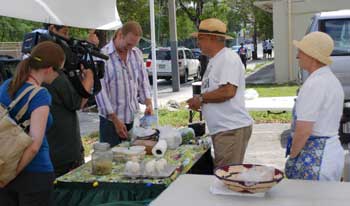
Robert Barnum with Fairchild volunteers Mary Hughes and Terry Shaw assisting. Mary Neustein is in the background, plating piper leaves.

When I got there, tempura batter had been prepared, and Fairchild volunteers Mary Hughes and Terry Shaw were dipping piper betel leaves (remember those from your CSA shares earlier this season?) into the batter, frying, and cutting them into pieces. Robert was finishing up making the coconut crab sauce. Saw a whole can of coconut milk going in. Mmmm, everything’s better with coconut milk!

Amaury and Tanya liked the crab dish.

The finished sauce was spooned out over plated betel leaves by volunteer Mary Neustein. Terry and Candy Sacher were handing out plates to the eager audience. As quickly as people got the food, it vanished. You’d think they don’t get fed at home, but yes, it was that good.

I grabbed a plate before it was all gone, and sat down to savor the flavor. The sauce had chunks of sweet (fake) genuine lump crabmeat provided by Whole Foods, and celery, bell pepper and onion, tasted gentle, slightly tangy and was creamy from the coconut milk. It could have used some kind of hotness. The recipe below calls for Tabasco, but there just wasn’t enough for my liking. The fried piper betel leaf was crispy in a light, egg-flavored tempura batter, and its sausage-y flavor contrasted nicely with the milder crab sauce. Actually, I liked the fried leaves just as they were, without the crab. They would be an interesting snack to munch on with a cold light beer, maybe while lounging in a hammock on the beach. Instead, there were white plastic chairs under a tent, and Robert had brought a bottle of his own wine made from the bignay or antidesma berry. Hard to describe, especially since I don’t have the vocabulary of a wine and food writer, so you’ll just have to try it for yourself!

Piper betel leaf garnishing the finished serving of crab and fried betel.

I had heard Robert talk a lot about this particular recipe, when he entered it into the Gordon Ramsay competition a few months ago, but this was my first time trying it. Robert said he had first tasted a similar dish in Sydney in a 12 course prix fixe dinner of Asian food, and liked the dish so much that he recreated it with a few tweaks over the years. The original crab sauce he ate had been “fire hot,” he explained, but his version was mild and mellow.

If you want to get a piper betel plant to grow in your garden, contact Robert Barnum at 305-235-1768 or possumplentious(at)yahoo.com.

If you want to buy a package of leaves for your own culinary experiments, contact Margie Pikarsky at 305-894-6657 or office(at)beeheavenfarm.com.

Tempura Fried Betel Leaf with Coconut Crab Sauce

Ingredients:

8 betel leaves, fresh and washed
1/4 cup corn starch
1/4 cup rice or wheat flour
1 tsp. baking soda
2 egg whites
1/4 tsp. salt
1 1/2 cup corn oil
1/3 cup cold water

1 medium onion, diced
1 rib celery, diced
1 green bell pepper, cleaned, diced
1 8 oz. can crab meat
1 tbsp. butter
1 12 oz. can coconut milk
1 tsp. garlic
1/2 tsp. salt
1/2 tsp. black pepper
4-6 juga-juga of Tabasco sauce
1 tbsp. brandy
1 1/2 tsp corn starch
optional hot pepper flakes

Method:

Heat oil in heavy pot with tall sides to 350 degrees F. Mix flour, corn starch, baking soda, egg whites salt and water in a bowl. Dip leaves one at a time in batter and place into hot oil. They cook very fast, 1-2 minutes, then flip. 1-2 minutes more then drain on paper towels and keep hot while you fry the rest.

Lightly brown the onions, celery and green pepper in the butter in a skillet. Add the seasonings and brandy and simmer for 5-8 minutes, and add coconut milk. Heat and add cornstarch in 2 tbsp. cold water or reserved coconut milk and stir till thickened. Add the drained crab meat and stir until heated through. Serve over the fried betel pepper leaves on a salad plate.

Recipe courtesy of Robert Barnum

It was a great weekend for the Fairchild Farm & Garden Festival, sunny and warm but not yet excruciatingly hot. A lot was going on, and I was running from presentations in the Garden Room to various tents and back trying to keep up with interesting events.

Margie Pikarsky

On Saturday morning, I dropped in at the start of Farmer Margie Pikarsky’s presentation on preserving the harvest. As usual, she gave a well-researched lecture on different kinds of food preservation — freezing, fermentation, dehydration, brining, pickling, and canning. The handout was chock full of info, and if you didn’t make it to the lecture, you can download it here.

As for following recipes and instructions that one finds published in books and elsewhere, Margie cautioned that “all publications are geared for the temperate zone. You can’t listen to them. We have to modify. It’s warmer here and chemical reactions happen faster. You have to be aware of that. Sauerkraut can take two weeks instead of two months. There’s potential for vegetables to go bad in the heat when fermenting. Start with organic produce which has less mold and contaminants.” Margie recommended the book Wild Fermentation if you want more detailed instructions for pickling and fermenting.

Stopped by the Cooking Demo tent to say hi to Laura Lafata aka La Diva Cucina. She was getting ready to give a presentation on preparing radishes with vermouth. The radishes looked happy to be in her hands, and vermouth is an ingredient I hadn’t thought of using. (The recipe is at the bottom of this post.)

Laura Lafata aka La Diva Cucina

Talk about food makes me hungry, so I prowled around looking for something good to eat. Found Margie standing in line at the bright green Native Conch stand, and we got the last of the conch salad. Thanks to Jason for taking care of us!

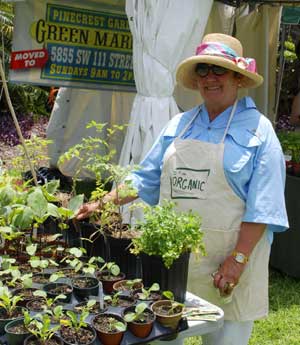
Claire Tomlin with potted herbs for sale.

Came across Claire Tomlin of The Market Company showing off her latest venture. She has ready-to-grow raised garden beds made of cedar that you can use in your yard. The beds come in a package that includes a cedar frame, soil blend, vegetable and herb starter plants, organic fertilizer and mulch. All you need to add is water and sunlight. It’s too late to plant almost all vegetables now (remember, we’re in the sub-tropical growing zone), but there’s more than enough time to get ready for fall planting. If you’re interested, contact Dylan Terry at dylanjterry(at)gmail.com or call 786-436-7703 for more information.

Pure beeswax candles available from Miguel Bode the beekeeper.

Said hi to Miguel Bode the beekeeper on the way out, and he revealed that he has the largest display of pure beeswax candles anywhere (well, at least at the festival). He uses 35 different molds to shape wax extracted from his hives.

My name was on the schedule for the food bloggers panel Saturday afternoon, but I couldn’t stay due to a schedule conflict. Thanks to Melissa Contreras and Annie Stamps of Fairchild for inviting me to participate in the Festival. You ladies rock!

Sauteed Radishes and Tops over Bow Tie Pasta with Apple Chicken Sausage

Serves four main dinners or six starter plates


Ingredients:

1 lb. box of bow tie pasta
1 bunch of radishes with tops attached
1 pkg. organic apple chicken sausage
dash white vermouth
good quality extra virgin olive oil
kosher salt and pepper

Method:

Put on pasta water to boil and once boiling, add a dash of salt. Cook pasta al dente in salted water for a minute or two less than suggested When pasta is cooked, drain into colander, saving 1/2 cup of pasta water. Set aside.

While pasta is cooking, fill sink with cool water. Chop radish tops and wash thoroughly in water, let green tops drain and then blot dry with paper towels. Wash radishes and thinly slice, set aside.

Heat large fry pan on stove and slice sausages into quarter inch slices. Add olive oil to pan and when heated, add sausages, lower heat to medium high and saute until brown on both sides, being careful not to burn. Put cooked sausage on plate, set aside.

Heat fry pan again and add more olive oil if needd. Once hot, add radishes, lightly salt and cook over medium heat until light brown on both sides. Turn up heat and add a dash of vermouth to deglaze pan, continue cooking radishes for another 30 seconds or until soft. Add to the plate of cooked sausage.

Heat fry pan and use more oil if necessary. Lightly saute greens until just wilted, add pasta to pan along with sausages and radishes and thoroughly combine all ingredients. Cook over medium high heat for another minute, adding a bit of pasta water to make a light sauce. Season with salt and freshly ground black pepper and serve immediately. Drizzle extra virgin olive oil over each serving.

Copyright (c) La Diva Cucina Inc.

Correction: The CNN report on the Roots in the City Farmers Market has been rescheduled and will air on Tuesday May 4 at 10 pm on the Anderson Cooper show.

The media — most recently national TV news, along with local newspapers, TV and local food blogs — has been all over Roots in the City Farmers Market. It’s a small market, just four or five tents by the side of the road in a very poor neighborhood. From a distance it doesn’t look too special. But it is, and that’s why the media keeps coming back.

The big deal is that the Roots market is the first farmers market in Florida specifically created to use the Double Value Coupon Program, funded by Wholesome Wave. The coupons enable people purchasing with food stamps (SNAP/EBT) to buy twice as much, up to $20, using special tokens. The program is already in 80 markets in 12 states, but those markets already existed and had food stamp program in place before Wholesome Wave came in.

Melissa Contreras (left) explains tropical fruit.

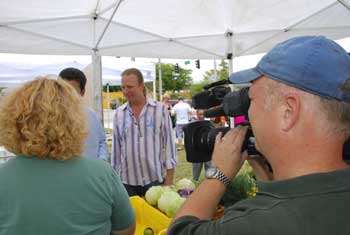
National TV news visited last week. On Wednesday April 21, a CNN crew consisting of reporter John Zarella, his cameraman Mike, and a field producer who was darting around with a notebook, hung out at the market all afternoon. Most of the people who created the market were on hand for interviews. Founder and Chef Michel Nischan chatted with a lot of enthusiasm on camera. Chef Michael Schwartz and Dr. Marvin Dunn (and several family members) were on hand for interviews, along with people from the Human Services Coalition. A school group came by, and the kids looked at, touched and tasted different fresh vegetables. Several people who came to shop were also interviewed. Some came over from downtown (where more than half of the shoppers are coming from), and some from the neighborhood.

Melissa Contreras, who was helping out at the Redland Rambles tent, spoke on camera about different tropical fruits — tamarind, canistel and black sapote — that were available. Farmer Teena Borek sliced up a hothouse cucumber and was handing out samples, and suddenly everyone around was eating cucumber and liking it. Mike the cameraman was bedazzled by pretty vegetables and took lots of video of carrots. And cucumbers. And greens. Zarella stopped to buy a small bottle of tupelo honey from the Redland Organics tent before they wrapped up for the day.

Mike the cameraman really likes carrots.

The market has plenty of funding, and is gradually picking up steam. According to Caitlin McLaren of the Human Services Coalition, the Wholesome Wave Foundation gave them a grant of $11 thousand to pay for tokens and farmers. By the fourth week of the market, they still have plenty of money left, having spent about $400 in matching funds. It’s taken a while but the market finally has more EBT than cash sales. Farmer Margie said that about half her sales are EBT and she’s getting regulars. “One lady was already here at 12 waiting while we were setting up,” she said, and added that several homeless people come by from week to week to get food.

Douglas Dunn, who helps run the Roots community garden, explained “The market attracts a lot of white Hispanics. About 70 per cent of the customers work close by and drive by, or have read about it in the paper. It’s going to take some time to get the word out.” As Douglas explained that to me, a man walking across the street called out, “Do you take food stamps?” Yes was the answer. The man stopped for a moment, said he’d be back and headed down the street.

Hani and Mary Lee talk about goat milk ice cream on camera.

Unfortunately the growing season is winding down as the weather gets hotter, and the market will close sometime in May. There might be fruit sales in the summer, but that isn’t certain yet. It all depends on what the farmers have to sell. Market manager Maggie Pons said they’re definitely going to be back in the fall. Hopefully the market will take off, for the sake of the people who need it the most.