Feeds:
Posts
Comments

Posts Tagged ‘Margie Pikarsky’

Robert Barnum, the owner of Possum Trot Tropical Fruit Nursery, was testing and fine-tuning his recipes for weeks before The End of Summer Brunch. He’s a self-taught chef who has developed a long list of interesting dishes with unique tastes and texture combinations, using tropical fruits that grow in his nursery. He’s also created The Possum Experience, which includes dinner and tour of the grove. The Brunch was similar to the Experience, in case you were wondering.
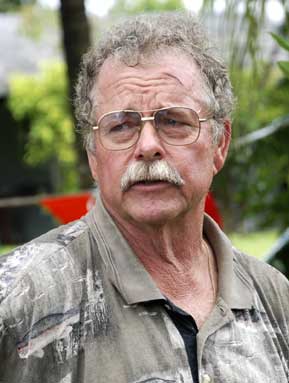
Robert Barnum, The Cantankerous Chef

Robert Barnum, The Cantankerous Chef

Robert was up at 3:30 in the morning the day of the brunch, making last minute preparations along with his assistants. Farmer Margie and her crew came over at 7:30 to help. The oven in the main kitchen gave out, so roasting mixed root vegetables was moved to the wood burning oven and smoker outside. It was puffing merrily when I arrived at 9:30. Cheesemaker Hani Khouri also came by, and that was his goat cheese and labneh that you ate. A long table with chairs was placed under the trees, set with centerpieces of basil, carambola and red ginger aka shampoo ginger. Nearby was the tent with beverages — a blend of cas, passion and carambola juices, lemongrass tea, a pitcher of honey-water to sweeten the tea, and water for the timid.

On the porch, a buffet was set up with all the dishes, and guests lined up to be served. The menu has been blogged elsewhere. The guests enjoyed themselves, and the scene under the trees looked like something from a French film. My favorite dishes were the broiled avocado with scrambled eggs, allspice muffins with honeyed labneh, and the fruit salad. That salad had a happy jumble of ingredients — carambola, longan, banana, red grapefruit, mango and jakfruit. (Have been getting the smoked eggs all summer, and they are great for egg salad with celery and sweet onion.) For nibbles, there were boiled jakfruit seeds that tasted like chestnut. Robert simmered them four times at 45 minutes each time, which made them quite edible, the result of another happy accident in the kitchen.

Halfway through the meal, Robert realized he needed to set out his homemade wine. He dusted off several jugs of bignay (or antidesma) fruit wine he made himself. It tasted like a fruity merlot, and later I combined it with cass juice for and incredible taste of deep sweet and bright tart. The bignay tree is native to Africa (according to Robert) and grows well here. The wine was made from its berries, which grow in clusters and is one of the few fruits that starts green, turns white, then bright red to purple-black as they ripen.
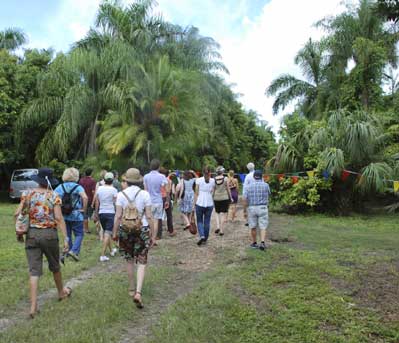
Tour of Possum Trot

Tour of Possum Trot

After the meal came the tour of Possum Trot. Most of the guests took a lap around the 40 acre property with Robert pointing out various kinds of trees growing there, and other interesting things. (I couldn’t help but notice that he was walking around in bare feet!) He has several macadamia nut trees (a favorite of squirrels), carambola, canistel, mango, avocado, citrus (now dying from greening disease) and plenty others. When I walk through his grove I think this is what the Garden of Eden might have been like… maybe. A tropical vine has infested a section of the grove and covered trees. Robert sure could use volunteers to pull the vines out. If you want to come and help — and most likely get fed a fabulous lunch– let him know!

So I waddled home with a full belly and a sack full of basil recycled from the centerpieces. There was plenty left, and I’m surprised that people didn’t ask to take it with them. Whipped up a big batch of pesto, and it’s going on the smoked eggs and other things I’m eating this week.

Reservations for The Possum Experience:

Robert Barnum
The Cantankerous Chef
Possum Trot Tropical Fruit Nursery
14955 S.W. 214 St.
Miami FL 33187-4602
305-235-1768

Read Full Post »

Farmer Margie's blog!

Farmer Margie's blog!

Farmer Margie has posted on this blog, and now she’s got the blog fever and started her own, Bee Heaven Farm’s blog. The news and details will be a lot more specific to daily operations at the farm. Meanwhile, Redland Rambles will keep rambling about Bee Heaven, the CSA and its members, other growers in Redland Organics, and whatever’s going on in Redland that’s relevant and that I find out about in a timely manner. Am cutting back on the politics, though…

Read Full Post »

<nag> Have you written to your county commissioner about the proposed budget cut that would close the doors to the Miami-Dade Cooperative Extension Service? No? Still thinking about it? Maybe it’s just not that important or relevant? I mean, how could it possibly tie in with the tasty, fresh, local and organic veggies you’re going to eat from Redland Organics in a few months? Extension has a LOT to do with it! </nag>

Farmer Margie wouldn’t be where she is if it weren’t for the training that she got from Extension over the years. In her own words:

I started contacting Extension way back in the 70’s when I was in college. I got information on vegetable gardening for Florida, castrating & butchering a pig, raising and butchering chickens, canning, pickling and preserving information, how to take care of my fruit trees, and put it all to good use. In the early 80’s, I took the Master Gardener training, and received in-depth information about growing plants.

In the mid 90’s, when we started the farm, I looked to Extension to get advice on establishing my avocado grove. Later, when we expanded to vegetables, I consulted with them on variety selection, growing techniques, pest control, fertilizing. I’ve attended numerous workshops providing training on irrigation, growing, pests, diseases, etc etc etc.

Extension has been very responsive in helping develop training programs for folks interested in converting to organic productions. I always find good workshops and field days that I can bring my farm interns and apprentices to learn about growing in this tropical climate.

So… what are you waiting for? The list of commissioners is right here. Start writing!

Read Full Post »

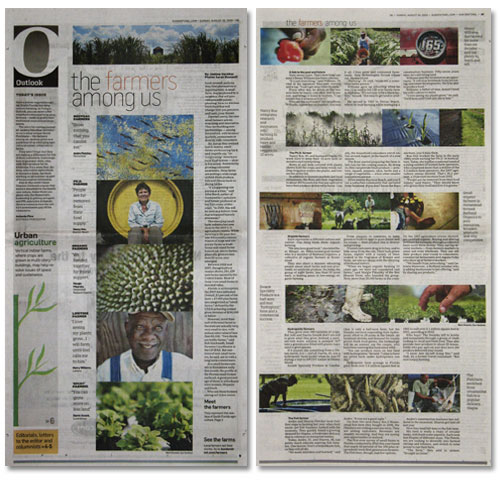
The spread in Sunday's Outlook section

The spread in Sunday's Outlook section

Did you happen to see the article about local farmers in Sunday’s Sun Sentinel? Margie Pikarsky, Hani Khouri and Gabrielle Marewski, among others, were interviewed by Jaideep Hardikar, a journalist from Nagpur, a city in central India. His beat is rural India and agriculture. Jaideep is here in South Florida finishing up a six month fellowship through the Alfred Friendly Press Fellowship program. He is one of 10 fellows selected this year to work in American newspapers. He also met up with us at the Small Farms Conference earlier this month.

Note: Jaideep’s article The Farmers Among Us has been removed from the Sun-Sentinel online archive. Discovered that on Oct. 13, 2009.

Read Full Post »

Still have a few more posts about the Small Farms Conference. There was a lot going on, but I focused on attending sessions where members of Redland Organics were presenting (or if there was a focus on local food systems). Here’s notes from Margie Pikarsky’s presentation on marketing.

Diversify! was Margie’s main theme, as in don’t put all your eggs in one basket. She raises various fruits and vegetables and animals (eggs) and also sells merchandise (tote bags and cookbooks).

Providers. Redland Organics CSA got started because of diversifying. Margie told the story of how Gabriele Marewski of Paradise Farms originally started the CSA. She was growing only a few things, and Margie was growing a few other things, and combined they were a good variety for their customers. From there, Redland Organics grew as other organic or non-spray/natural growers were included. Currently there are eight providers within a 160 mile radius. Membership in the CSA grew from 40 in the first season (2002-2003) and topped at 450 shares this past season.

Crops. Margie started with avocados and greens, but now gets more money per square foot from vegetables. She recommends growing something unique that would appeal to the public. For her it’s heirloom tomatoes, and usually she raises around 30 different varieties. Diversify also means to interplant crops, such as tomatoes with mustard greens, or a short crop with a second crop.

Seasonal offerings. In summer there are eggs and fruit for sale — mangos, avocados, passion fruit, jakfruit — depending on whatever is available from various local sources. Emails are sent out to customers and payments are made online. Customers pick up at the farm or one other site in the city. Margie doesn’t grow vegetables in summer but plants a cover crop instead, such as black eyed peas. During the winter CSA season, her crew picks to order on Thursday, and additional deliveries start coming in. The CSA boxes are packed on Friday. Saturday morning the shares go out by truck to various drop off points in town for customer pick up.

Labor. Bee Heaven Farm relies on volunteers from WWOOF and occasional interns. Margie tries to get seasonal people who will stay for at least a couple months. The work crew is small, about 6 to 8 people, and is intensely managed. Everything is handwork, only Margie uses the tractor and other machinery. She pays somebody local year round to pull weeds and gather eggs.

Various sources of income.
The CSA brings in 75 percent, and farmers market 15 percent. The other 10 percent comes from avocados, honey, tomato starts, greens, workshops, eggs, value added products, and other products (totes, cookbooks).

Direct marketing. Redland Organics has space at the South Florida Farmers Market in Pinecrest, and at the peak of the season added a large table devoted to heirloom tomatoes. Last two seasons Margie sold avocados to Whole Foods. Participating in select events and festivals is also a good way to get exposure.

Agritourism. Bee Heaven Farm is open to the public twice a year. Farm Day is in winter and started as a small potluck. Last season it grew to 200 people attending. A small market is offered on the side. There’s also the end-of-season Gleaning Day, also a potluck, then customers go through the rows to pick the last of the season. Mothers Day brunch with tables set under the trees was a new event, featuring local food prepared by the chefs of Mise en Place.

Workshops. A series of four cooking workshops were offered last winter. Margie teamed up with chefs Adri Garcia and Rachel O’Kaine of Mise en Place, who used all local ingredients except for flour, sugar, salt and oil. The tamale workshop was hands on, and participants picked and shucked corn, and shaped their own tamals. When Margie needed to cull roosters she held a chicken processing workshop. Participants watched her process the first bird, then did their own and got to take it home. Margie said that people do want to know more and connect with their food, and these interactive workshops help them connect.

Value added. Other diversity is through dried fruits (mango, banana etc.) and tomatoes. Tip: Margie uses a venison dryer from Cabela’s. She also makes various spice rubs that include her herbs.

Currently Margie and a couple other growers in RO are working with their local county commissioner to allow on-farm food processing and commercial kitchens. The state laws allows this, but county zoning ordinances do not. A change in zoning would also allow for B&Bs, which would have to be located on an active farm (unless it was a historically designated building), and would have to follow certain restaurant kitchen requirements. Language for this change in zoning is being drafted now and will come up for a vote in fall.

Download the Powerpoint slide show and the handout from this session.

Read Full Post »

« Newer Posts - Older Posts »