Feeds:
Posts
Comments

Potato Pandemonium!

Join us Wednesday, February 24, 2010 for
A Possum Trot Experience! presented by Bee Heaven Farm

POTATO PANDEMONIUM

Native to the New World Tropics, potatoes are used around the world in many different cuisines. Experience the incredible variety of potatoes at this one-of-a-kind event.

MENU
Potato Vichyssoise Soup with Multicolored Chips
Potato Salad with Carambola Relish
Scallopes Potato with Betel Leaf
Individual Potato Souffles
Parsley Potatoes
Smoked Potato Medley
Meat ‘n Potatoes
Potato Pancakes Topped with Fruit & Cas/Passion Sauce

Your unconventional experience will include sampling from a selection of 35 years’ worth of home-made wines from tropical fruits grown on the farm.

Limited seating in quasi-formal setting in a rustic old Florida farmhouse.
$100 per person * 6:30 pm serving
Come early for an informal class on sustainable cooking techniques and unusual uses for local ingredients.

RSVP with advance payment required by Saturday, February 20th.
Cancellations accepted up to 48 hours prior to event.
No refunds for no-shows or late cancellations.

REGISTER NOW

Where:
Possum Trot Tropical Fruit Nursery
14955 SW 214th St
Miami, FL 33187-4602
305-235-1768

Steven Green, Green Groves

Meet Steven Green of Green Groves. His day job is professor of tropical biology, conservation and statistics at UM. He also has a two and a half acre grove of various fruit trees. The cute little clementines from a couple weeks ago were his. This week we have lemons from his grove. Steve doesn’t know the name of the variety but does know it was planted in 1938. He says their flavor is “much brighter and more flavorful,” than your average supermarket lemon, and the fruit has a moderate amount of seeds and thick skin.

Steven grows lemon, lime, carambola, calamondin, allspice, monstera, avocado, tangerine, 5 kinds of mango, and lychee. He has been growing fruit since he moved to Redland in 1978, when he bought a 2 1/2 acre avocado grove with trees planted originally in the 1930s. There are still a few of those left, including the lemons. In 1991 Steve planted lychees, but Hurricane Andrew knocked them all down the following year. Putting his scientific knowledge to good use, Steve replanted 125 lychee trees at what he calls the “optimal distance” for orb weaver spiders. They prefer a span of about 2 meters from branch edge to branch edge for their webs. Once the spiders made their webs and settled in, there have been no problems with caterpillar moths in the groves. Lychees have so few pests, Steve says, that he doesn’t used pesticides in his grove. He’s now in the process of getting the grove certified organic.

Lemon from Green Grove

When Steven has way too many lemons, he makes this North African lemon preserve:

Cut the lemon into quarters, bury in kosher salt, add chilis (optional).
Can take out spoonfuls of liquid to cook with.
Store salted lemons in frig.

The end of an era?

Katy Sorenson has long been a friend to the farmers. She is best known for fighting attempts to move the Urban Development Boundary (UDB) which has restrained urban sprawl; for promoting zoning changes that would allow struggling family farmers to have alternative streams of agriculture-related income; and for promoting agri-tourism. Without her on the Commission, some farmers I’ve talked to fear their voices will no longer be heard, and the last remaining farm land will be devoured by waiting developers. Is this the end of an era, or will somebody as strong stand up and take Katy’s place?

Read the official announcement on the District 8 site, where you can also download her statement.

Read the Miami Herald article published on Friday, Feb. 5, 2010:

Miami-Dade Commissioner Katy Sorenson won’t seek 5th term

Miami-Dade Commissioner Katy Sorenson won’t seek a fifth term, closing a noteworthy career and opening the door for a new commissioner for South Miami-Dade.

BY MATTHEW HAGGMAN
mhaggman@MiamiHerald.com

Miami-Dade Commissioner Katy Sorenson will not seek reelection this fall, ending a 16-year run on the county board distinguished by her advocacy for the environment and social equality.

The commissioner announced plans to collaborate with the University of Miami to develop a leadership initiative on public service for people aspiring to run for local and state elected office. The effort, she said, will have the backing of the Knight Foundation and Dade Community Foundation.

Read more here:

http://www.miamiherald.com/news/miami-dade/story/1463960.html

CSA share: week 10

CSA share: week 10

Hey kids, we’re aready at the halfway mark of the season! Ten weeks down, and ten to go…

Waiting for kids

A very pregnant doe

Hani Khouri of Redland Mediterranean Organics is waiting for his kids to arrive. Actually, his does (female goats) are pregnant and due to deliver their kids (baby goats) in mid-February or early March. Giving birth to a baby goat is called kidding, I was told. Really, I’m not kidding.

Cleopatra takes a sip of water

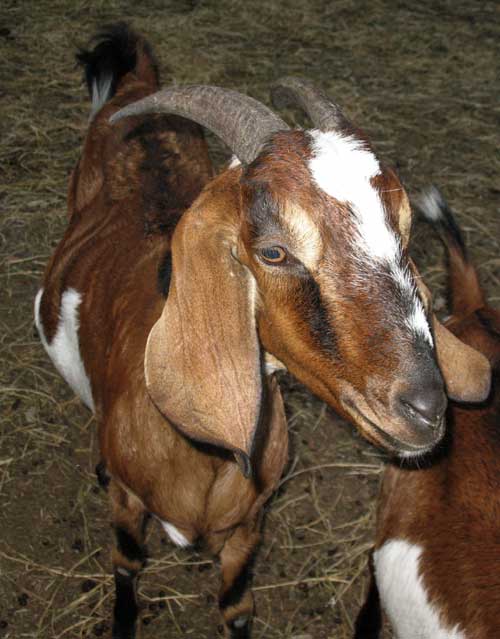
Hani keeps a small herd of Nubian goats, six pregnant does and one buck, and they’re all about one to two years old. This is the first kidding for the goats. This is also Hani’s first kidding and he’s excited, nervous and watchful of his herd. One doe named Cleopatra (whose picture you might have seen in the CSA newsletter last Saturday) is huge and very round. She started standing off to one side and went off her feed, which goats do when they’re sick, and that gave Hani the worries. But the vet checked out Cleo and said she’s ok, that’s also what pregnant goats do. So it’s watch and wait for now.

All this family excitement means no cheese and no ice cream in the CSA shares and at market. Too bad for us humans! The does need to save their milk for their kids. Hani can start milking three to four days after the births, after the kids get the colostrum. But even then he can’t milk as frequently or as much, until the kids are weaned at about two months age. Only then will Hani be back into full production.

Can all you hungry cheese fans wait until April or May? Looks like you’ll have to. Hani checked with other goat cheese producers in the state, and all their does are pregnant too. No fresh, local goat cheese to be had anywhere. Eating with the seasons — including goat seasons — is part of eating local food supplied by local growers, so you’ll have to be patient!

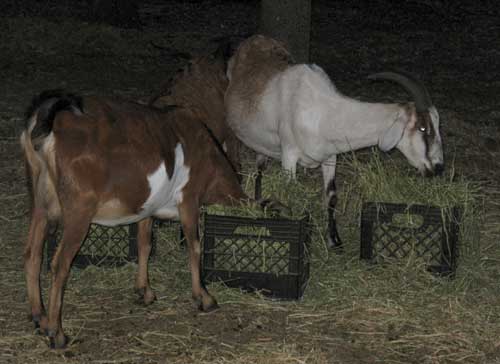
Goats love alfalfa