Feeds:
Posts
Comments

Posts Tagged ‘Gabriele Marewski’

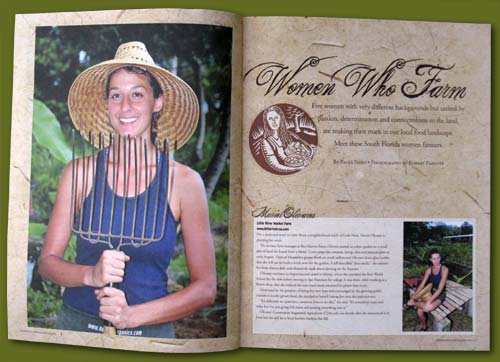
The Fall 2010 issue of Edible South Florida has a wonderful photo essay about the women farmers among us. Get to know Muriel Olivares, Teena Borek, Margie Pikarsky, Gabriele Marewski and Alice Pena.

The magazine is free at Whole Foods (look in the produce section) in Dade and Broward counties, and other locations around town.

Read Full Post »

Gabriele Marewski of Paradise Farms Organic announces another season with a stellar line up of Miami’s best chefs! Prepare yourself for an incredible evening of rustic decadence as Dinner in Paradise takes you away to a lush and tropical setting.  Upon arrival, guests enjoy a welcome reception with delicious hor d’oeuvres, before heading off on a farm tour, conducted by Gabriele that encompasses this beautiful five acre organic paradise and its fruit trees, edible flowers, mushrooms, and fragrant herbs.  As the sun sets on the evening, the magic truly gets underway.

This year, Dinner in Paradise proceeds benefit the Urban Oasis Project, a not for profit organization, whose mission it is to make fresh local food available to every one. Paradise Farms’ Ready to Grow garden beds will be installed in Liberty City and homeless shelters that house children in Miami Dade County.

Dinners are scheduled from December through February and begin at 5 PM with a cocktail reception followed by a farm tour. Dinner begins at 6 PM. March & April dinners will begin at 7PM with the cocktail reception at 6PM. Each dinner, priced at $165.50 (tax and google fee included), features five courses made with local, organic products, paired with top quality wines. Schedule/Chefs subject to change. Please visit the Paradise Farms web site for updates and to make reservations.

Read Full Post »

A lot was going on at the Fairchild Farm & Garden Festival. Here’s another post from the Festival, about growing your own oyster mushrooms.

On Saturday April 24th, Gabriele Marewski and Drake Kurlander of Paradise Farms were set up for a talk on her oyster mushroom operation. “Growing mushrooms is an art and a science,” Gabriele said as she introduced Drake, an FIU student with a passion for mushrooms. He works closely with Benjamin Masope, the mushroom expert from Ghana who is responsible for successfully starting Gabriele’s mushroom production. (You can read more about his story in the April issue of edible South Florida.) Here are my notes from Drake’s presentation.

Drake Kurlander

“Anyone can grow mushrooms once the process is understood,” Drake said. He went on to explain the life cycle of mushrooms. You start with spores, which germinate, grow in substrate and result in the fruit body, or edible part of the mushroom. Spores are in the air everywhere. Spores are both male and female, and once they germinate, they make a simple structure called hypha that replicates itself, combines, and creates a network called mycelium. This network colonizes, and two and a half to three months later, produces pin or baby mushrooms. From that stage, it takes only two to three days for a pin mushroom to grow to full size. A full grown fruit body (as the edible part of the mushroom is called) has a hollow structure full of spores, and it can reach out and put spores in the atmosphere. A fruit body will also grow by cloning. You can sever it and put it in substrate (special growing medium) and it will expand.

The production process on the farm follows a specific process. The growers start the spore culture in a petri dish. Next, they sterilize grain (they use organic chicken feed at Paradise) under high heat and crush it. The grain, or primary substrate, is inoculated with spores and incubated in jars. While it’s growing, Drake and Benjamin mix up the secondary substrate — a top secret formula! — and put it into bags. Those go in the pasteurizer which cooks the substrate at a high heat to kill any wild spores which might dominate the mushroom spores. The spawn is then inoculated into the sterilized substrate and left to grow in a chamber which circulates humidified air. “The challenge is to maintain sterility in the grow room,” Drake explained. “Air has fungi and contaminants floating in it.” Currently they are harvesting 200 to 300 pounds a week, and want to increase production to 800 pounds a week.

Oyster mushroom starter kits. Each bag of substrate is inoculated with mycelium. Just add water and light, and wait for signs of growth!

If you’re adventurous and want to grow your own oyster mushrooms, Gabriele has starter kits available. The kits consist of a large bag of secondary substrate inoculated with mycelium, and a larger bag with perlite. Drake explained the home growing process with the starter kits. Soak the perlite with water, strain, then set the bag of colonized material in it. The water provides humidity that the mycelium needs to grow and set fruit. “Open it up and air it out every day and mist with water. After a week or two, you will see the mushrooms start growing.” The best place to grow is on a windowsill or near a source of light. “The mycelium need light to trigger pin set,” Drake explained. He recommended that you harvest all the mushrooms at one time, or it will shut down growth and start to rot. Once picked, the fruit body growth will start again, and you can re-harvest several times. Click here for a copy of Paradise Farms’ mushroom growing instructions. (If you want to learn more, Drake recommended this book — The Mushroom Cultivator: A Practical Guide to Growing Mushrooms At Home by Paul Stamets.)

The starter kits are available for $40. Each bag or inoculated substrate will last for about four to six months of growing, and you can harvest six to twelve pounds of mushrooms from it. Gabriele pointed out this is a pretty good deal, since mushrooms retail for $10-12 per pound. You can order a mushroom growing kit from Paradise Farms, and pick it up from Benjamin where he works at the Crackerman booth at the Coconut Grove Farmers Market on Saturdays.

Paradise Farms
305.248.4181
Info(at)paradisefarms.net

Read Full Post »

It was a great weekend for the Fairchild Farm & Garden Festival, sunny and warm but not yet excruciatingly hot. A lot was going on, and I was running from presentations in the Garden Room to various tents and back trying to keep up with interesting events.
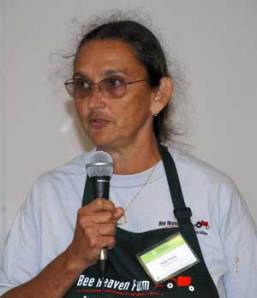
Margie Pikarsky

On Saturday morning, I dropped in at the start of Farmer Margie Pikarsky’s presentation on preserving the harvest. As usual, she gave a well-researched lecture on different kinds of food preservation — freezing, fermentation, dehydration, brining, pickling, and canning. The handout was chock full of info, and if you didn’t make it to the lecture, you can download it here.

As for following recipes and instructions that one finds published in books and elsewhere, Margie cautioned that “all publications are geared for the temperate zone. You can’t listen to them. We have to modify. It’s warmer here and chemical reactions happen faster. You have to be aware of that. Sauerkraut can take two weeks instead of two months. There’s potential for vegetables to go bad in the heat when fermenting. Start with organic produce which has less mold and contaminants.” Margie recommended the book Wild Fermentation if you want more detailed instructions for pickling and fermenting.

Stopped by the Cooking Demo tent to say hi to Laura Lafata aka La Diva Cucina. She was getting ready to give a presentation on preparing radishes with vermouth. The radishes looked happy to be in her hands, and vermouth is an ingredient I hadn’t thought of using. (The recipe is at the bottom of this post.)

Laura Lafata aka La Diva Cucina

Talk about food makes me hungry, so I prowled around looking for something good to eat. Found Margie standing in line at the bright green Native Conch stand, and we got the last of the conch salad. Thanks to Jason for taking care of us!

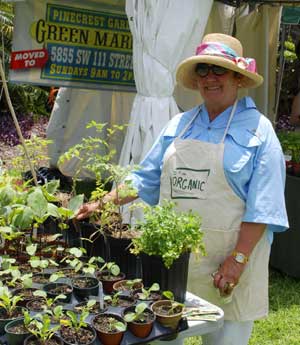
Claire Tomlin with potted herbs for sale.

Came across Claire Tomlin of The Market Company showing off her latest venture. She has ready-to-grow raised garden beds made of cedar that you can use in your yard. The beds come in a package that includes a cedar frame, soil blend, vegetable and herb starter plants, organic fertilizer and mulch. All you need to add is water and sunlight. It’s too late to plant almost all vegetables now (remember, we’re in the sub-tropical growing zone), but there’s more than enough time to get ready for fall planting. If you’re interested, contact Dylan Terry at dylanjterry(at)gmail.com or call 786-436-7703 for more information.
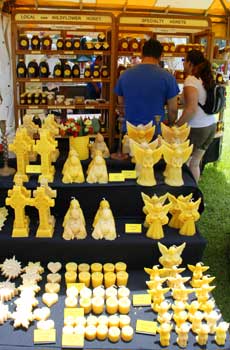
Pure beeswax candles available from Miguel Bode the beekeeper.

Said hi to Miguel Bode the beekeeper on the way out, and he revealed that he has the largest display of pure beeswax candles anywhere (well, at least at the festival). He uses 35 different molds to shape wax extracted from his hives.

My name was on the schedule for the food bloggers panel Saturday afternoon, but I couldn’t stay due to a schedule conflict. Thanks to Melissa Contreras and Annie Stamps of Fairchild for inviting me to participate in the Festival. You ladies rock!

Sauteed Radishes and Tops over Bow Tie Pasta with Apple Chicken Sausage

Serves four main dinners or six starter plates


Ingredients:

1 lb. box of bow tie pasta
1 bunch of radishes with tops attached
1 pkg. organic apple chicken sausage
dash white vermouth
good quality extra virgin olive oil
kosher salt and pepper

Method:

Put on pasta water to boil and once boiling, add a dash of salt. Cook pasta al dente in salted water for a minute or two less than suggested When pasta is cooked, drain into colander, saving 1/2 cup of pasta water. Set aside.

While pasta is cooking, fill sink with cool water. Chop radish tops and wash thoroughly in water, let green tops drain and then blot dry with paper towels. Wash radishes and thinly slice, set aside.

Heat large fry pan on stove and slice sausages into quarter inch slices. Add olive oil to pan and when heated, add sausages, lower heat to medium high and saute until brown on both sides, being careful not to burn. Put cooked sausage on plate, set aside.

Heat fry pan again and add more olive oil if needd. Once hot, add radishes, lightly salt and cook over medium heat until light brown on both sides. Turn up heat and add a dash of vermouth to deglaze pan, continue cooking radishes for another 30 seconds or until soft. Add to the plate of cooked sausage.

Heat fry pan and use more oil if necessary. Lightly saute greens until just wilted, add pasta to pan along with sausages and radishes and thoroughly combine all ingredients. Cook over medium high heat for another minute, adding a bit of pasta water to make a light sauce. Season with salt and freshly ground black pepper and serve immediately. Drizzle extra virgin olive oil over each serving.

Copyright (c) La Diva Cucina Inc.

Read Full Post »

Paradise Farms introduces the first interactive “Learning Luncheon” featuring Private Chef Mary Siragusa.

Saturday, April 17th
11:00 am Arrival with sparkling organic juices, followed by farm tour
11:30 am – 12:30 pm Interactive food prep
12:30 pm – 2:00 pm Luncheon

3 courses with dessert @ $45 per person. Sign up at www.paradisefarms.net

Learn how to prepare delicious and healthy meals effortlessly while having a great time. Guests will have the opportunity to partake in the preparation of the meal. Chef Mary will explain the benefits of organic foods and show you how easy it is to incorporate organic juices and food into your lifestyle. You will be inspired by her fresh, wholesome approach!

Gabriele Marewski, owner of Paradise Farms, will lead a farm tour to collect the herbs and edible flowers for lunch with a discussion on how you can grow your own food.

Featured will be Carico International, a manufacturer of healthy lifestyle products including cookware which uses low heat and no oil.

MENU:

First course: Creamy cucumber soup
Second course: Baby Brassica greens with fennel, carrot and orange
Third course:
Grilled shrimp on top of orrecciette primavera
Dessert: vanilla coconut cake with a hint of lime accompanied with lime sorbet
Coffee and tea service.

Read Full Post »

« Newer Posts - Older Posts »